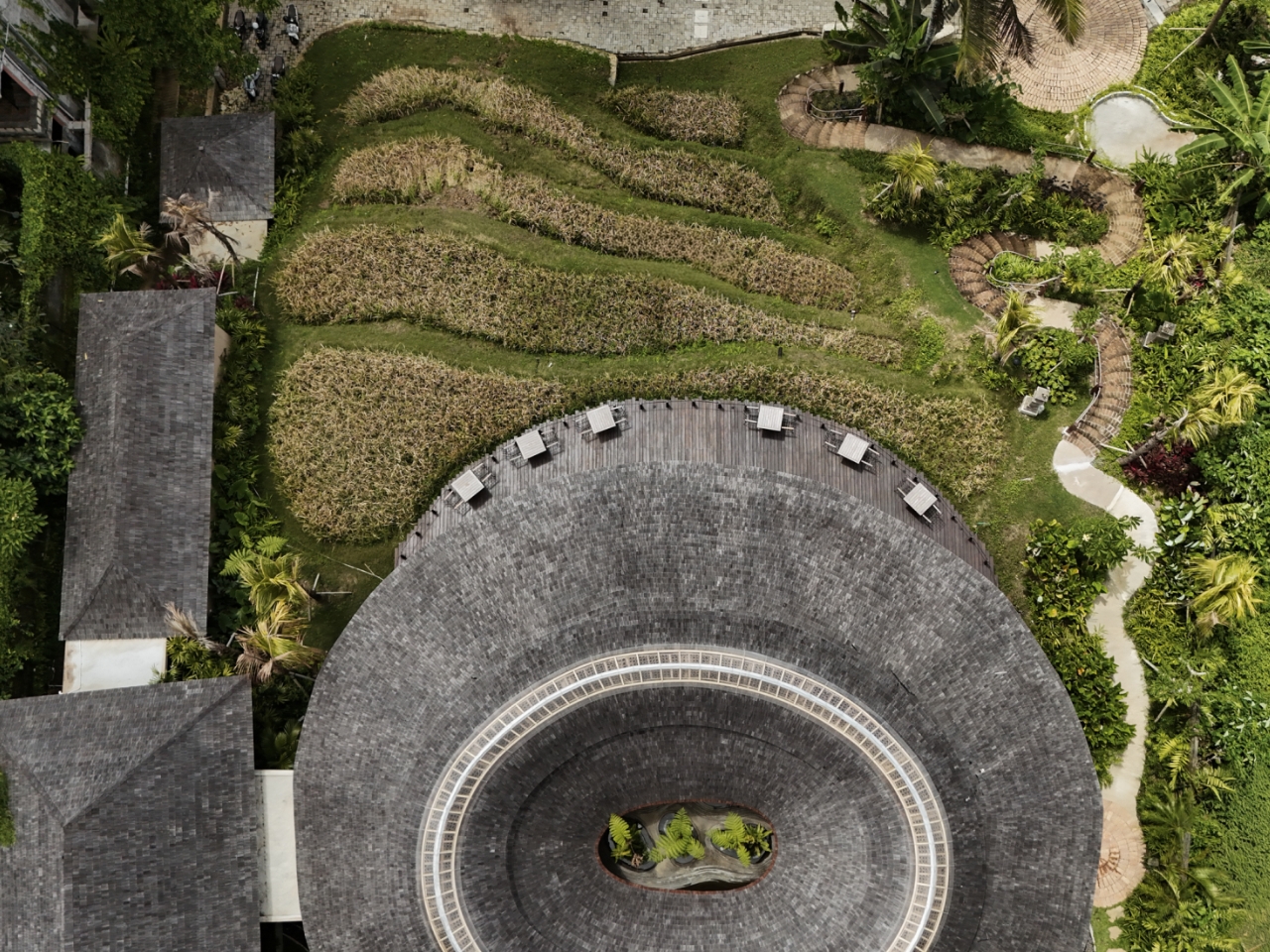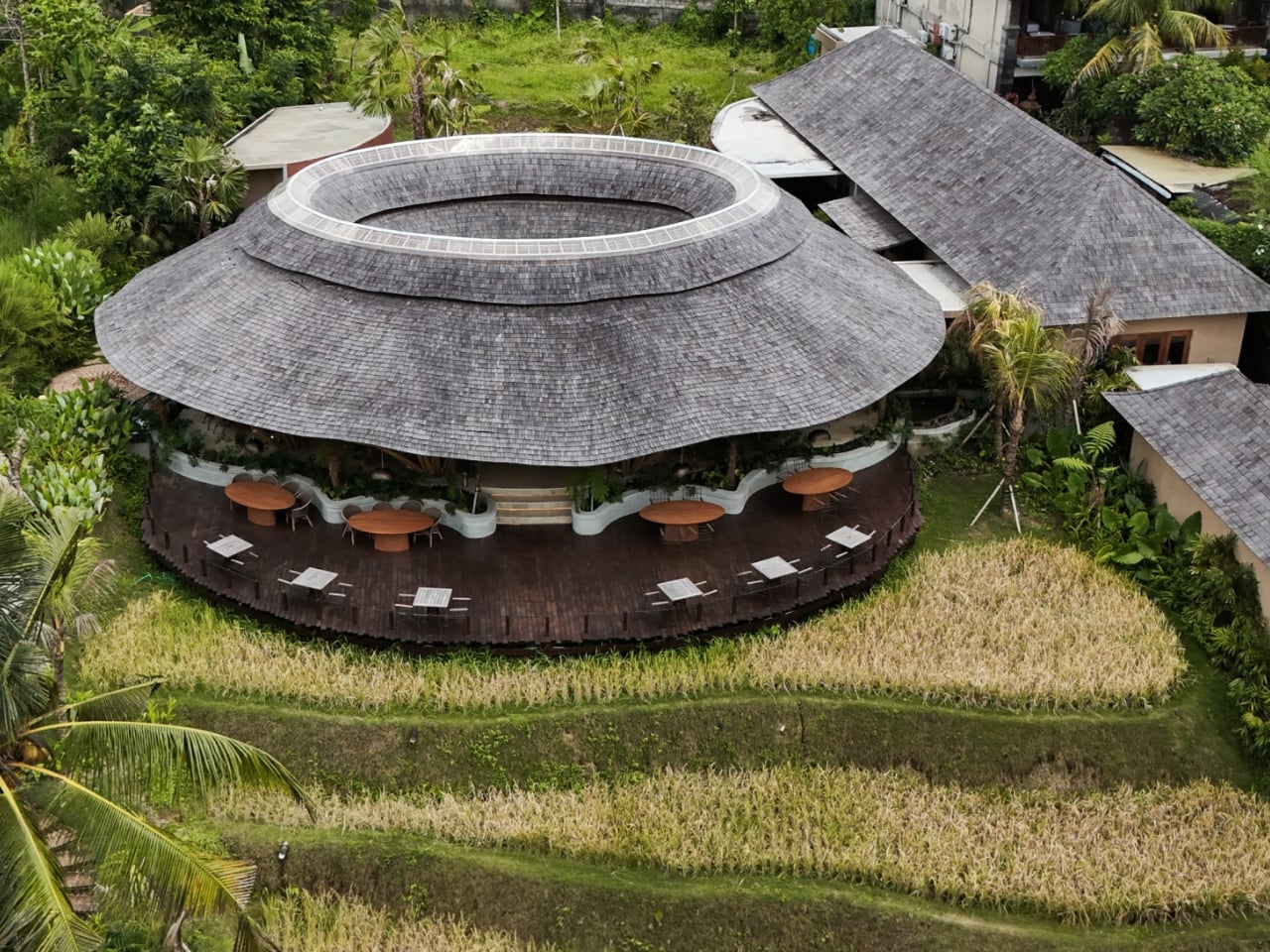

There is a moment at Juna Ubud when you forget whether you’re indoors or out. You’re sitting at your table, the air is soft, the light is filtered, and above you a circular bamboo roof seems to hover, tiered like a rice terrace in the sky. Somewhere overhead, rain is quietly being choreographed.
Designed by Pablo Luna Studio, Juna is a Balinese restaurant that treats climate as its main collaborator. The building is essentially a circle, pulled open and layered so light, air, and water can move through it with almost theatrical precision.
Designer: Pablo Luna Studio
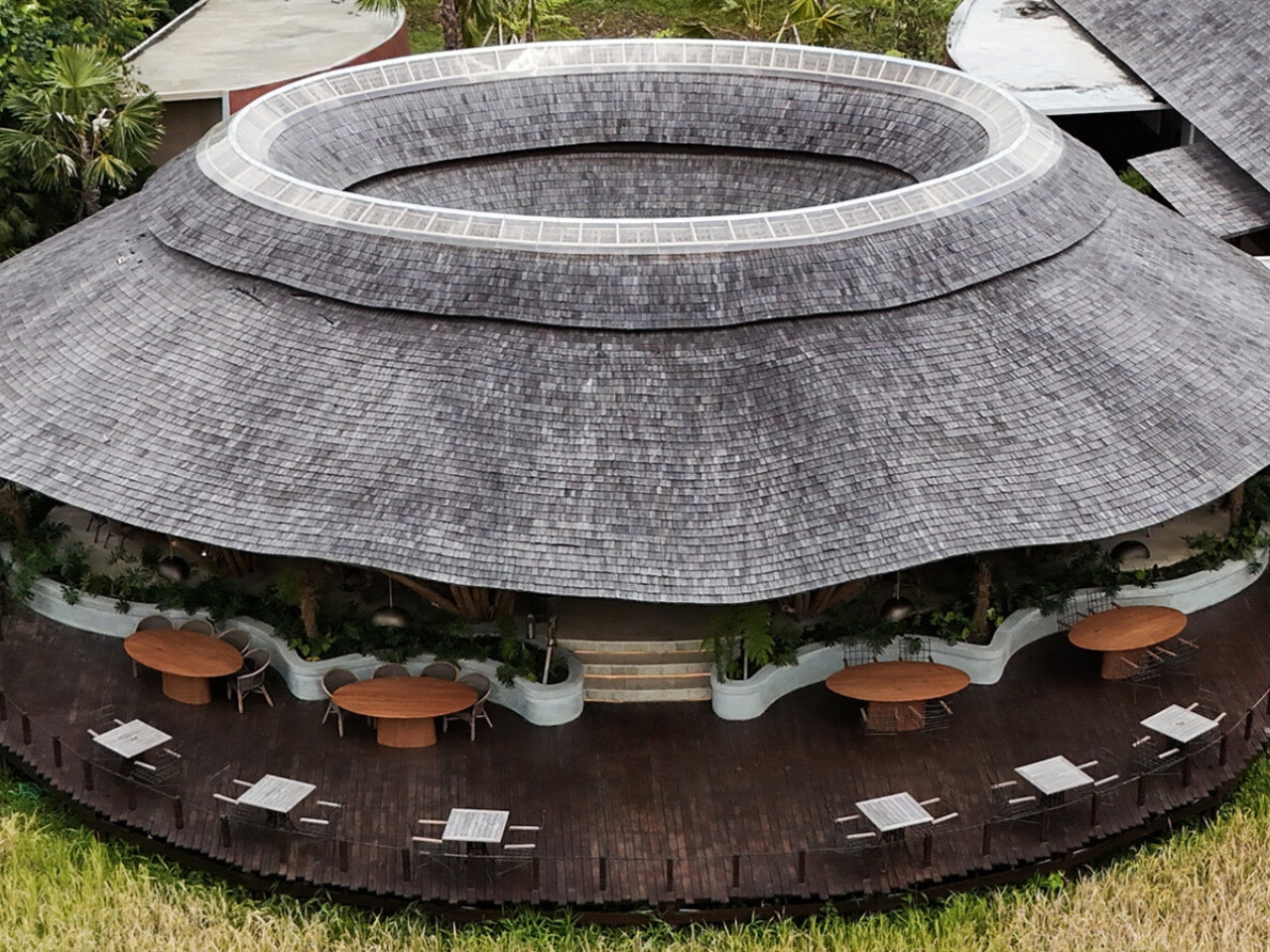
Instead of a heavy roof that just keeps weather out, Juna’s canopy funnels rain toward a central point. The tiers step and vent toward the middle, so water is guided inward while views and breezes stay open at eye level. The effect is part stadium, part shrine, part sci‑fi pavilion. You feel sheltered but not sealed.
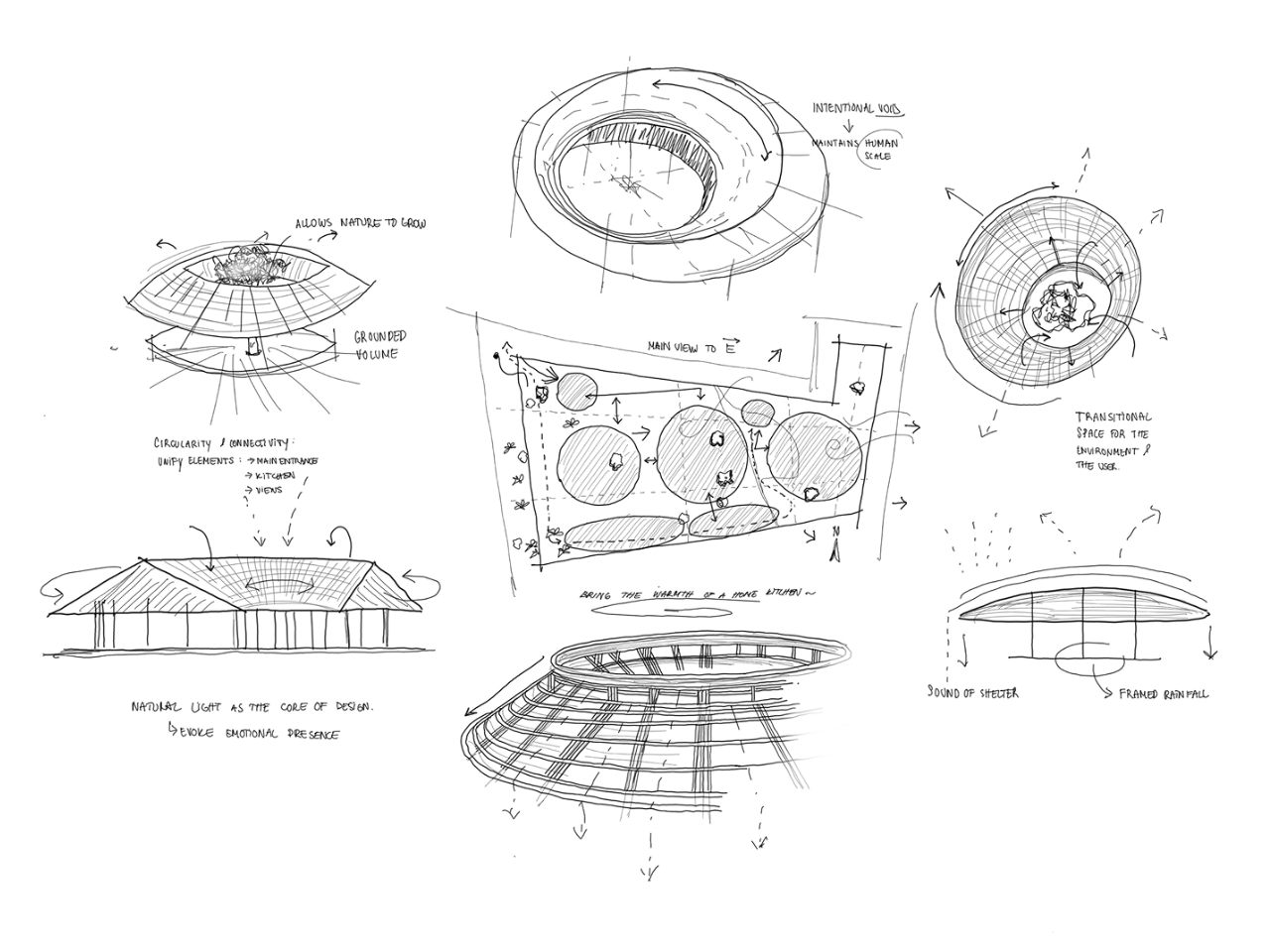
At the core sits a courtyard with a pond and lush planting, the kind of green pocket that makes you slow down whether you meant to or not. This is where that carefully collected rain completes the story, feeding a micro‑landscape that cools the air and mirrors the roof above. It is climate control as choreography: water falls, air flows, light shifts, and the architecture simply sets the stage.
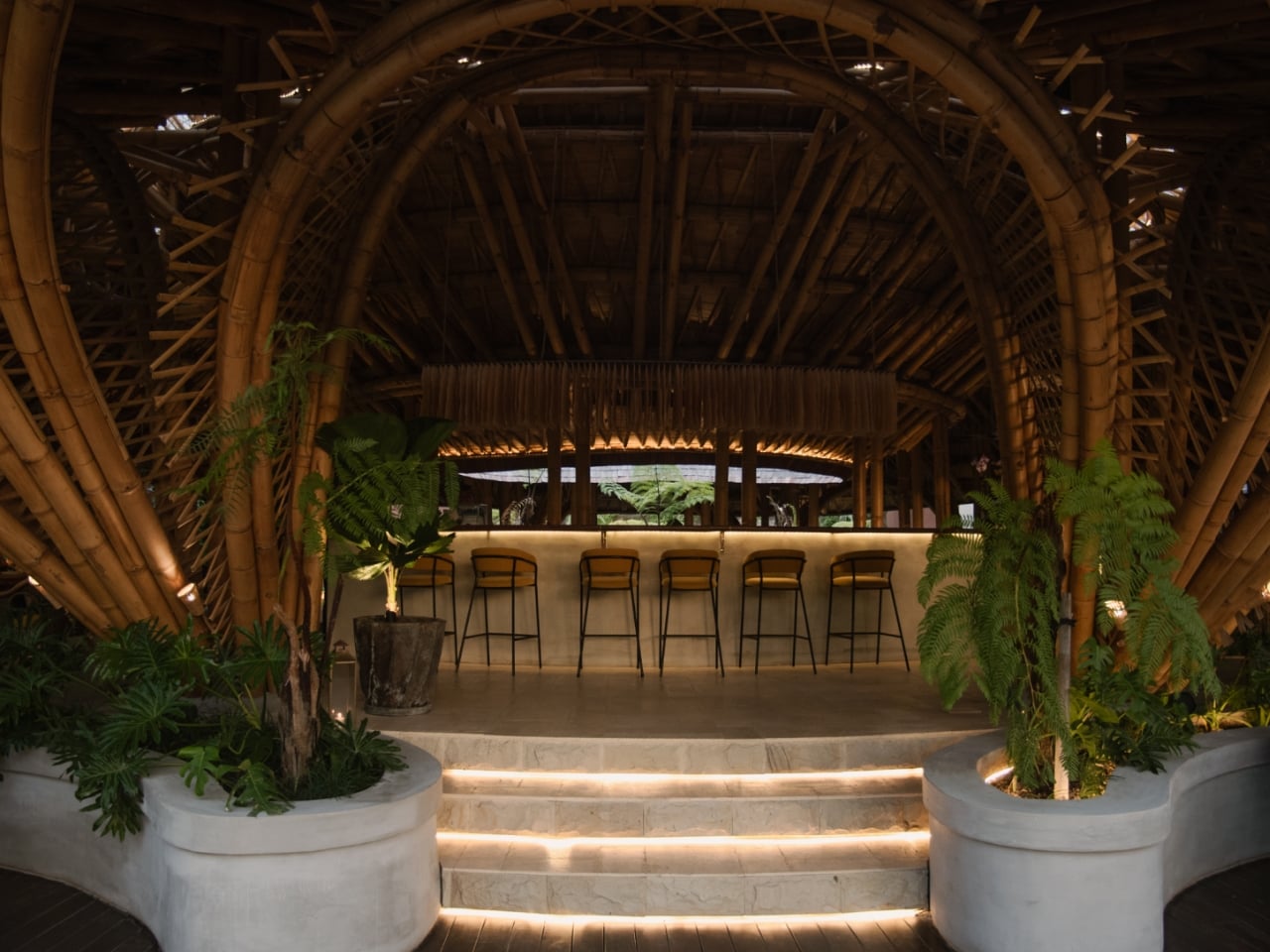
The structure itself is a study in how “natural” can still feel sharply designed. A forest of bamboo arches and A‑frames defines the dining space, but the geometry is crisp, almost graphic. The bamboo isn’t rustic background texture; it behaves like a drawn line, tracing curves, spans, and thresholds. Look closely and you see intricate joinery, where each connection feels both handcrafted and engineered.
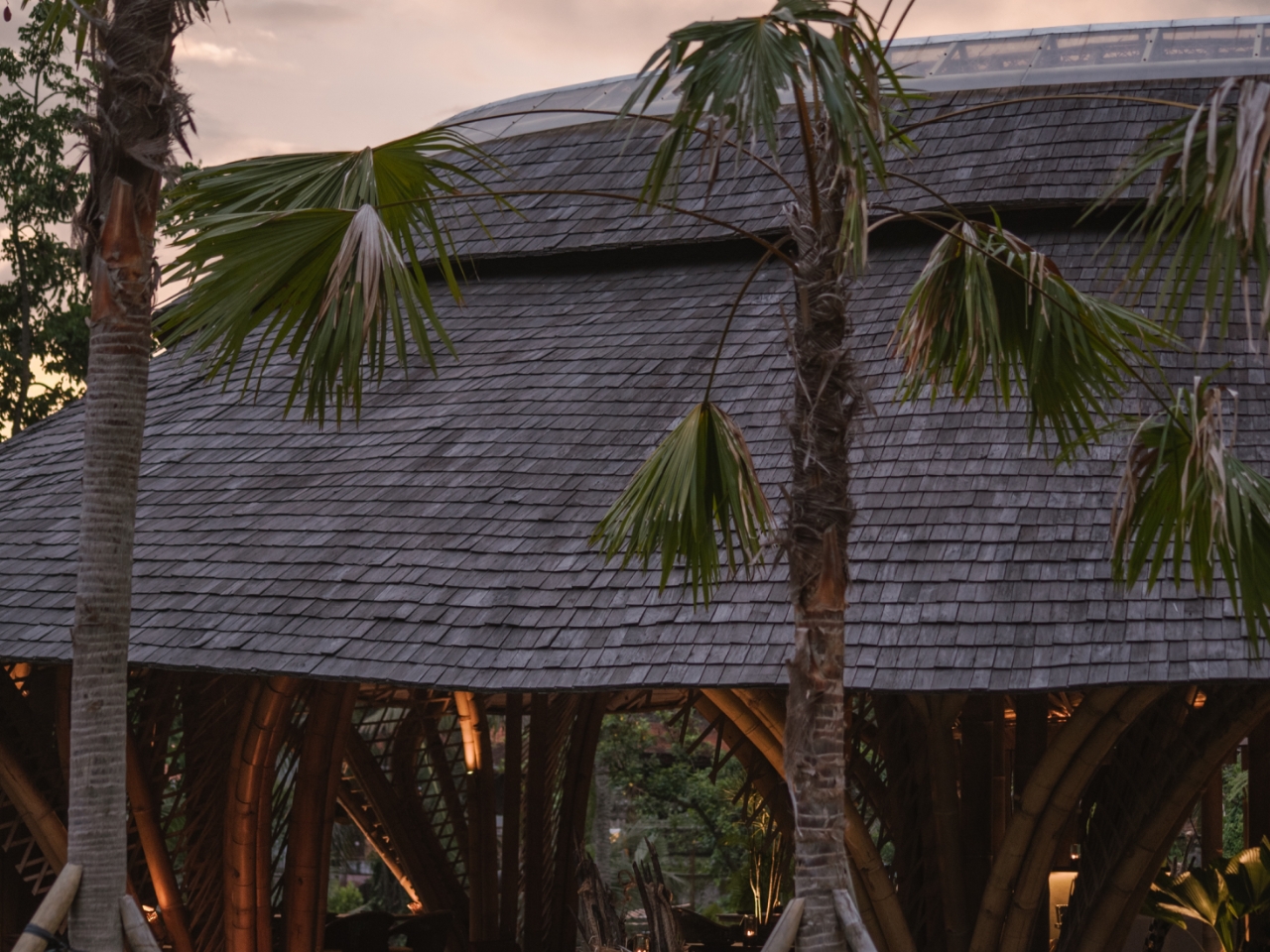
On top of that bamboo skeleton, the roof is finished with ulin wood shingles, crafted by local artisans. The shingles give the whole volume a tactile, scaled surface, like a creature that has grown here over time. Near the center, a skylight made from clear panels sits on a steel frame that has been finished to visually melt into the bamboo, keeping the roof watertight without breaking the illusion of an all‑natural canopy.
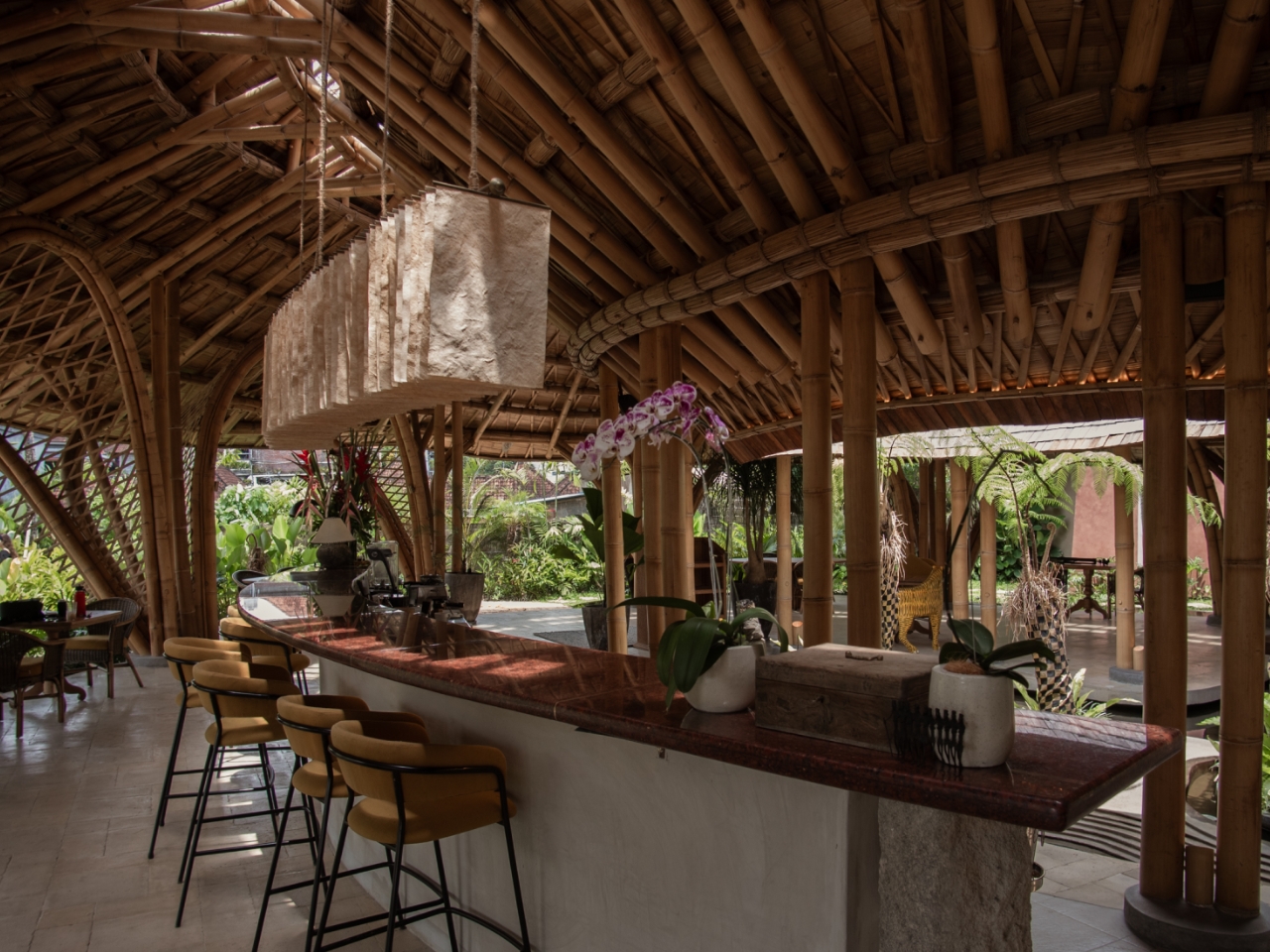
For a restaurant, all of this could have turned into spectacle. Instead, the architecture mostly frames what’s around it. The site is on an elevated stretch of Ubud, with views westward over a river and rice fields. The building doesn’t compete with that; it edits it. Open sides and carefully placed arches direct your sightlines out toward the landscape, so a casual glance from your seat becomes a composed view.
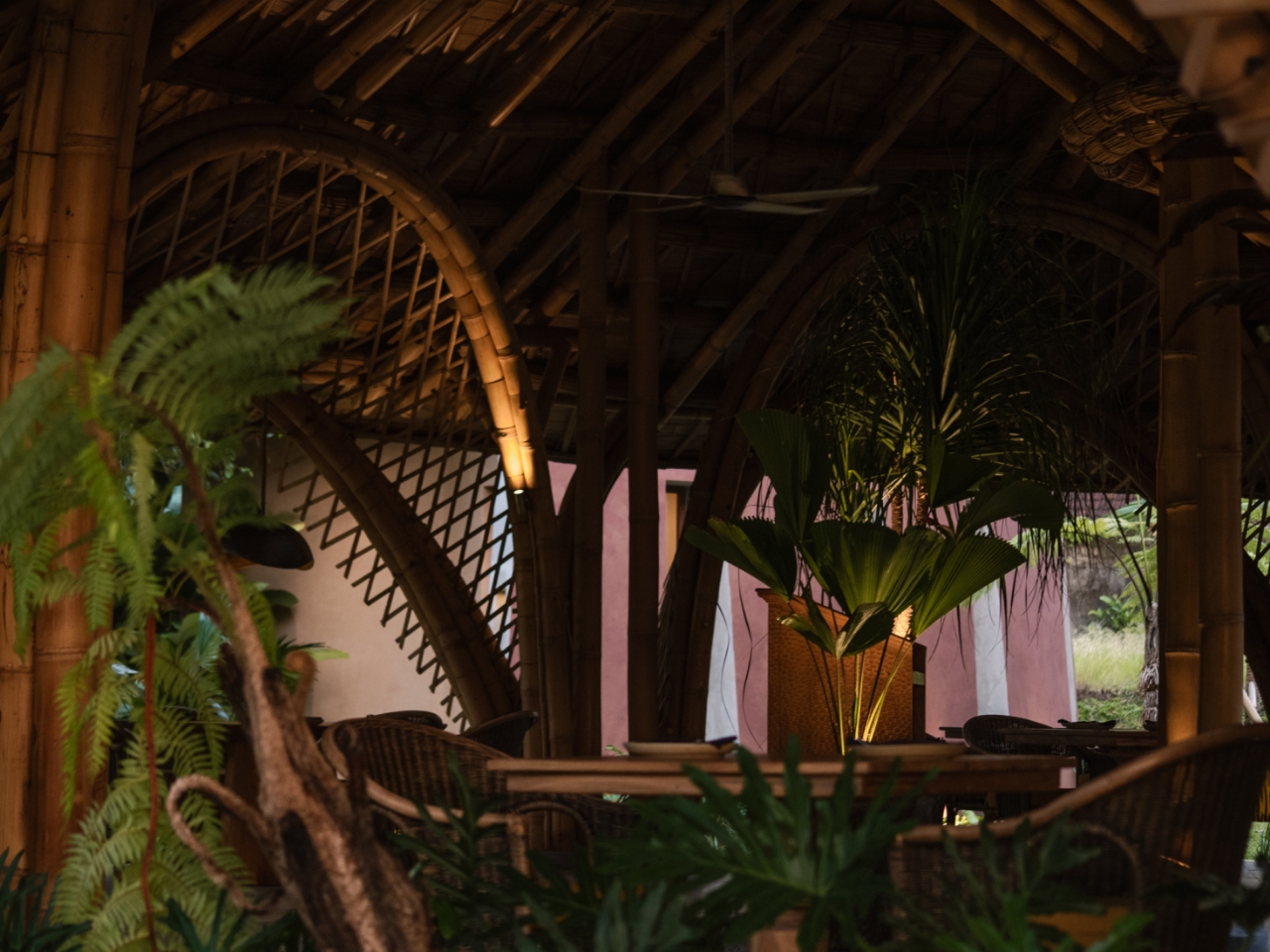
What’s interesting here for anyone into design is how Juna feels like a quiet rebuttal to the glass‑box global aesthetic. This is not a sealed, air‑conditioned capsule that dominates its plot. It rides the existing contours and leans on passive strategies: shade from the broad roof, cross‑ventilation through the open sides, evaporative cooling from the central pond. The “technology” is mostly physics, material intelligence, and local craft.
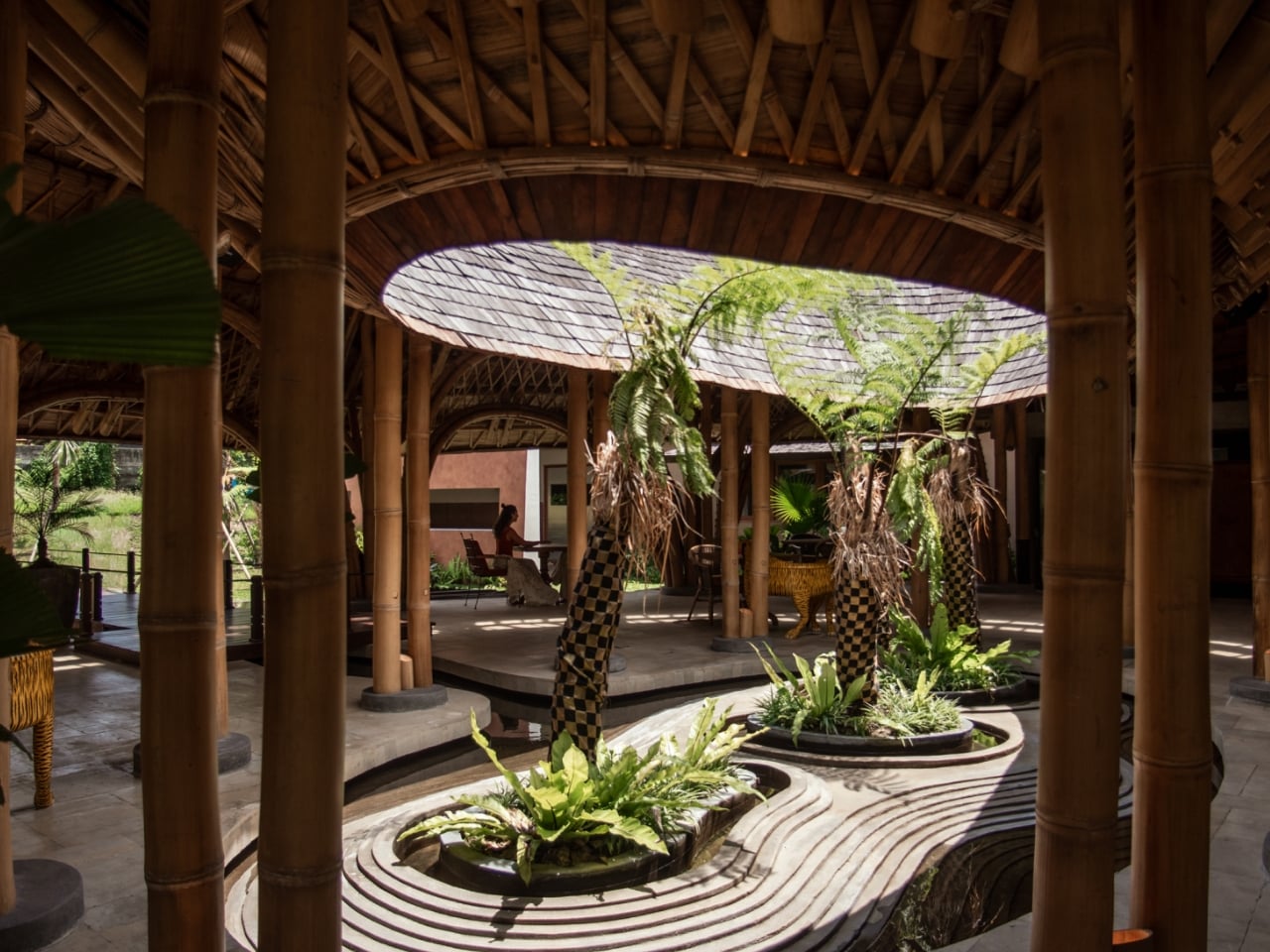
Yet the project doesn’t romanticize tradition. The hybrid of bamboo, steel, engineered skylight panels, and carefully detailed shingles is a reminder that sustainable architecture today is rarely about going backward. It is about stacking old knowledge and new tools until they click into something that feels both inevitable and fresh. There is also a social scale question that Juna answers with surprising clarity. The circular plan pulls people into a shared field of view, but the layered roof and arches break the space down into more intimate pockets. You’re aware of the room as a whole, yet your table still feels like its own scene. For a restaurant, that balance is gold: collective energy without the food‑court vibe.
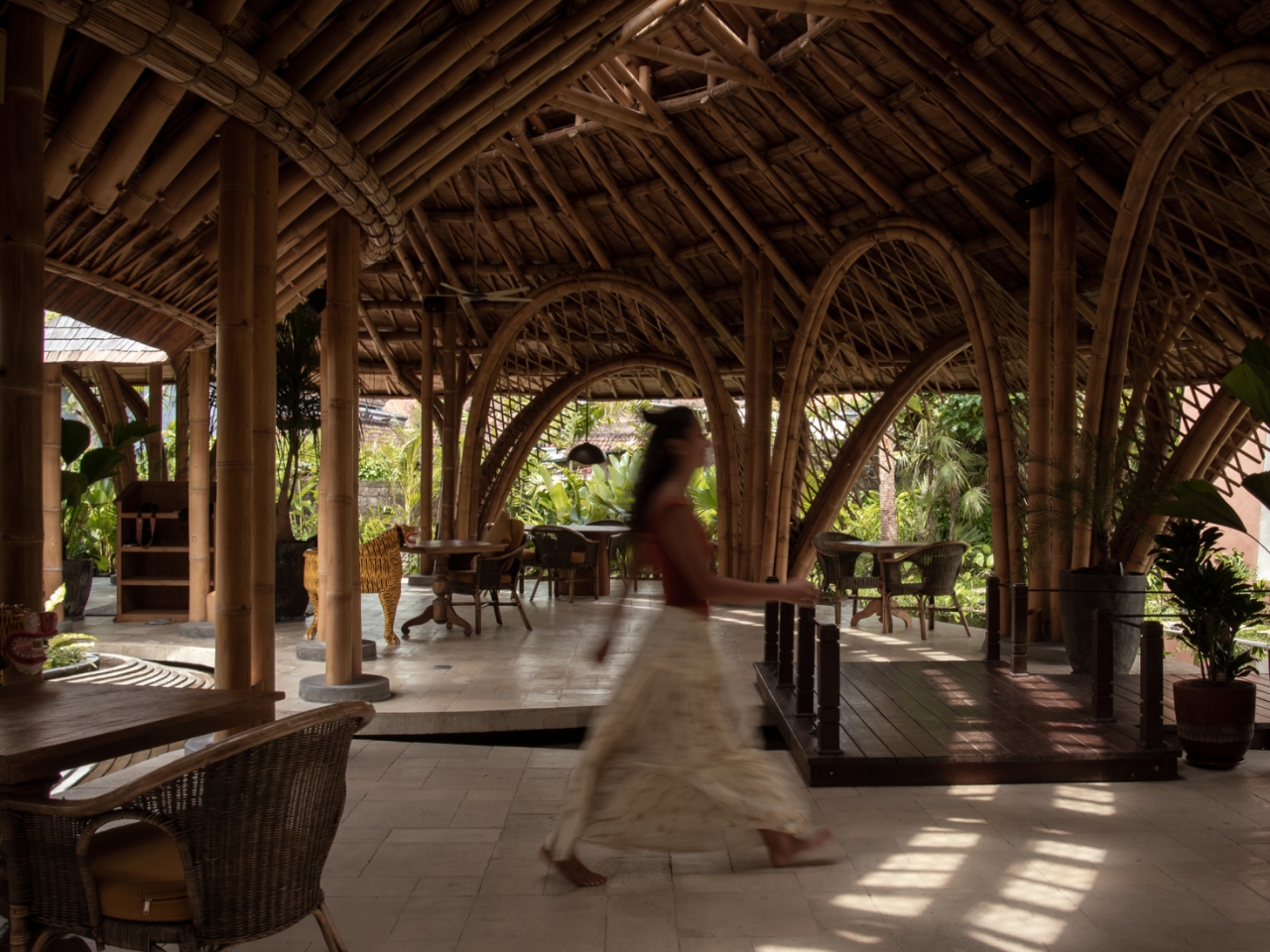
Juna fits into a growing fascination with eco‑spectacle spaces, the kinds of venues that show up endlessly in travel reels and architecture feeds. But what makes it more than a backdrop is that the photogenic moves are doing real work. The halo of bamboo, the stepped roof, the reflection of the pond, the dappled light; all of it is performance with purpose, tuned to climate, craft, and comfort. If you’re into design, this is a case study in how a single strong gesture a circle in plan, a ring in section, a crown in elevation can carry an entire project. If you lean more toward tech, it is a reminder that sometimes the smartest system is the one that requires no app, no interface, no instructions. Just gravity, airflow, and a roof that knows what to do when it rains.