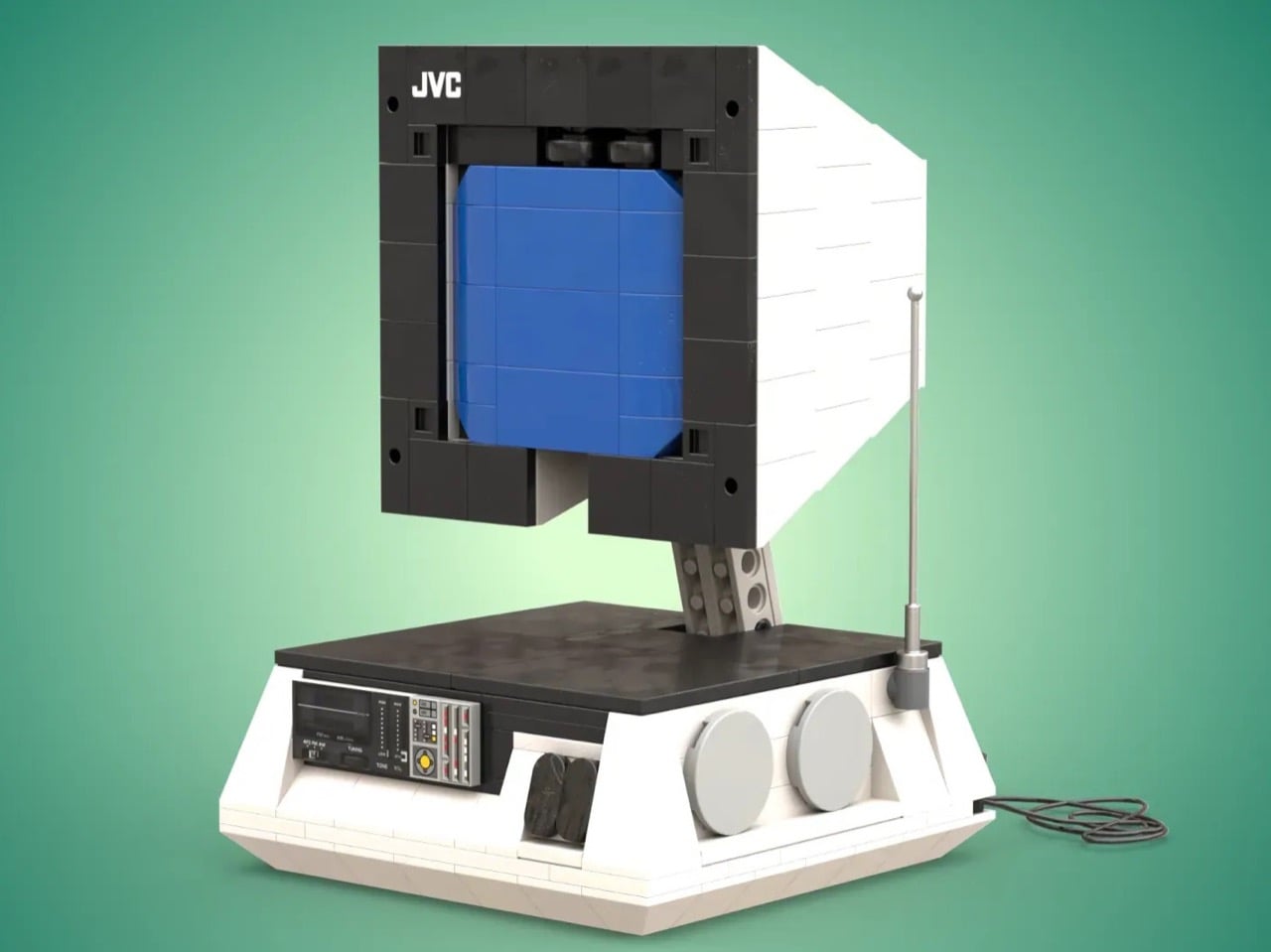

Before flat screens colonized every wall and surface, televisions had personality. They came in wild shapes and bold colors, designed by people who believed consumer electronics could be sculpture. The JVC 3100R Video Capsule, produced throughout the 1970s, exemplified this philosophy. Its pyramid form and space-helmet aesthetic made it a favorite among collectors of “space-abilia,” that peculiar category of objects inspired by Apollo missions and science fiction films.
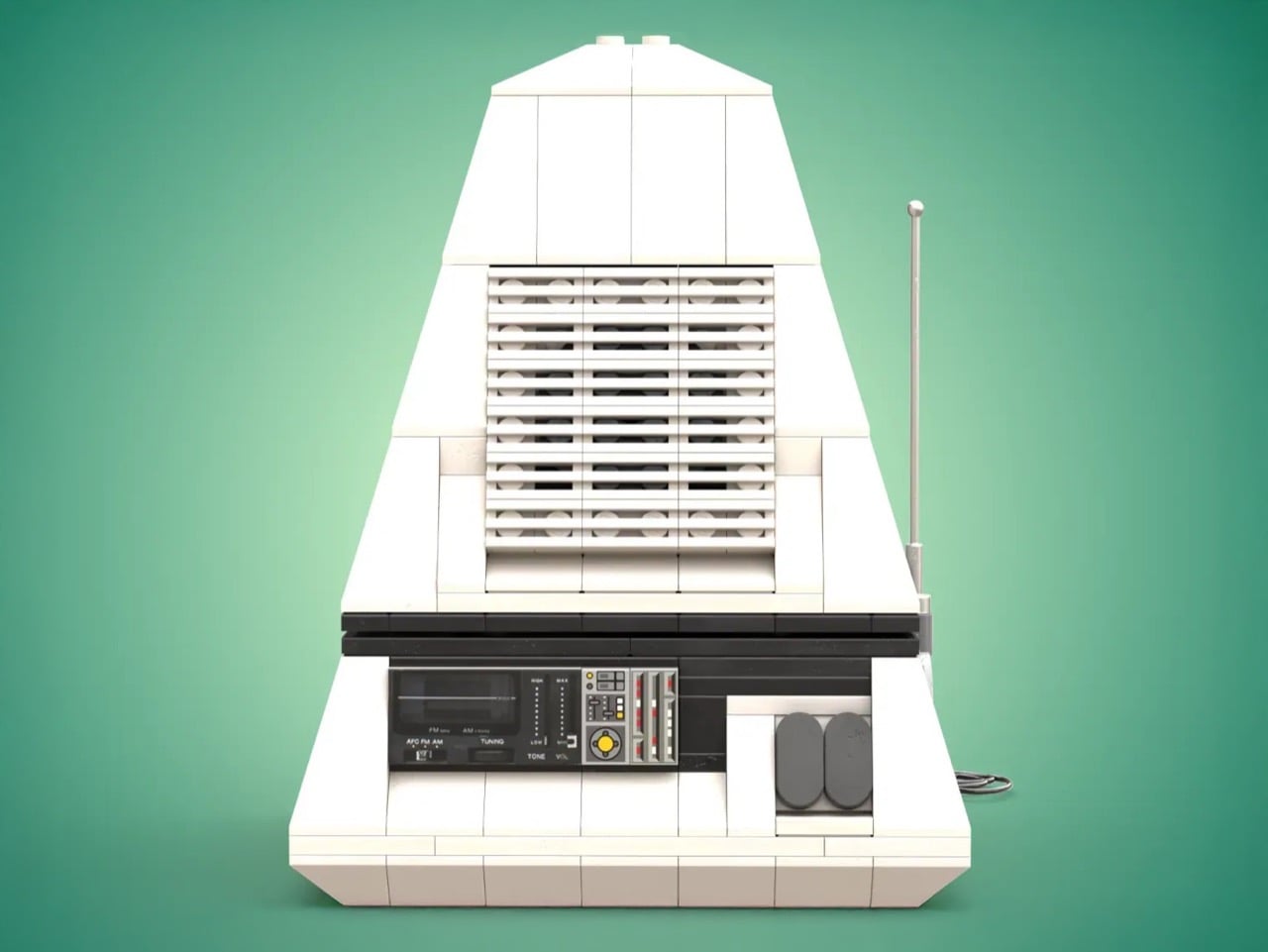
Enter DocBrickJones, a LEGO builder who has recreated this vintage icon in remarkable detail. His LEGO Ideas submission captures everything from the angled white body to the frequency gauge on the control panel. The project needs 10,000 supporters to be considered for production, but it’s currently sitting at just over 200. For anyone who appreciates when design took risks, or when LEGO tackles interesting real-world objects, this pyramid-shaped tribute deserves a closer look.
Designer: DocBrickJones
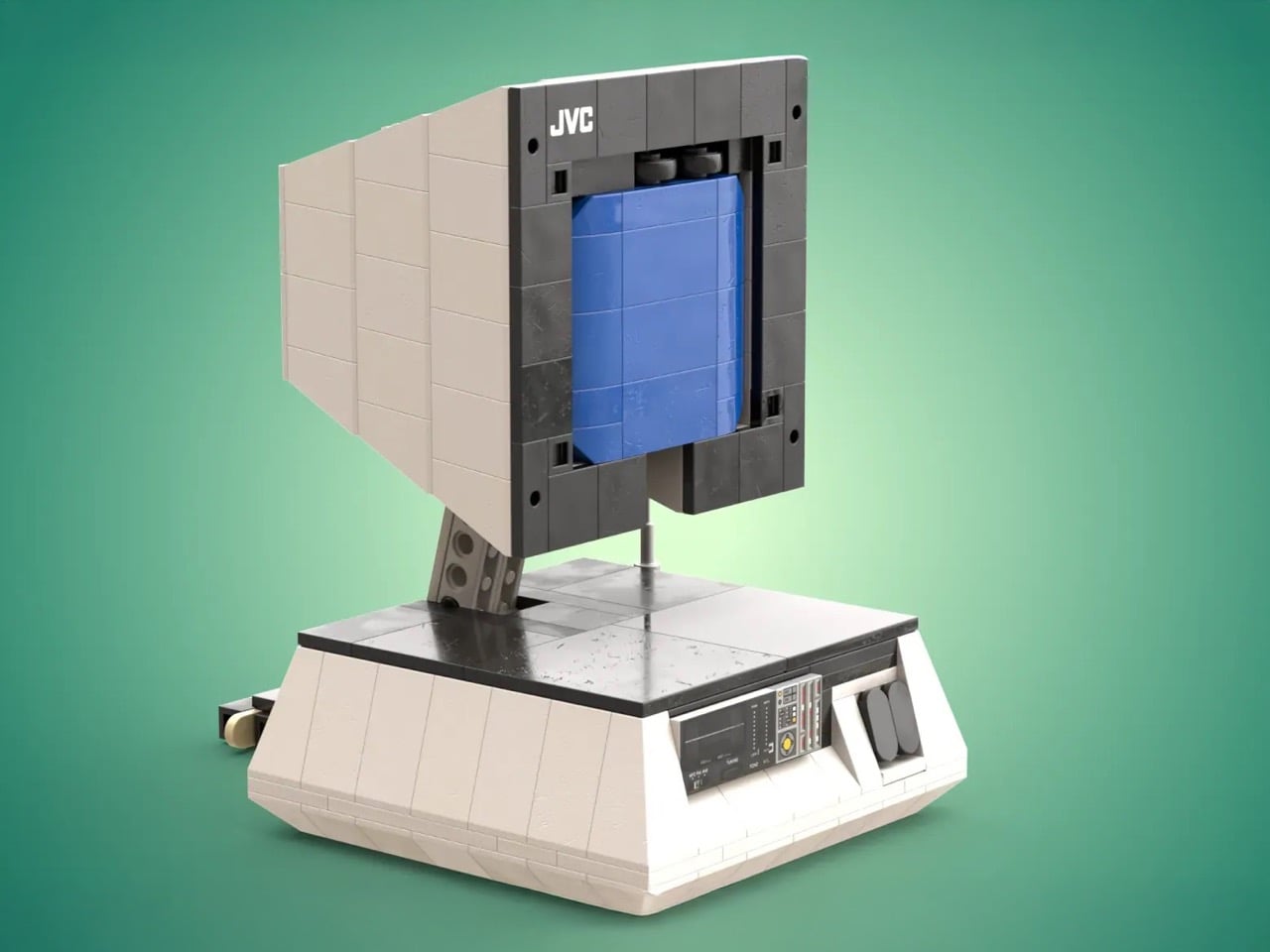

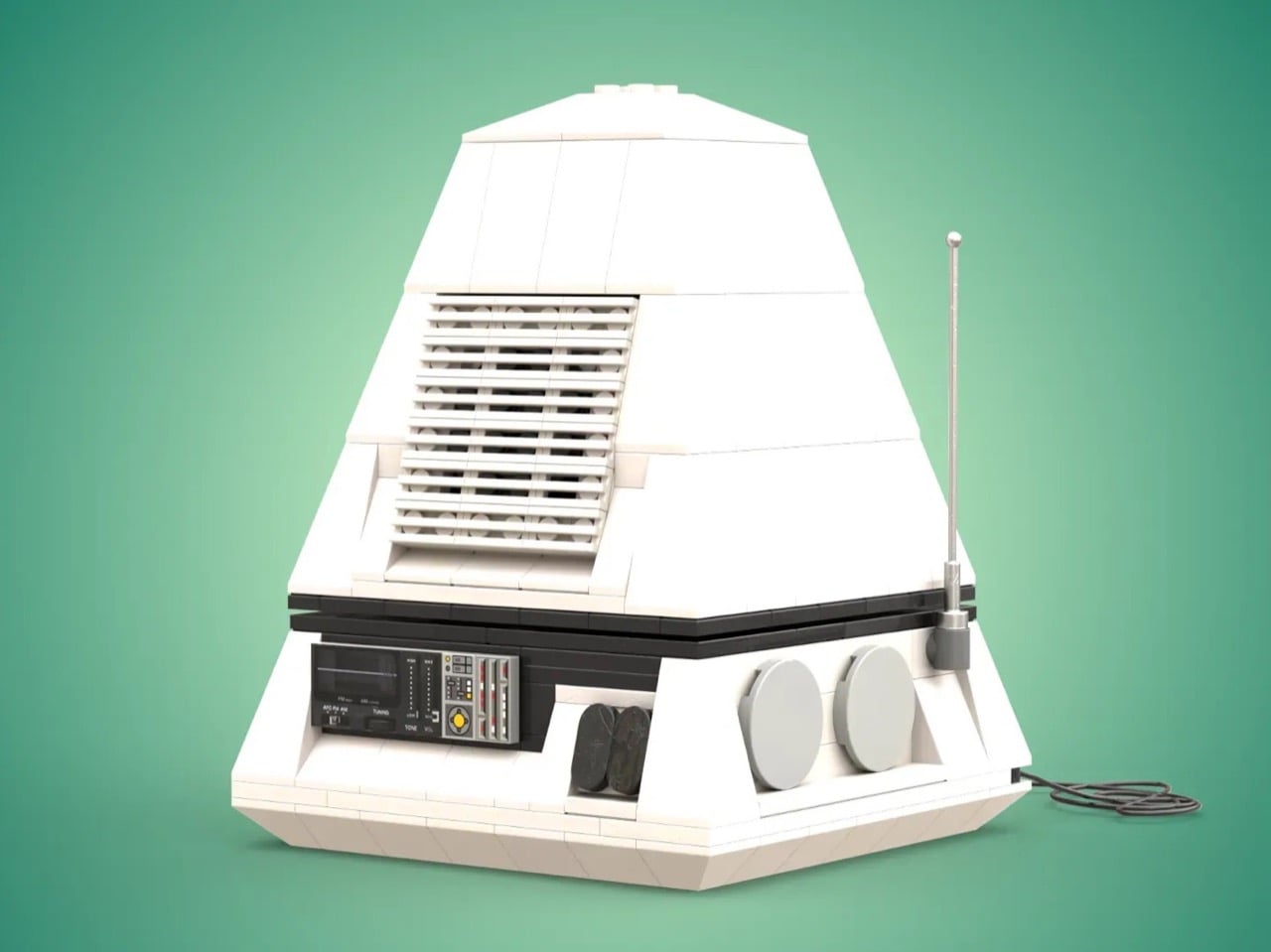
The original 3100R combined a 6-inch black and white CRT screen with an AM/FM radio in a package that could transform. Collapsed into pyramid mode, it functioned as a radio. Truncate that pyramid by opening the top section, and suddenly you had a television. The design language borrowed heavily from the cultural moment: the black and white color scheme echoed Saturn rockets, while the pyramid geometry nodded to San Francisco’s Transamerica Pyramid skyscraper, completed just a year before the 3100R hit shelves. This was 1972, when the Apollo program still dominated headlines and anything vaguely space-themed sold like crazy. JVC understood the assignment.
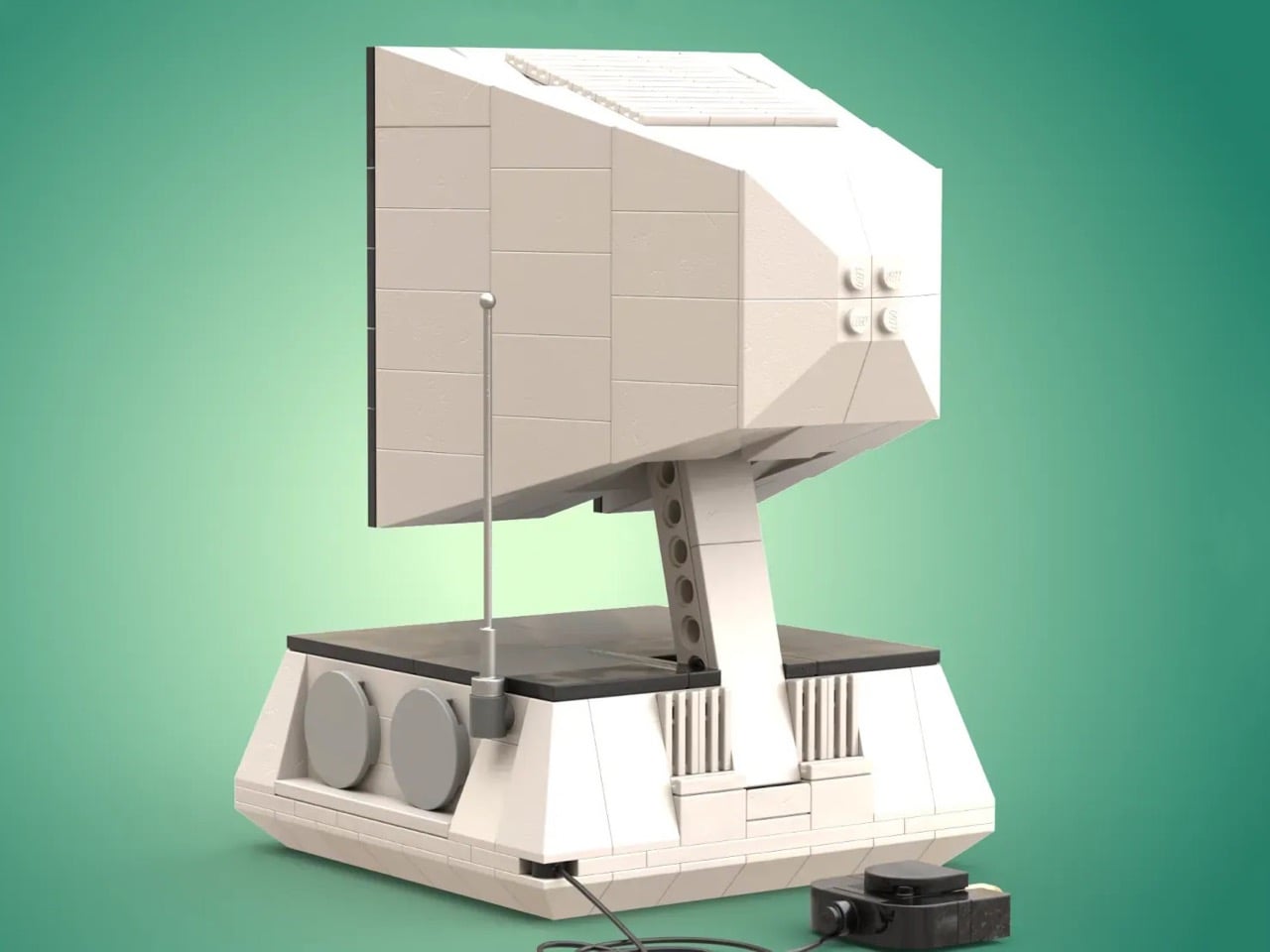
What makes DocBrickJones’ LEGO version impressive is how he’s translated analog curves and slopes into a medium that fundamentally works in right angles. The angled faces of the pyramid base use carefully placed slope bricks to maintain clean lines. The blue-tiled screen sits recessed behind a dark gray frame, complete with speaker grills and control dials. There’s even a telescoping antenna in light gray and a brick-built power cable trailing from the base. These details matter because they demonstrate an understanding of what made the original compelling: the interplay between smooth surfaces and functional elements, the visual weight of that wide base supporting a delicate screen assembly, the contrast between the pristine white body and the technical-looking control panel.
The current LEGO Ideas lineup skews heavily toward nostalgic tech objects. The Polaroid OneStep camera, the classic typewriter, even the Atari 2600 have all found success by appealing to adults who remember when consumer electronics felt tactile and specific rather than generic and touchscreen. The 3100R fits this pattern perfectly, maybe even better than some approved projects. It represents a specific design philosophy from a specific moment when optimism about technology translated into physical form. You looked at a 3100R and thought about the future, even if that future was technically just watching grainy UHF broadcasts.

LEGO Ideas operates as a democratic platform where fan-created designs compete for official production. Submit a project, gather 10,000 supporters within a set timeframe, and LEGO reviews it for potential manufacturing. The newly minted JVC 3100R build currently sits at 207 votes and needs to hit the 1,000 vote margin to reach the next stage, which means there’s plenty of runway for this design to find its audience. Voting costs nothing beyond a free LEGO account, and successful projects get produced as official sets with the original creator receiving royalties and credit. The platform has launched everything from the Saturn V rocket to the Medieval Blacksmith, proving that niche appeal can translate into mainstream success. If you want to see this space-age pyramid sitting on store shelves next to other design-focused sets, the voting link lives on the LEGO Ideas website. The 3100R deserves a second act, this time in brick form.