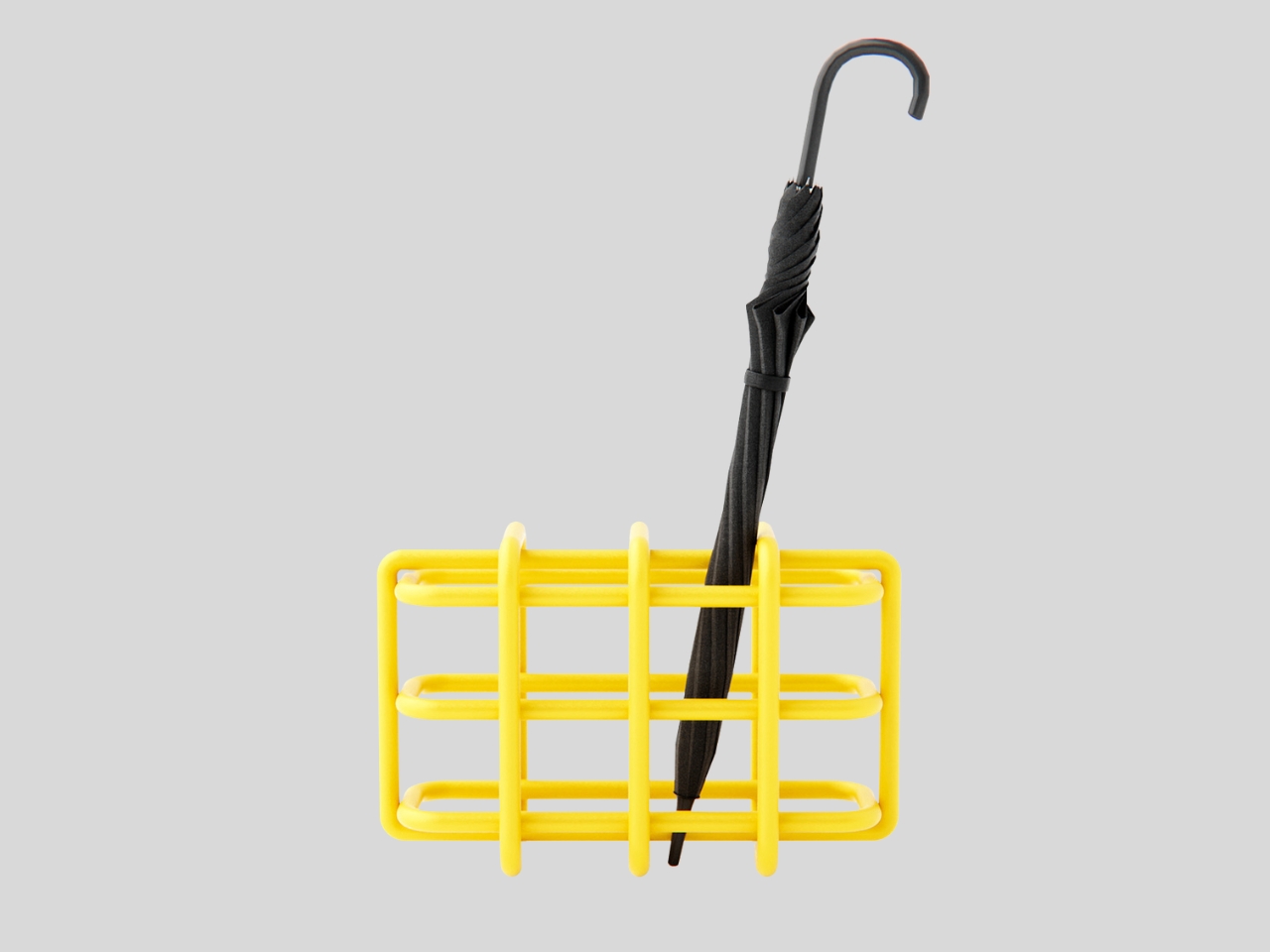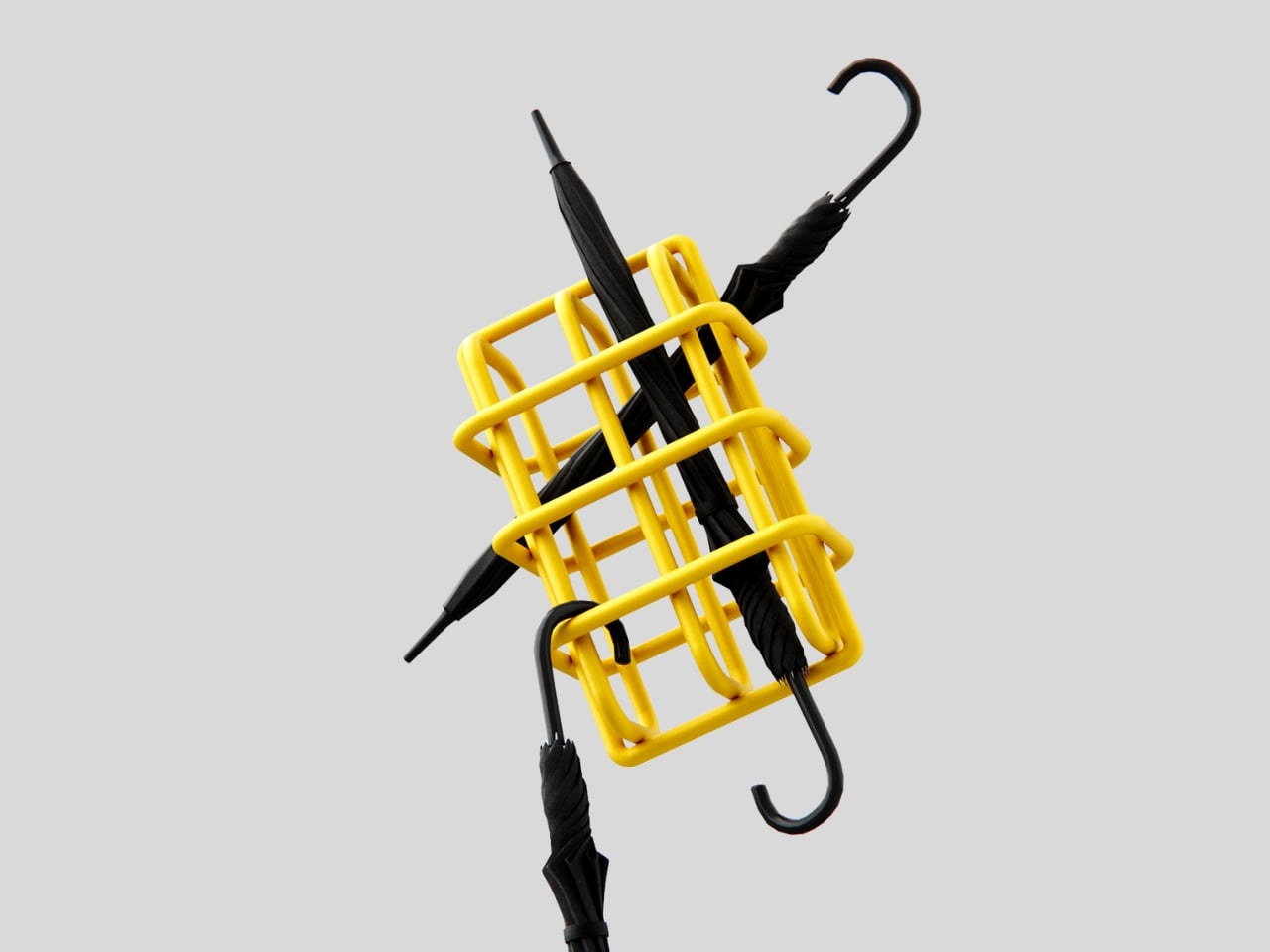

There’s something delightful about a design that makes you reconsider the mundane. We walk past umbrella stands every day without giving them a second thought. They’re just there, practical and forgettable, tucked into corners doing their quiet work. But what if an umbrella stand could be more than a utilitarian afterthought? What if it could be playful, sculptural, and bold enough to earn a spot in your entryway not despite being an umbrella stand, but because of it?
That’s exactly what Liam de la Bedoyere achieved with Grid, a minimalist umbrella stand that looks less like household furniture and more like a three-dimensional puzzle that escaped from a modern art gallery. The Essex-based industrial designer, who runs Bored Eye studio specializing in furniture and imaginative everyday objects, took inspiration from wine racks to create something that reimagines how we store our rain gear.
Designer: Liam de la Bedoyere
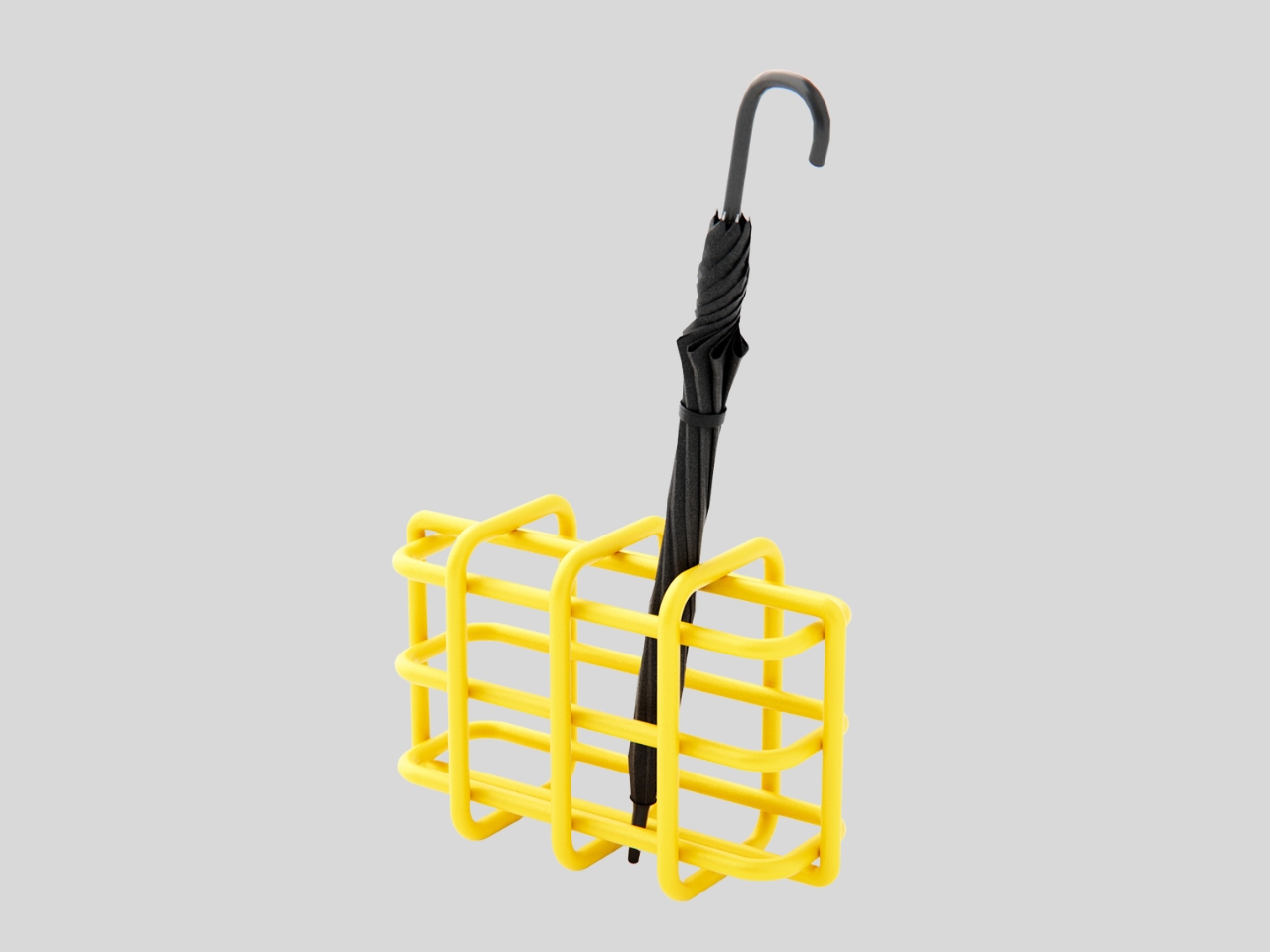
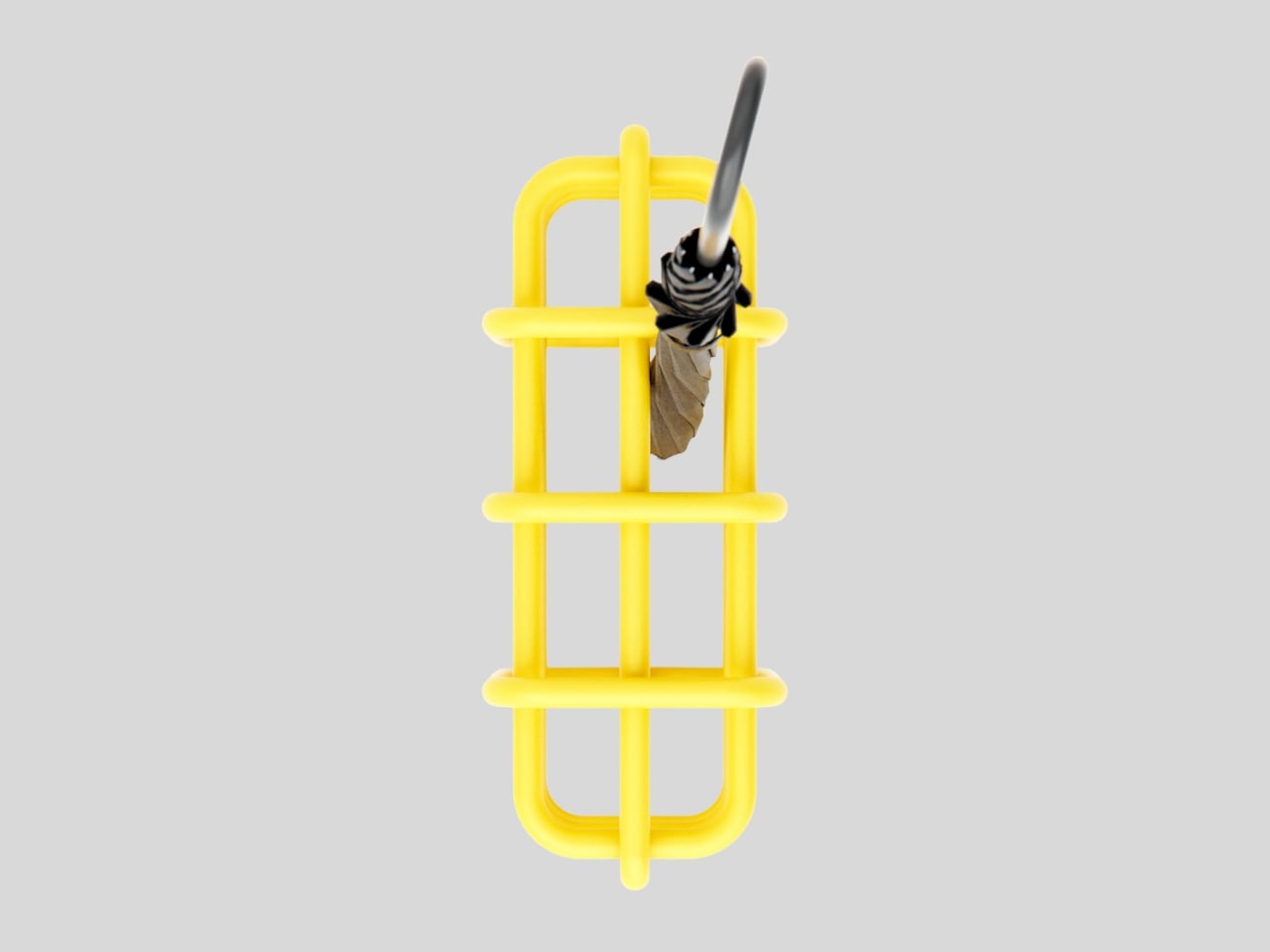
At first glance, Grid is pure visual joy. The bright yellow tubular frame weaves and loops through space, creating a geometric lattice that seems to defy its own simplicity. It’s the kind of object that makes you stop and trace the lines with your eyes, following how each rounded bar intersects and overlaps with the next. The design sits somewhere between functional sculpture and architectural model, compact enough for a small apartment yet striking enough to anchor a statement entryway.
The genius lies in how Grid holds umbrellas. Rather than forcing them into rigid slots or letting them jostle for space in a cylindrical container, this design cradles each umbrella at multiple points throughout the three-dimensional grid structure. You can slide an umbrella through at various angles, and the interwoven frame naturally supports it. The result is something unexpectedly organic: umbrellas become part of the composition, their handles and shafts creating new visual lines that play off the yellow framework.
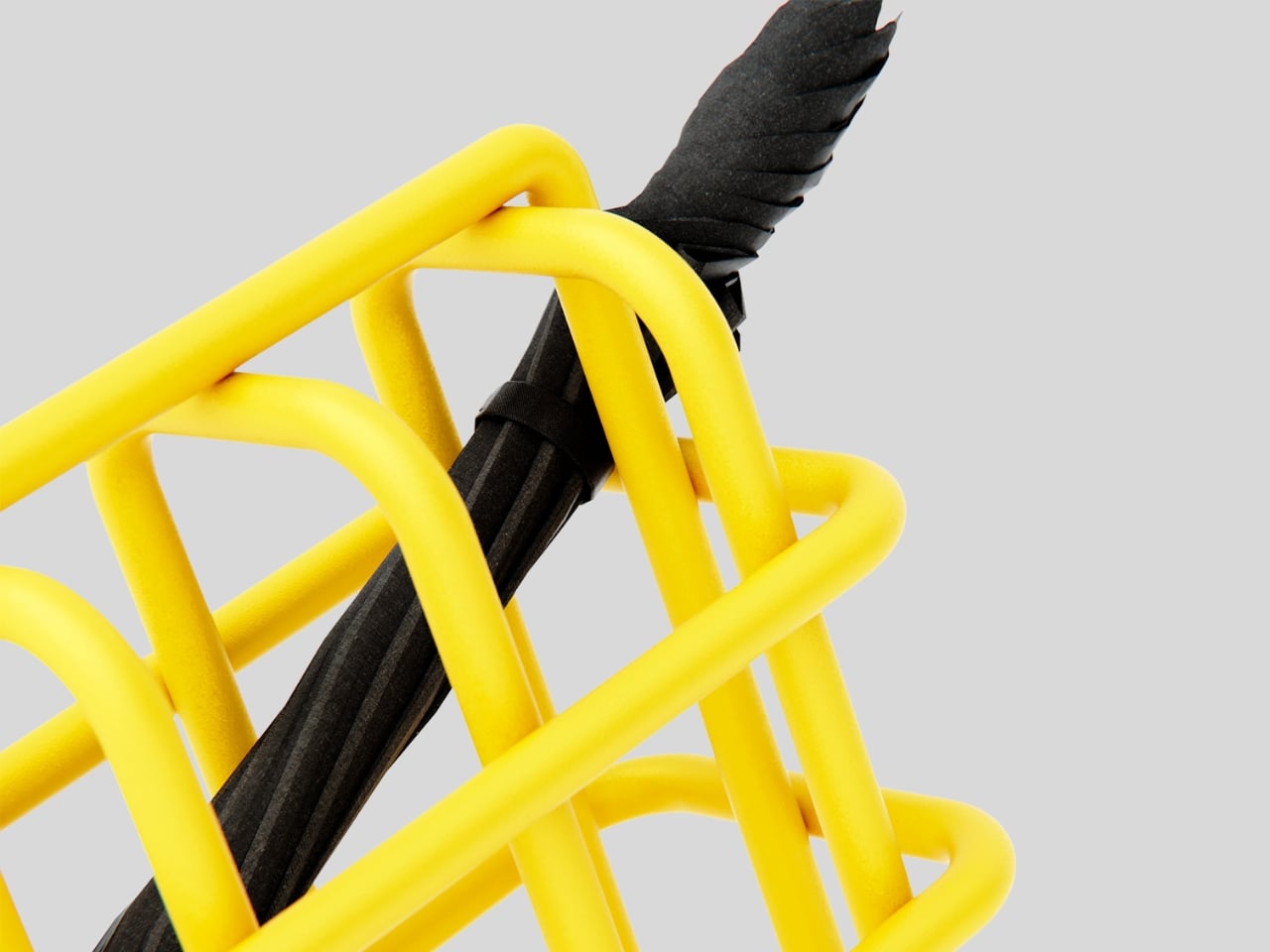
According to the designer’s concept, Grid includes practical considerations that keep it from being merely decorative. The flat-pack construction means it arrives unassembled and space-efficient, while the powder-coated finish gives it durability and that eye-catching color depth. There’s a removable drip tray hidden at the base to catch water from wet umbrellas, solving the age-old problem of puddles forming on your floor. Even compact umbrellas get their moment, with a top peg designed specifically for them.
What makes Grid particularly appealing for design enthusiasts is how it exemplifies a broader movement in contemporary product design: the idea that everyday objects deserve creative consideration. We’re living in an era where people curate their living spaces more intentionally, where Instagram-worthy interiors have raised the bar for domestic aesthetics. Grid fits perfectly into this cultural moment, offering something that’s both genuinely useful and worth photographing.
The modularity adds another layer of interest. While the concept shows a singular yellow unit, you can imagine how multiple Grid stands might work together, creating larger installations that blur the line between storage and art installation. Picture an office lobby with several units in different colors, or a cafe entrance where the umbrella stand becomes a talking point rather than an eyesore.
There’s also something refreshing about seeing a designer tackle such an overlooked category. While the design world often focuses on chairs, lighting, and statement pieces, the humble umbrella stand rarely gets this kind of attention. De la Bedoyere’s approach suggests that no object is too ordinary to benefit from thoughtful design, that even the things we interact with for mere seconds can enhance our daily experience.