
Most cutting-edge science happens in anonymous lab buildings that could be anything from offices to data centers. Fields like protein folding, which quietly underpin medicine and biotech, rarely get a public face. Architecture could act as a billboard or sculpture for that work, making invisible processes more legible to everyone outside, but most research centers settle for glass boxes with vague names on the lobby wall.
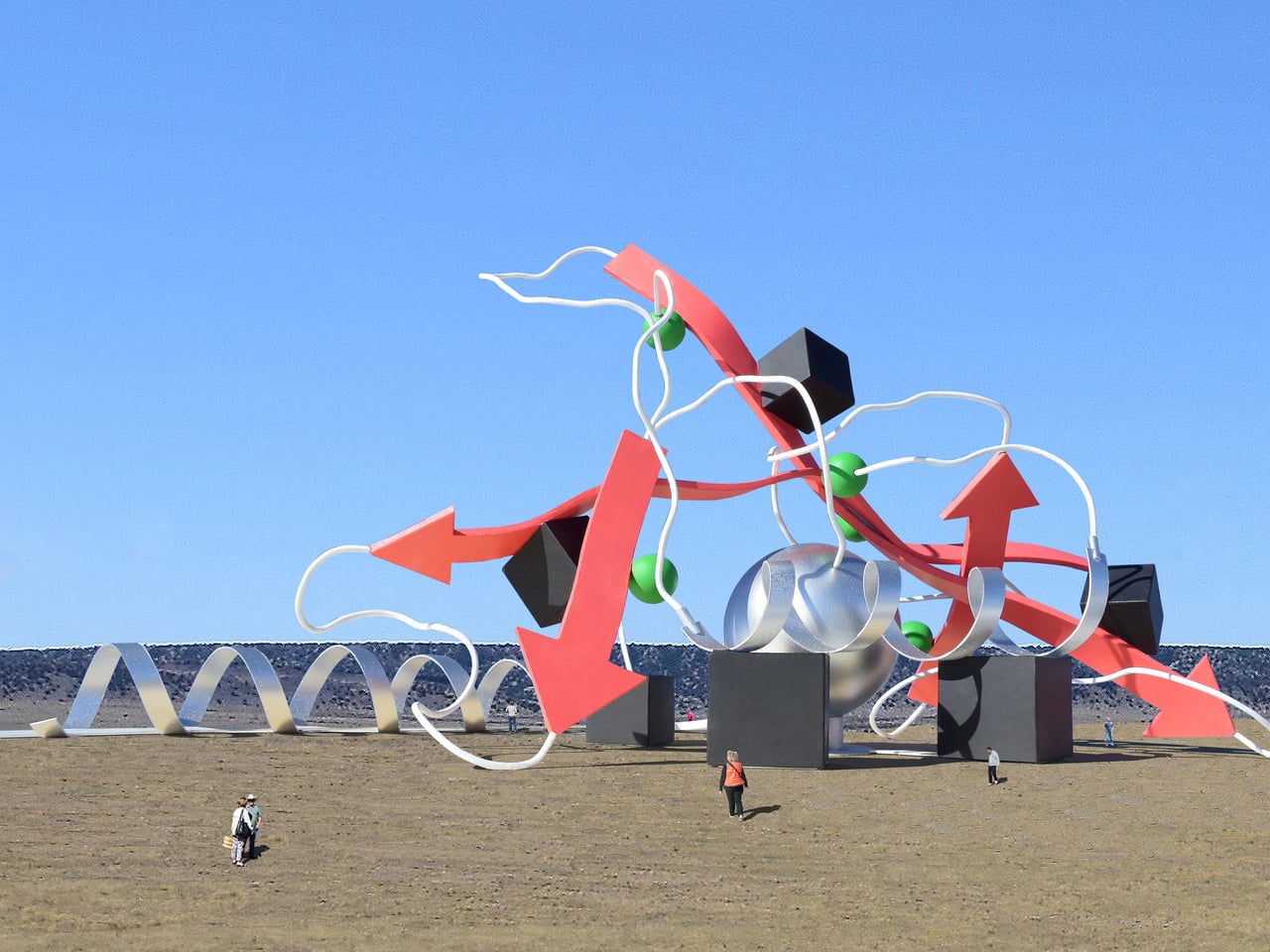
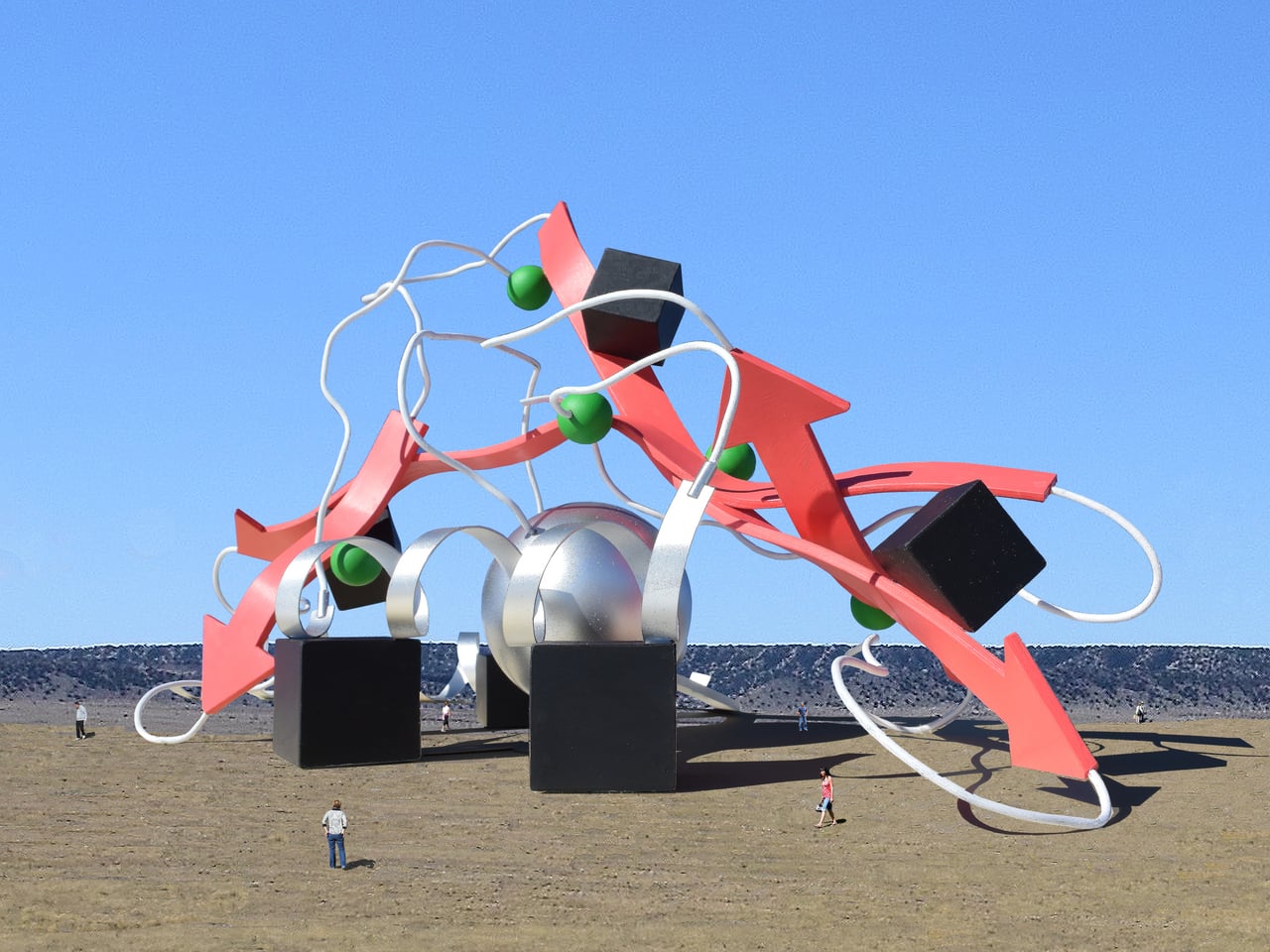
Michael Jantzen’s Folded Protein Molecule Research and Exhibition Center is part of his Fantasy Art, Architecture, Science series and proposes a facility where scientists researching protein folding could work and exhibit findings. The twist is that the entire complex is shaped like an exploded protein diagram, using the same coils, arrows, and rods that researchers use to visualize molecules. The building becomes its own subject matter, scaled up so you can walk through it.
Designer: Michael Jantzen
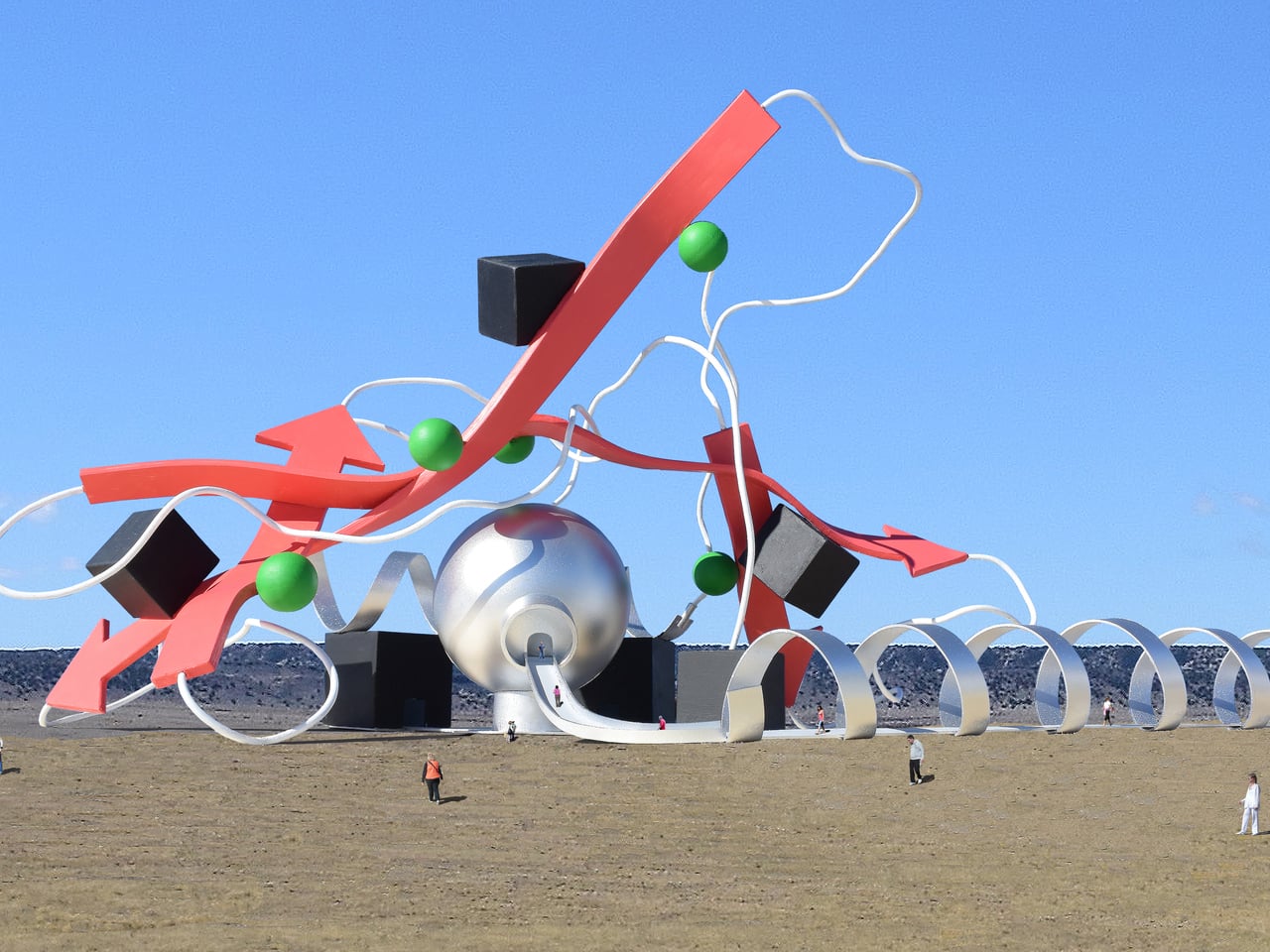
Protein folding is how a linear chain of amino acids twists into a three-dimensional structure that lets it function. Scientists represent these structures with bright symbols, coils for helices, arrows for sheets, bent rods for turns. Jantzen takes those flat symbols and imagines walking through them at architectural scale, turning abstract science into something you approach, enter, and move around inside instead of staring at on a screen.
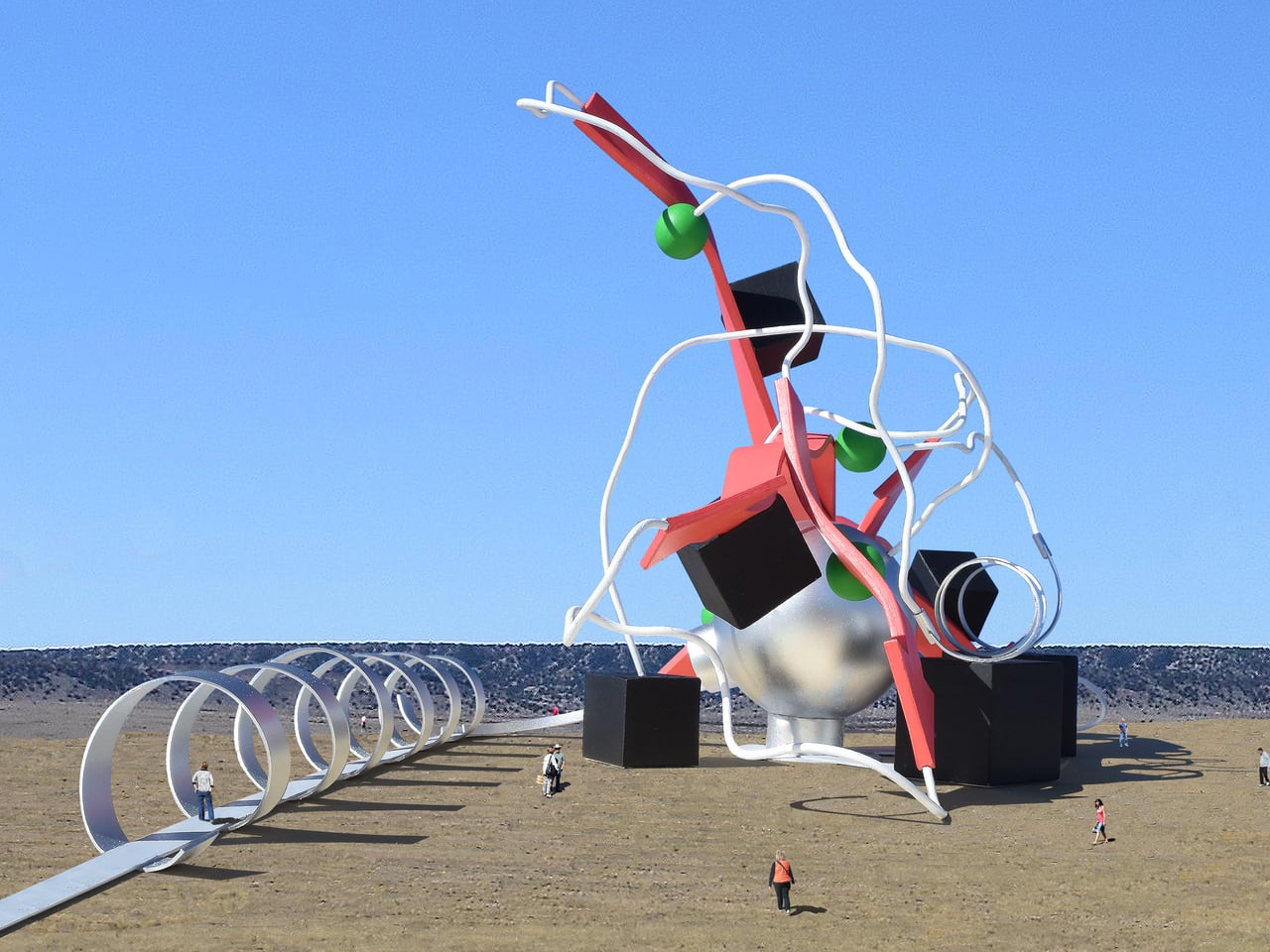
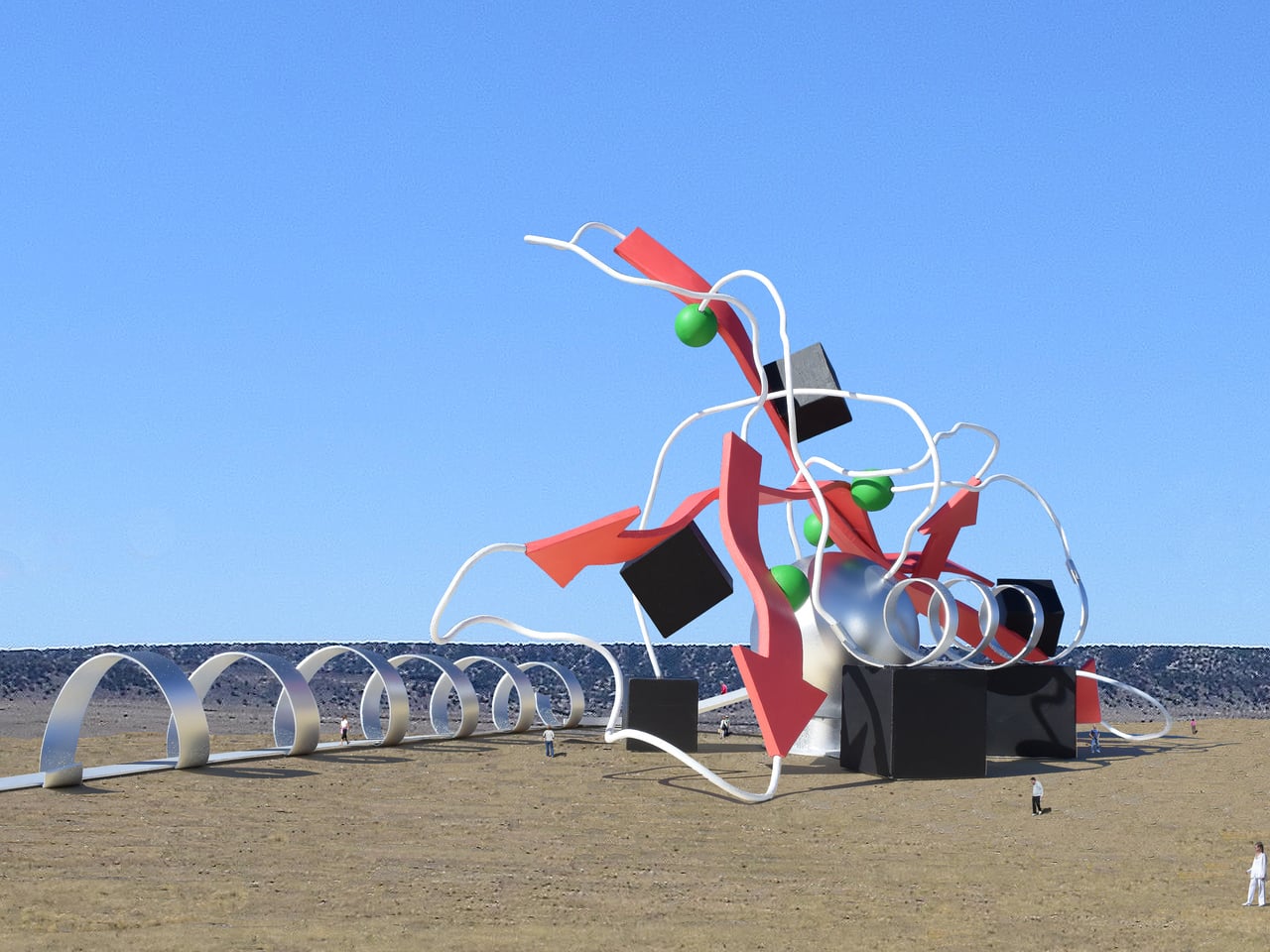
The three black cubes house research spaces, and the large silver sphere forms the exhibition hall, but they sit entangled in bright red arrows, white coils, green spheres, and smaller cubes. The functional rooms are inside these solids while symbolic elements wrap around and pierce them, so the working building is literally knotted up in its own subject matter. You would approach across an open landscape and see a giant folded molecule rising from the ground.
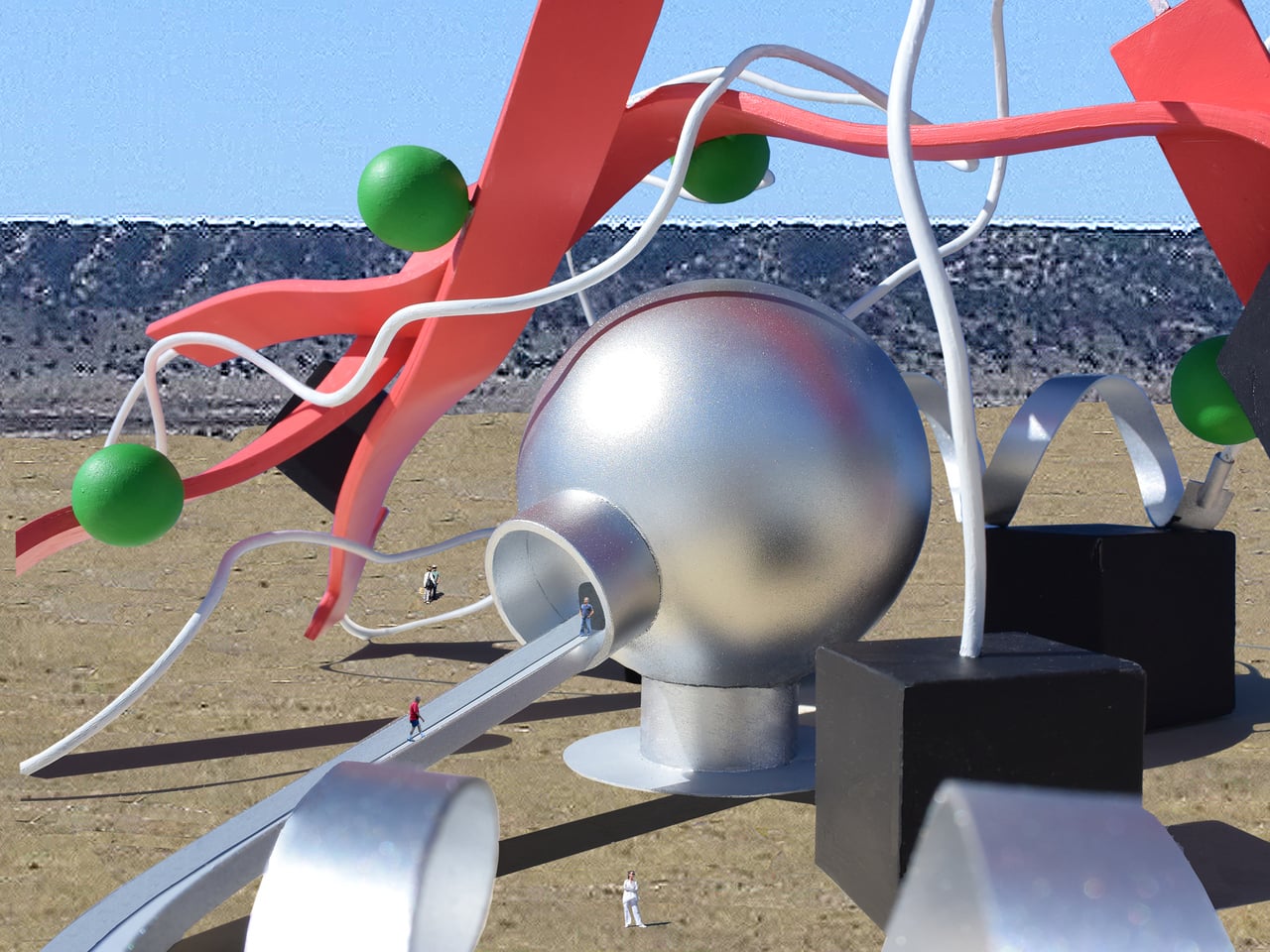
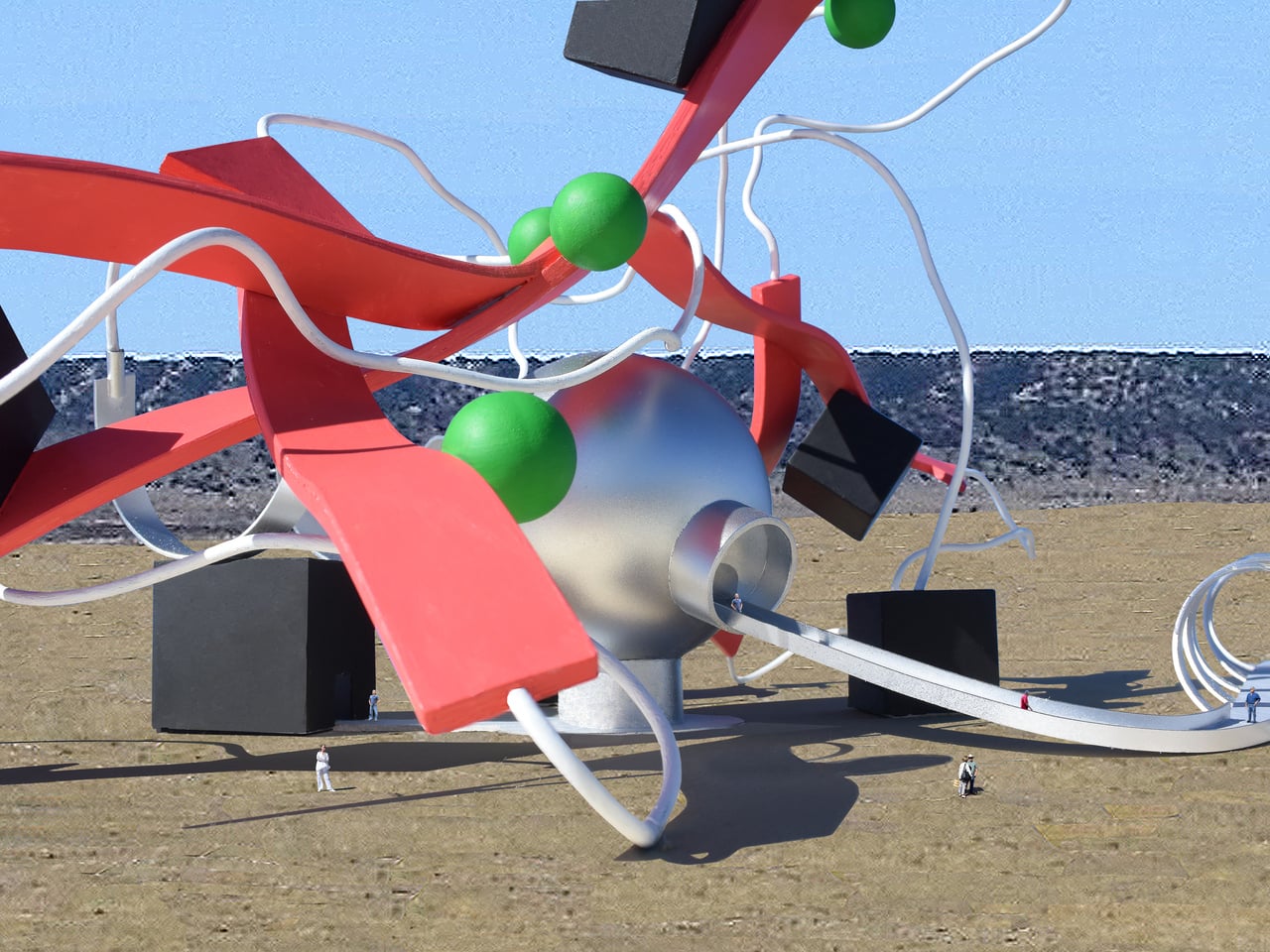
The arrows and coils arch over the complex like a frozen moment in a folding process, creating a canopy you move under. A long ribbon-like path leads toward an opening at the sphere’s base, suggesting a main entrance that feels more like entering land art than a museum. Visitors experience protein folding as a spatial journey, wandering through loops and under arrows before reaching labs or galleries inside.
Portions of the black cubes and smaller cubes attached to arrows are clad in solar panels, helping to power the center. It ties a facility dedicated to molecular science to renewable energy in the landscape. The same surfaces that read as abstract protein domains also quietly collect sunlight, merging symbolism and function in one set of geometric volumes without needing separate infrastructure or signage.
This proposal blurs the line between research campus, sculpture park, and science museum. It is unlikely to be built exactly as shown, but the idea, that a research center could wear its subject matter on the outside and invite people to wander through a giant protein, is compelling. For a field as abstract and important as protein folding, architectural storytelling might be what pulls it out of the lab and into public imagination.