
There’s something transformative happening in the world of workspace design, and it’s about time. For decades, executive furniture and lighting have been dominated by heavy wood, leather, and angular shapes that scream “traditional power.” But what happens when you design a table lamp specifically for a female executive? You get LEDA, a piece that challenges everything we thought we knew about authority, elegance, and what belongs on a power desk.
Created by designer Sai Divakar Boddeti during his Master’s program in Industrial Design, LEDA isn’t just another lamp. It’s a sculptural conversation starter that asks an important question: why can’t femininity and power coexist in the same object? The answer, as LEDA demonstrates beautifully, is that they absolutely can.
Designer: Sai Divakar Boddeti
The design language here is fascinating. Instead of defaulting to the typical corporate aesthetic, Boddeti looked to three distinct sources that embody both strength and grace: the gaze of a woman’s eye, the graceful posture of a swan, and the luminous quality of mother of pearl. These aren’t random choices. Each element speaks to a different aspect of feminine power that often gets overlooked in professional spaces.
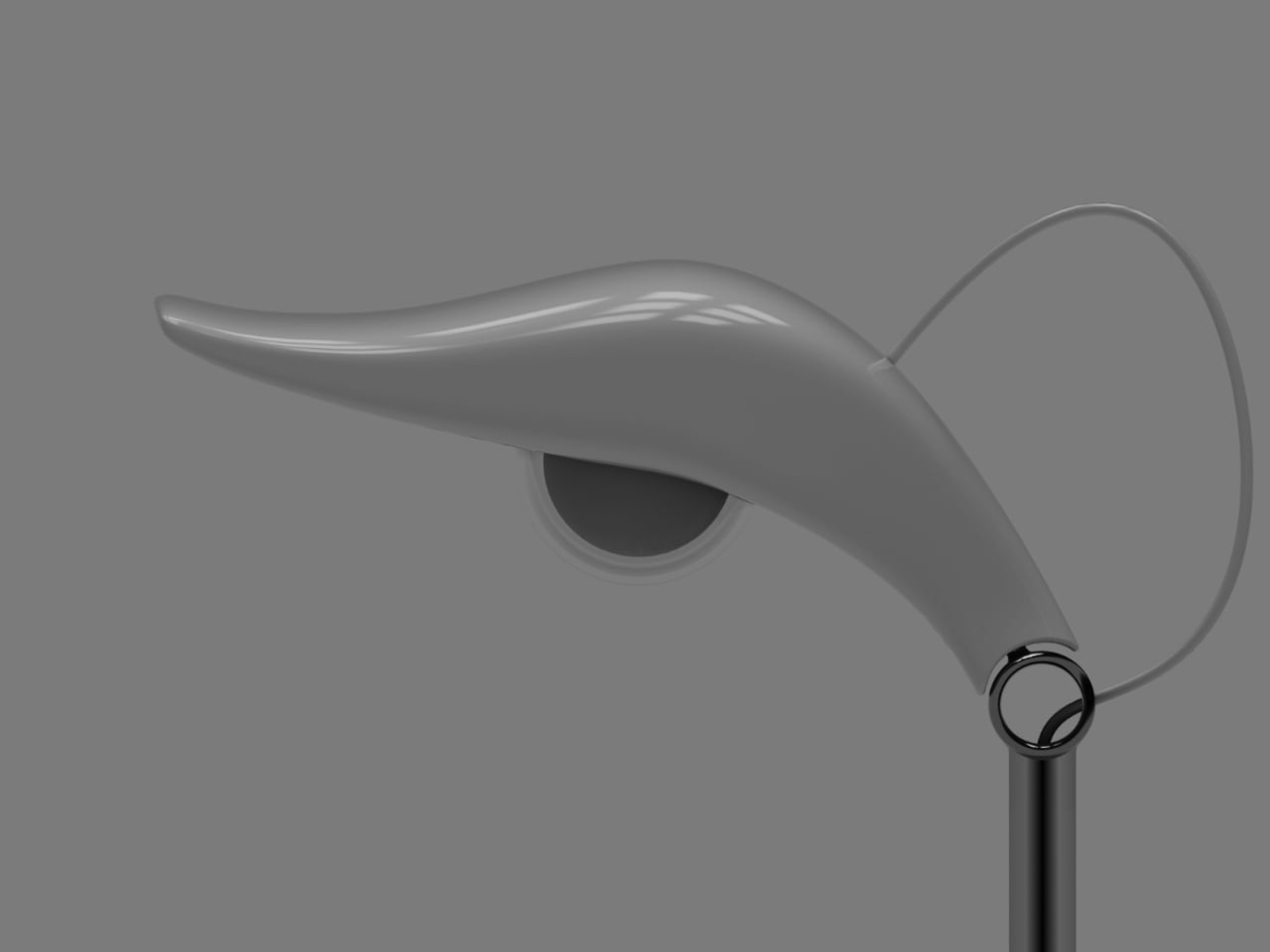
What really captures attention is how LEDA translates these organic inspirations into physical form. Look at the lamp and you’ll immediately notice the eye-like element integrated into its curved head, a subtle nod to focused elegance. The neck sweeps upward and curves with the exact poise of a swan mid-glide, neither timid nor aggressive, just perfectly assured. The entire form sits atop a circular base, creating a balanced silhouette that commands attention without dominating the space.
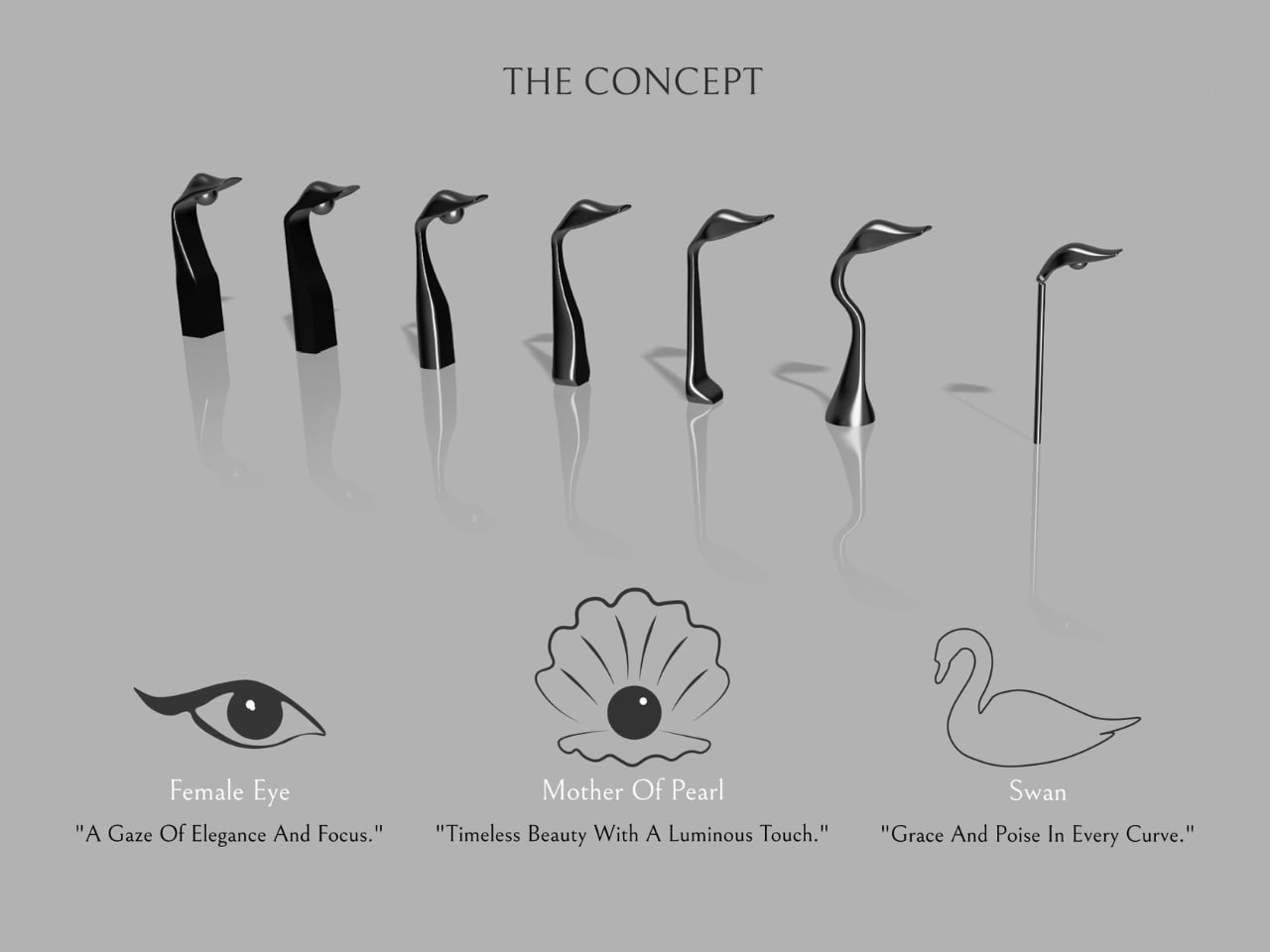
The development process visible in the concept iterations shows how Boddeti refined the swan inspiration from literal interpretation to sophisticated abstraction. The final design captures the essence without being obvious about it. It’s smart restraint that elevates the lamp from novelty to serious design object. The material choices amplify the concept. That mother-of-pearl inspired finish gives certain versions of LEDA a soft iridescent quality that shifts subtly depending on the light and viewing angle. It’s “timeless beauty with a luminous touch,” as the design philosophy states. This isn’t just description, it’s what you actually see when the lamp catches the light.
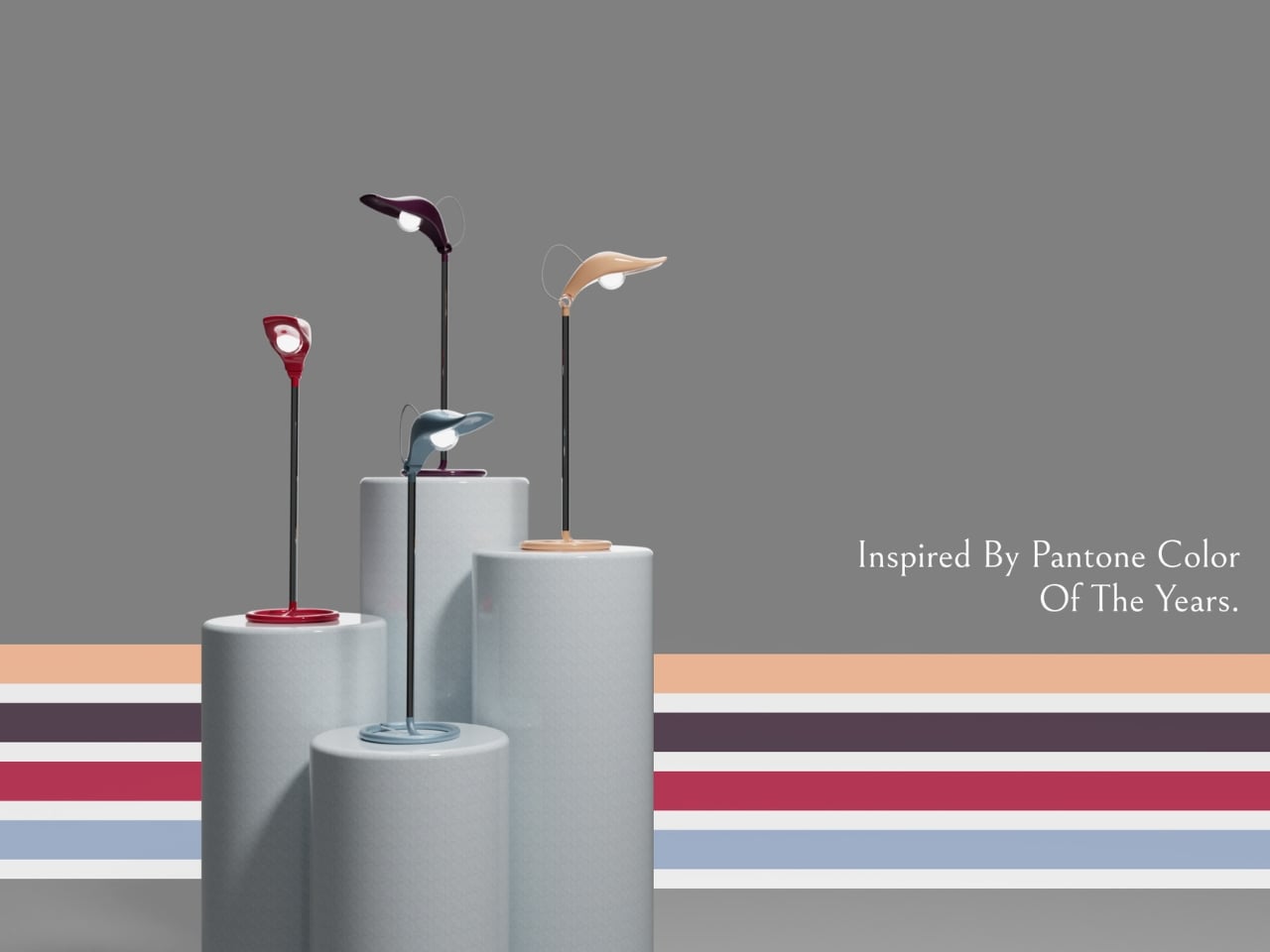
Here’s where LEDA gets even more interesting: it comes in multiple colorways inspired by Pantone Colors of the Year. We’re talking deep burgundy, sophisticated blue-grey, warm peach, and bold red. This isn’t just product variation for the sake of options. It’s recognition that feminine power looks different for different people. Some days you want the quiet confidence of grey-blue. Other days you want the unapologetic boldness of red.
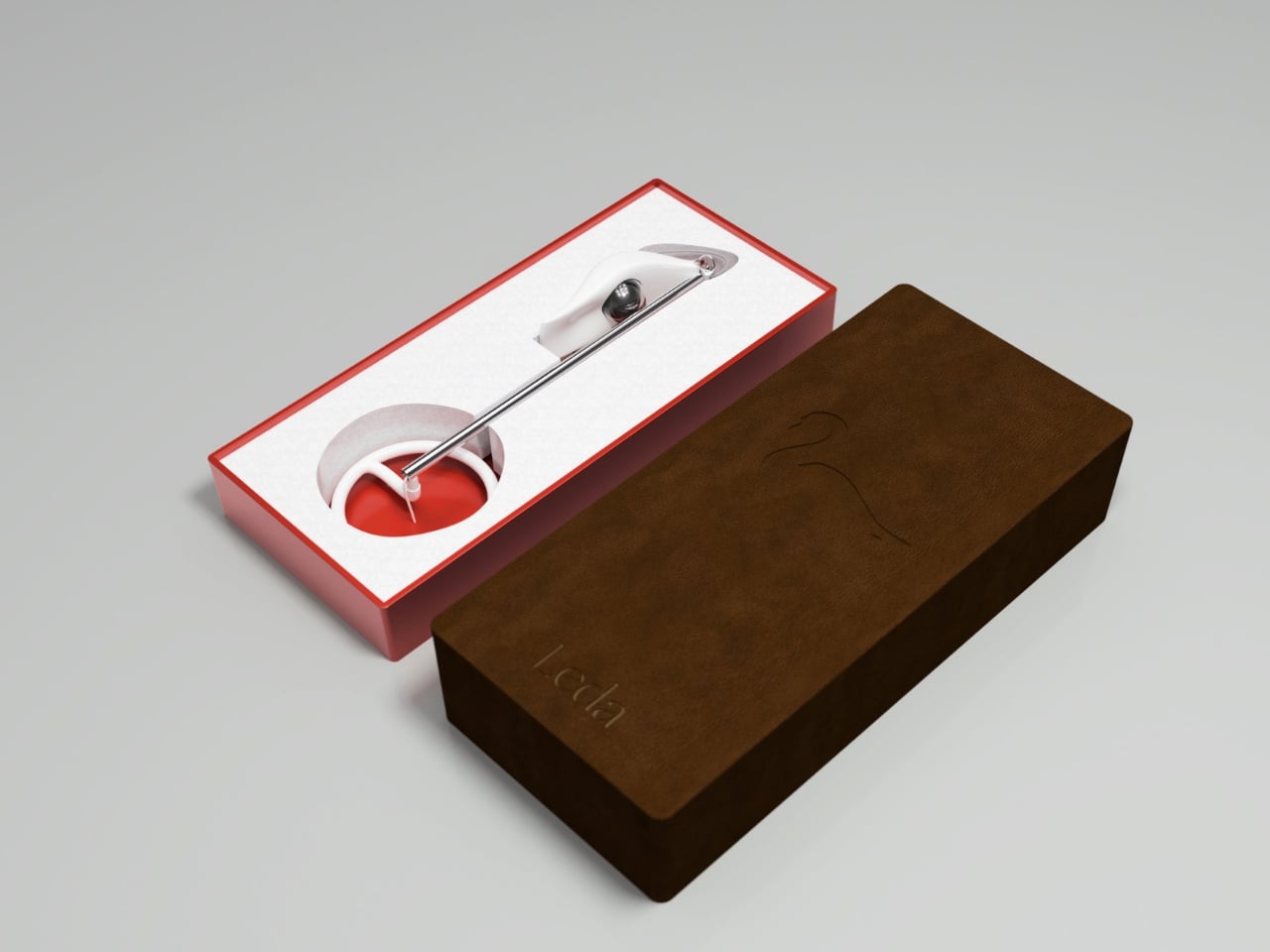
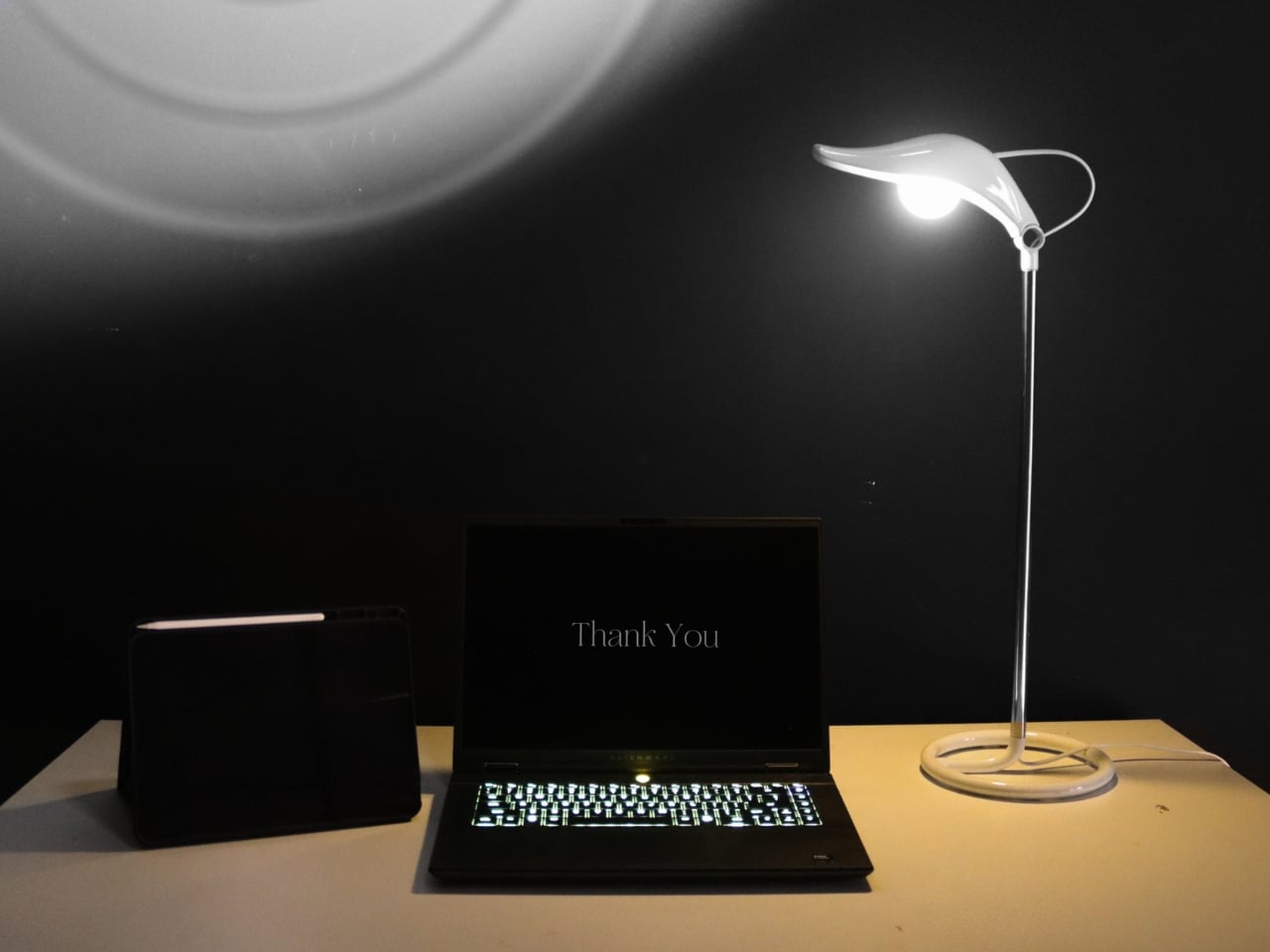
The presentation matches the ambition. LEDA arrives in premium packaging with embossed branding on a suede-like brown outer box, opening to reveal the lamp nestled in a red-lined interior. This is intentional luxury positioning. The packaging communicates that this isn’t an impulse purchase from a big box store. It’s an investment piece that deserves ceremony. In workspace context, LEDA transforms the desk. That tall, slender stem gives it presence without bulk. The curved head directs light exactly where you need it, but the form itself becomes a focal point even when switched off. It’s the kind of object that makes people pause and ask questions.
The name LEDA itself adds cultural weight. In Greek mythology, Leda is associated with the swan, connecting directly to the lamp’s form language. This isn’t surface-level symbolism. It’s deliberate anchoring in storytelling tradition that gives the design depth beyond its immediate visual impact. What’s particularly refreshing about LEDA is how it rejects the false choice between functional and beautiful. The lamp illuminates your work perfectly while serving as sculpture that reflects identity. For female executives who’ve often had to navigate spaces designed with someone else in mind, having objects that reflect multidimensional identity can be quietly revolutionary.