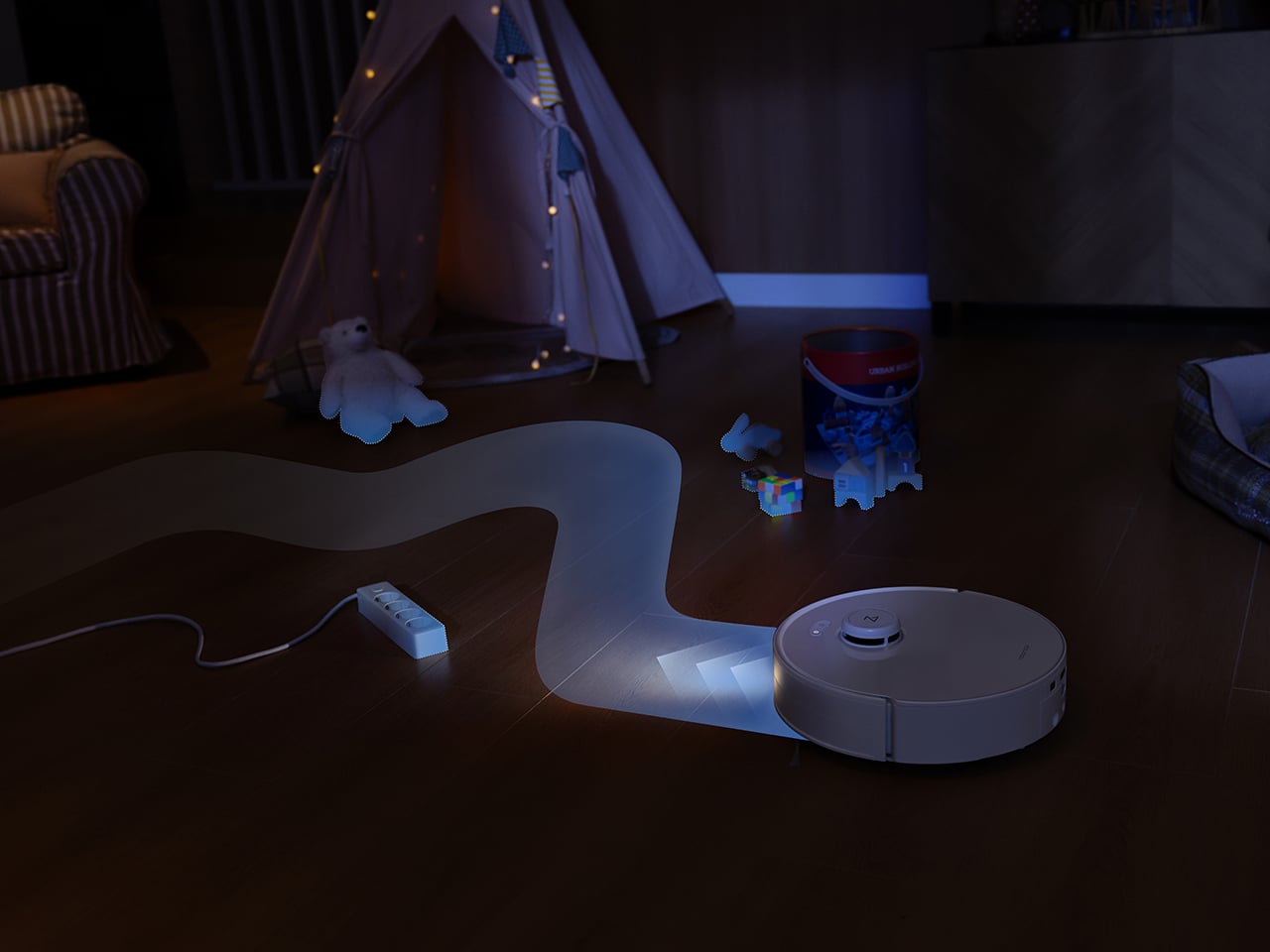
Most robot vacuum-mop combos on the market right now do an acceptable job on light dust and can push a damp pad across hardwood, but ask them to handle a real kitchen spill or a week’s worth of tracked-in dirt from a dog, and the cracks start to show. Streaky floors, damp patches that take twenty minutes to dry, wheel marks through the mess, and mop pads that smell like a gym locker after three days. The promise has always been “set it and forget it,” but the reality for most owners involves regular pad washing, manual spot cleaning, and a nagging sense that the robot is just redistributing grime rather than actually removing it. Homes with kids, pets, or open-plan layouts where the kitchen flows into the living room need more than a technical pass, they need floors that are genuinely clean and dry enough to walk on immediately.
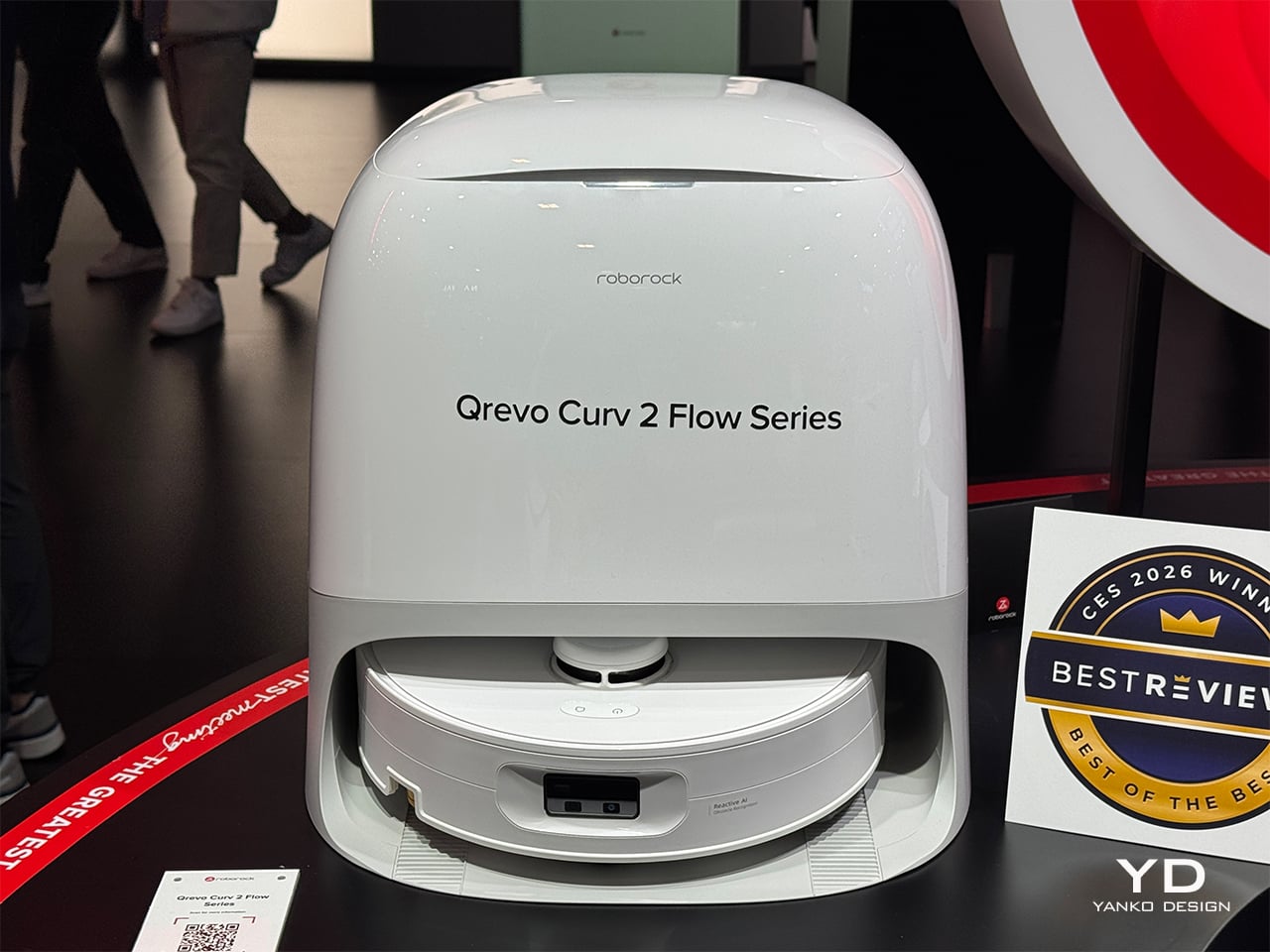
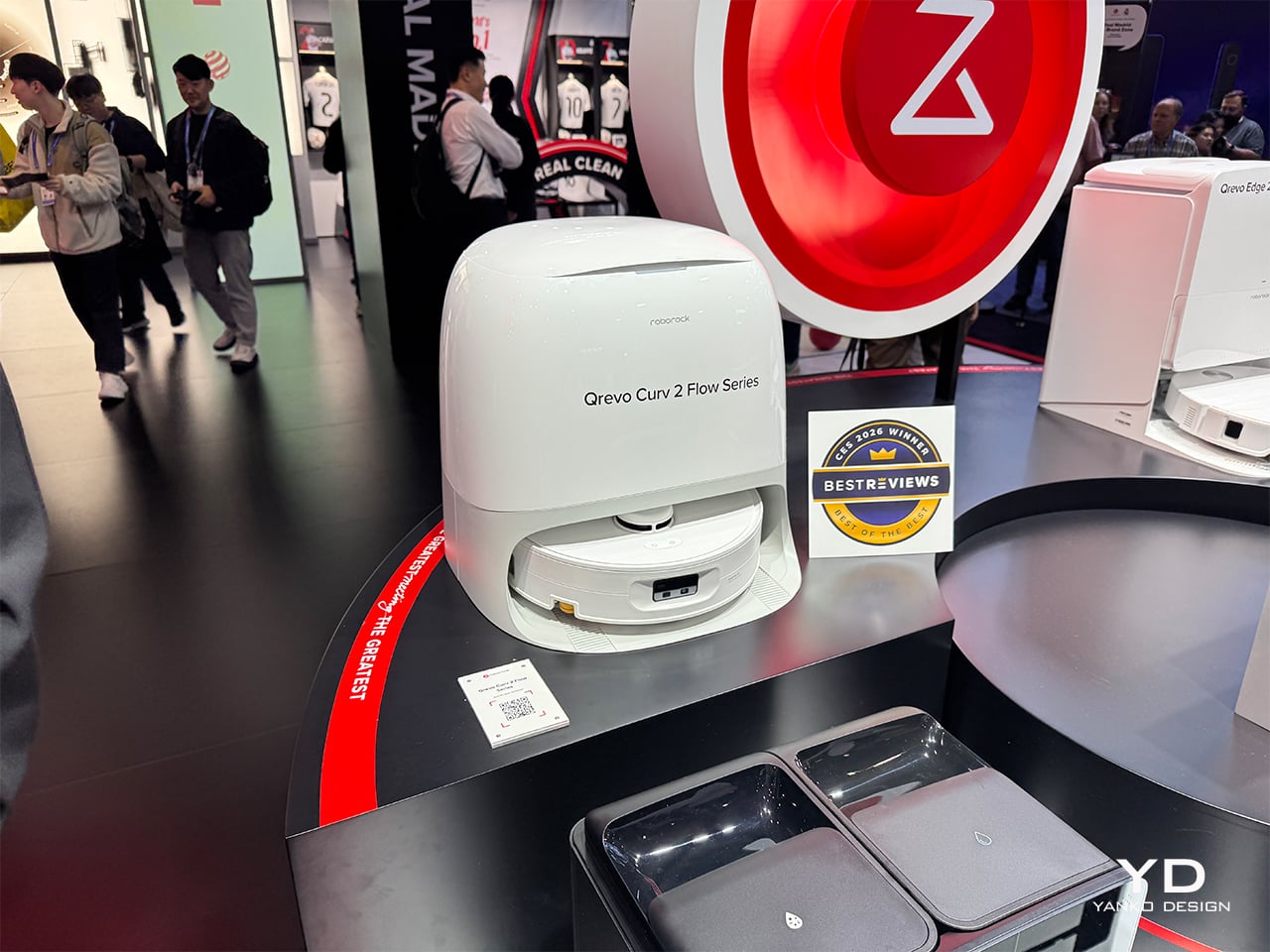
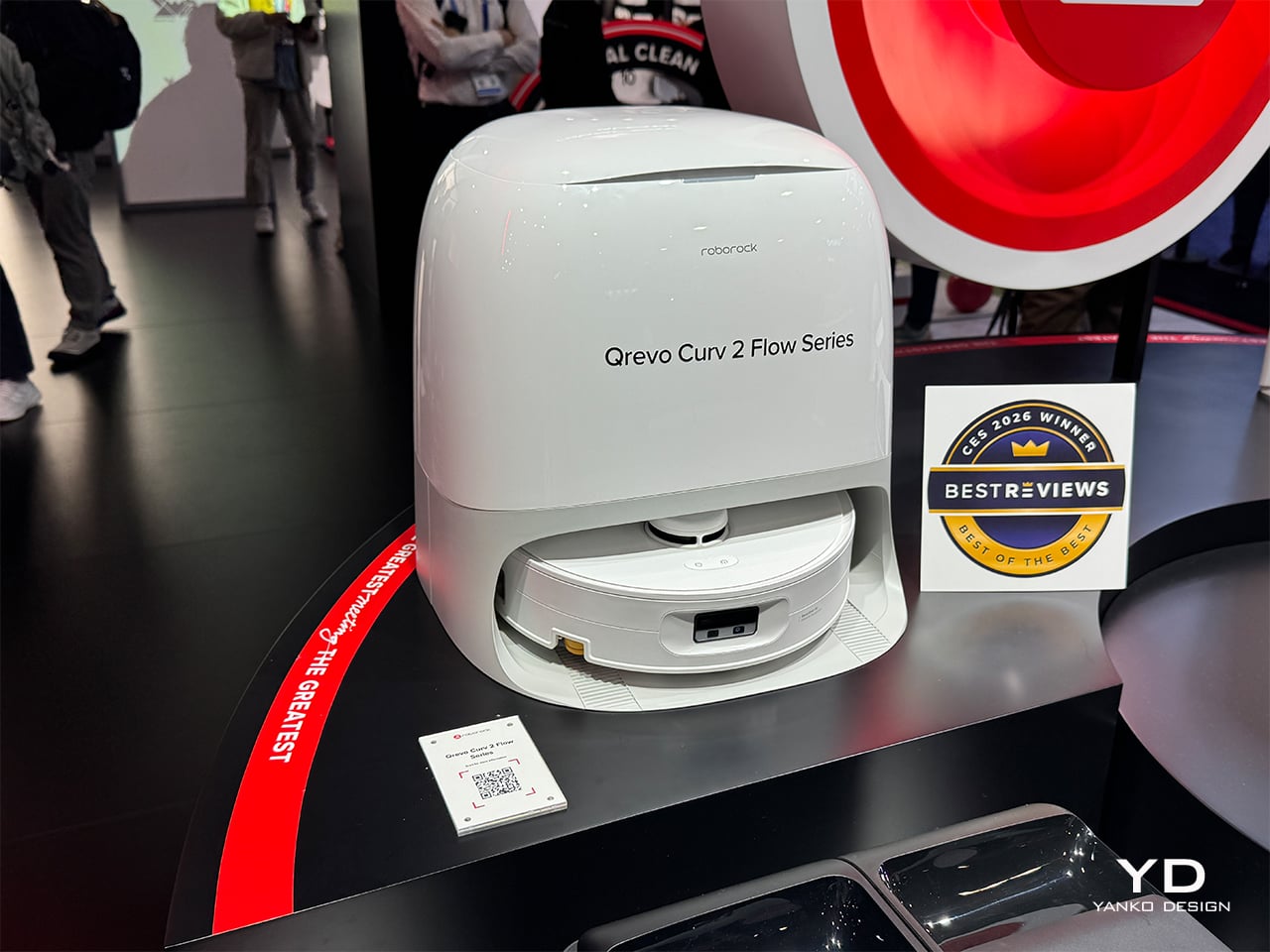
Roborock’s answer to that gap is sitting on the show floor at CES 2026, and it is called the Qrevo Curv 2 Flow. Positioned as the brand’s first “Real Clean Challenge” hero product, it is engineered specifically around what North American households actually throw at a robot vacuum: sticky spills, pet messes, carpets next to hard floors, and the expectation that a thousand-dollar machine should not become another maintenance project. The pitch centers on “real dry and real clean” performance, delivered through a one-pass roller-mop system, automatic wet/dry carpet separation, and a dock that handles most of the gross maintenance work without intervention. What follows is a walkthrough of the five things that stand out most after watching it run through Roborock’s booth demos, with an eye on what actually matters once this machine is navigating a real living room.
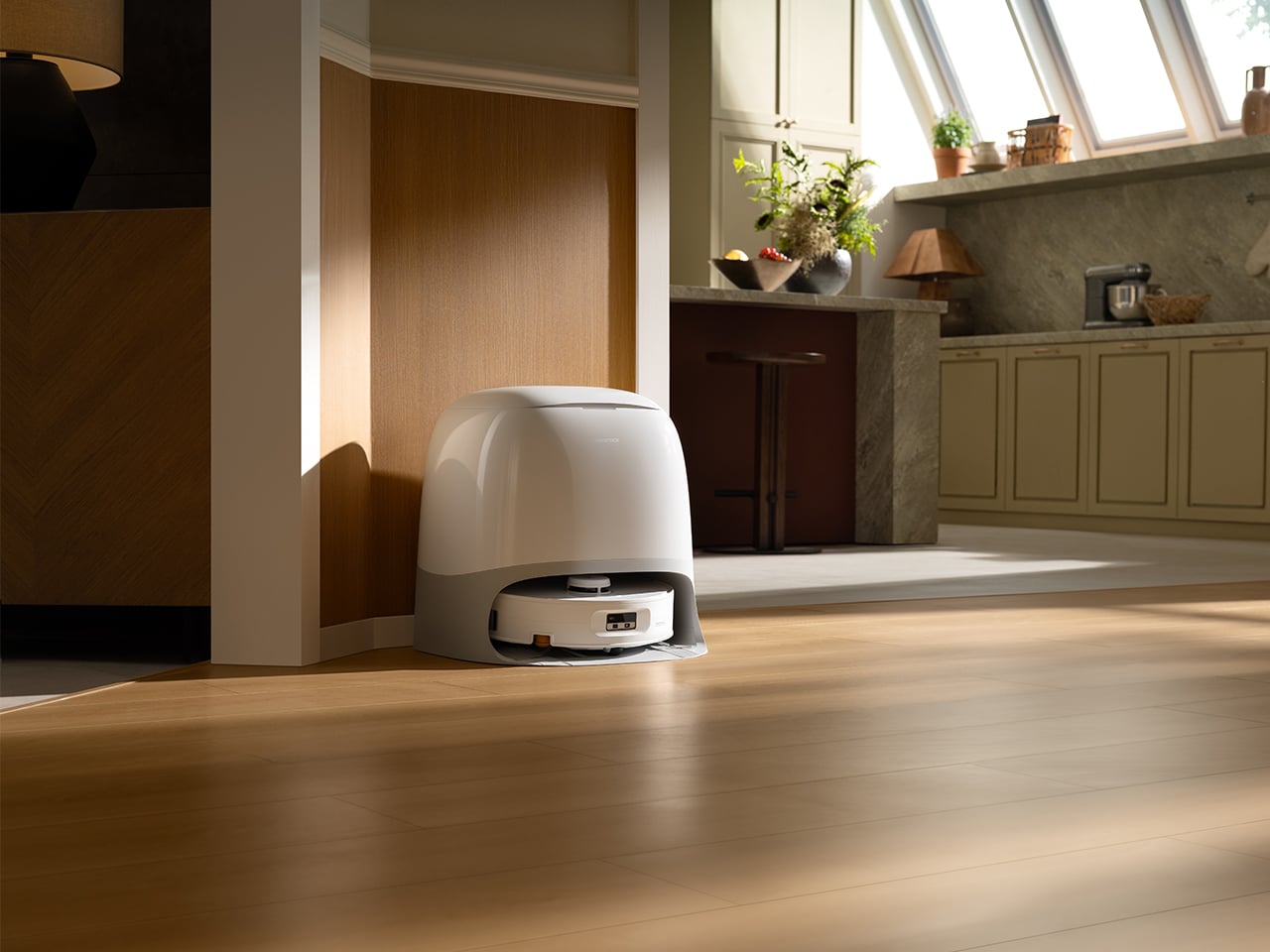
Designer: Roborock
1. One-Pass Roller Cleaning That Actually Looks Finished
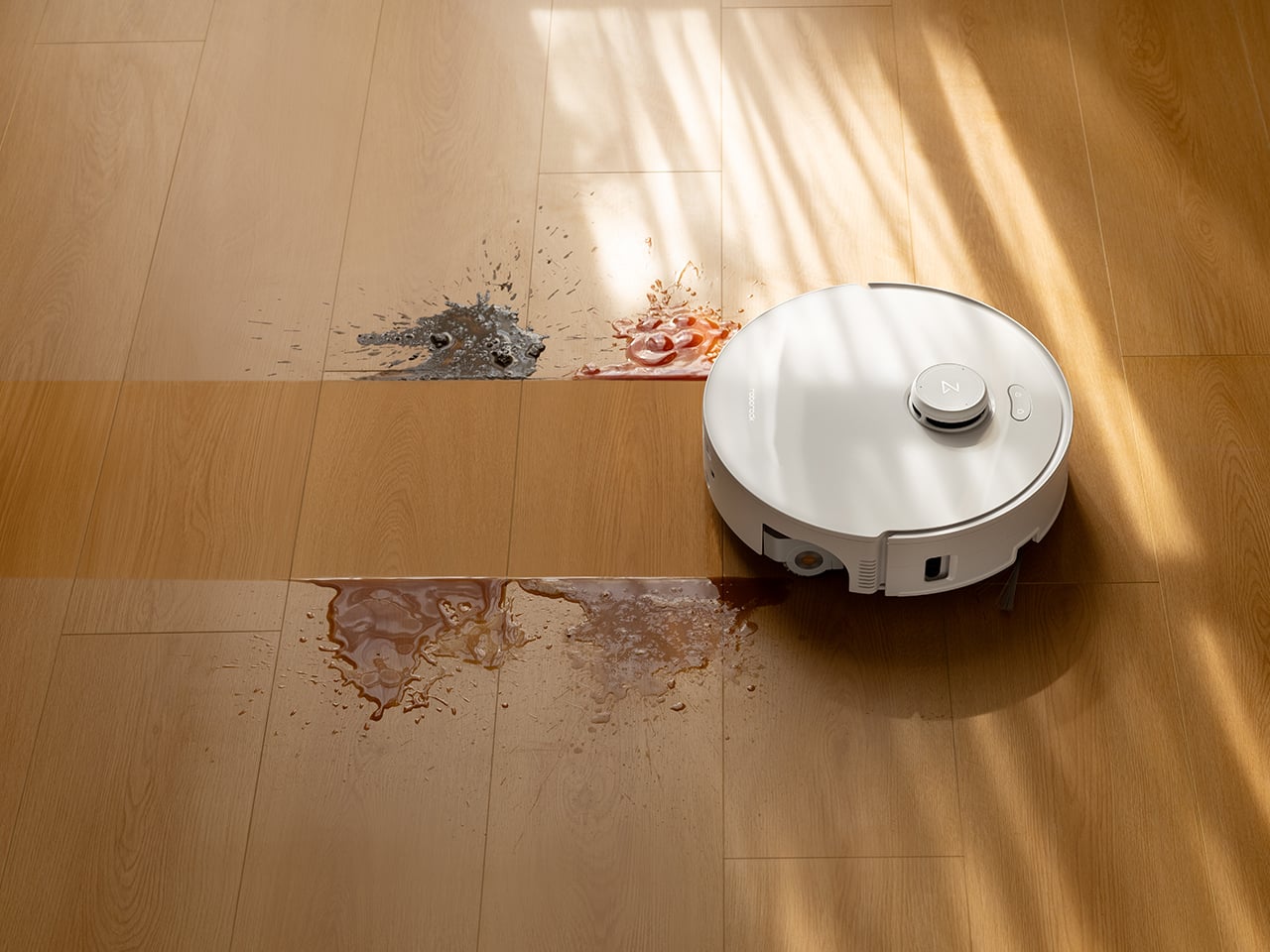
The centerpiece is a 270mm-wide roller mop, noticeably wider than the typical 180mm rollers on most competitors. That extra width means fewer passes to cover the same area, and in booth demos running over simulated coffee spills and muddy pet prints, the difference is visible. The system applies 15N of downward pressure (roughly 2.5 times the previous model, equivalent to about 1.5kg of force) combined with 220 RPM rotation, so the roller scrubs rather than just wipes. Where shorter rollers leave streaks or require a second pass, this one clears the mess in a single stroke and moves on.
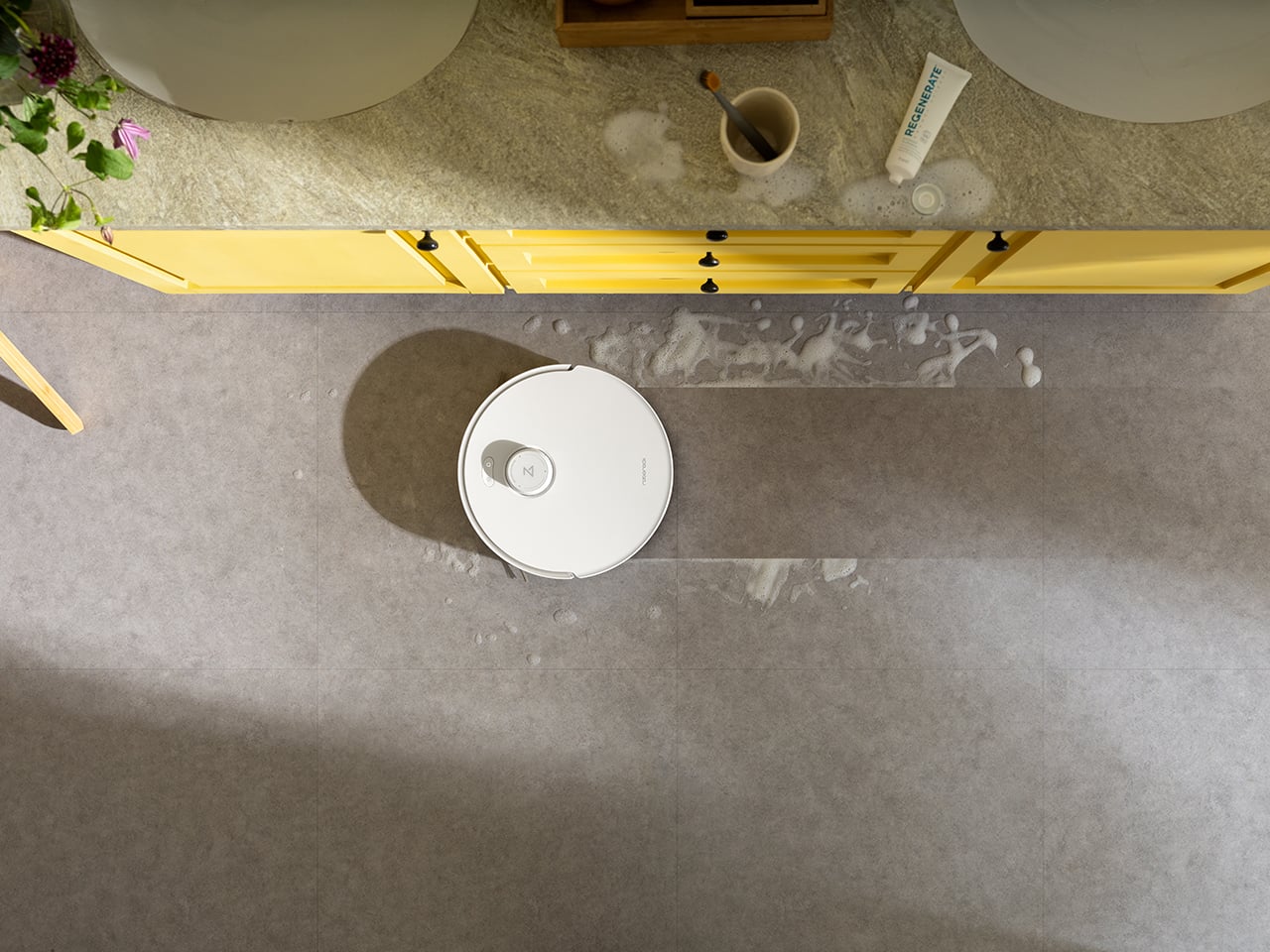
What keeps it from smearing dirty water around is the SpiralFlow real-time self-cleaning system. Eight precision hydration points distribute clean water across the roller while a built-in floating scraper removes excess moisture and channels dirty water into a separate wastewater tank. The four-step process (hydrate, control moisture, scrub, collect) happens continuously while the robot moves, so every pass uses a relatively fresh section of roller. The floating scraper automatically adjusts to the roller surface, unlike fixed scrapers on track-mop designs that apply uneven pressure and leave streaks. In controlled spill tests, floors look finished after one pass and dry to the touch within a couple of minutes.
2. Carpets Stay Dry, Even When You’re Not At Home
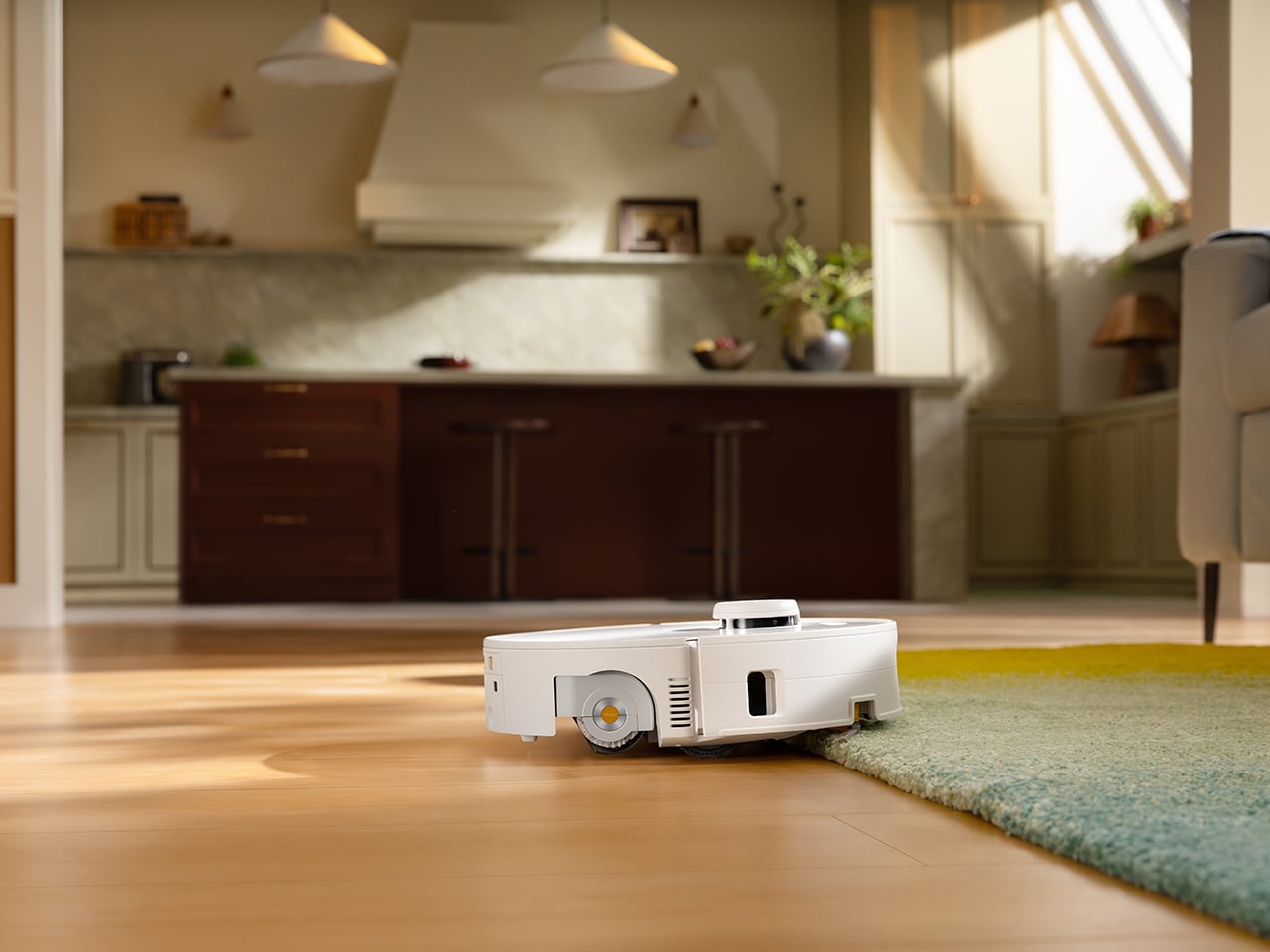
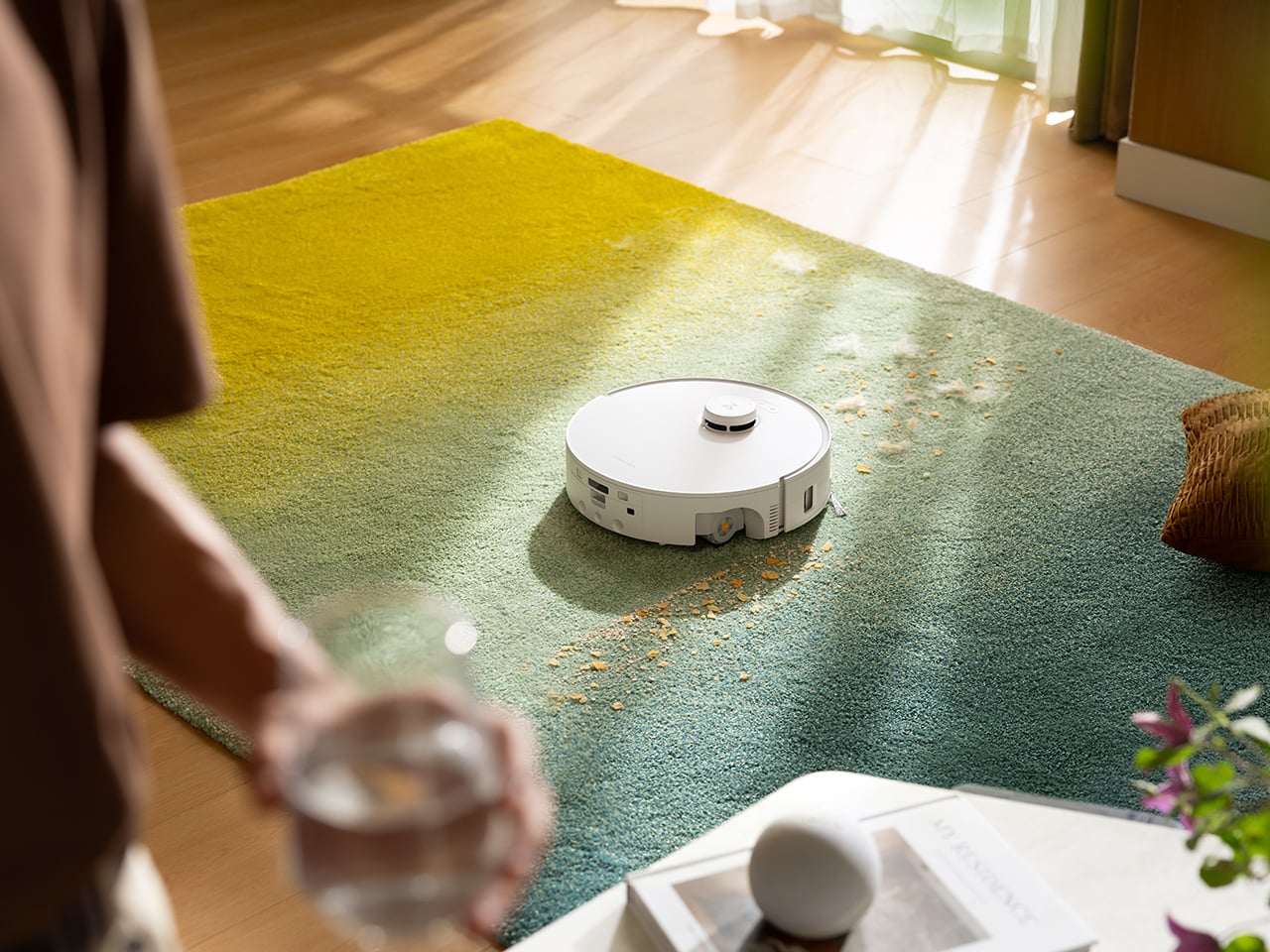
Before the robot reaches a carpeted area, the roller lifts up to 15mm off the floor while a roller shield simultaneously extends to cover the mop, creating a physical barrier that blocks both moisture and dirt from transferring onto carpet fibers. The system works with carpets up to about 13mm pile height, and for taller rugs, the app lets users set custom behaviors. In the demo setup with a kitchen runner adjacent to tile and a living room area rug, the robot transitions cleanly between surfaces without leaving visible damp spots on carpet edges, which is usually where most robots fail.

That edge transition matters for homes with mixed flooring, especially where a spill on hard floor sits right next to a rug. Most two-in-one robots either roll onto the rug and react (leaving damp edges) or force users to draw manual no-go zones around every carpet. The shield solves that by keeping the wet roller physically separated during the entire crossing, rather than relying solely on lift height.
3. Edge Cleaning Without the Baseboard Crunch
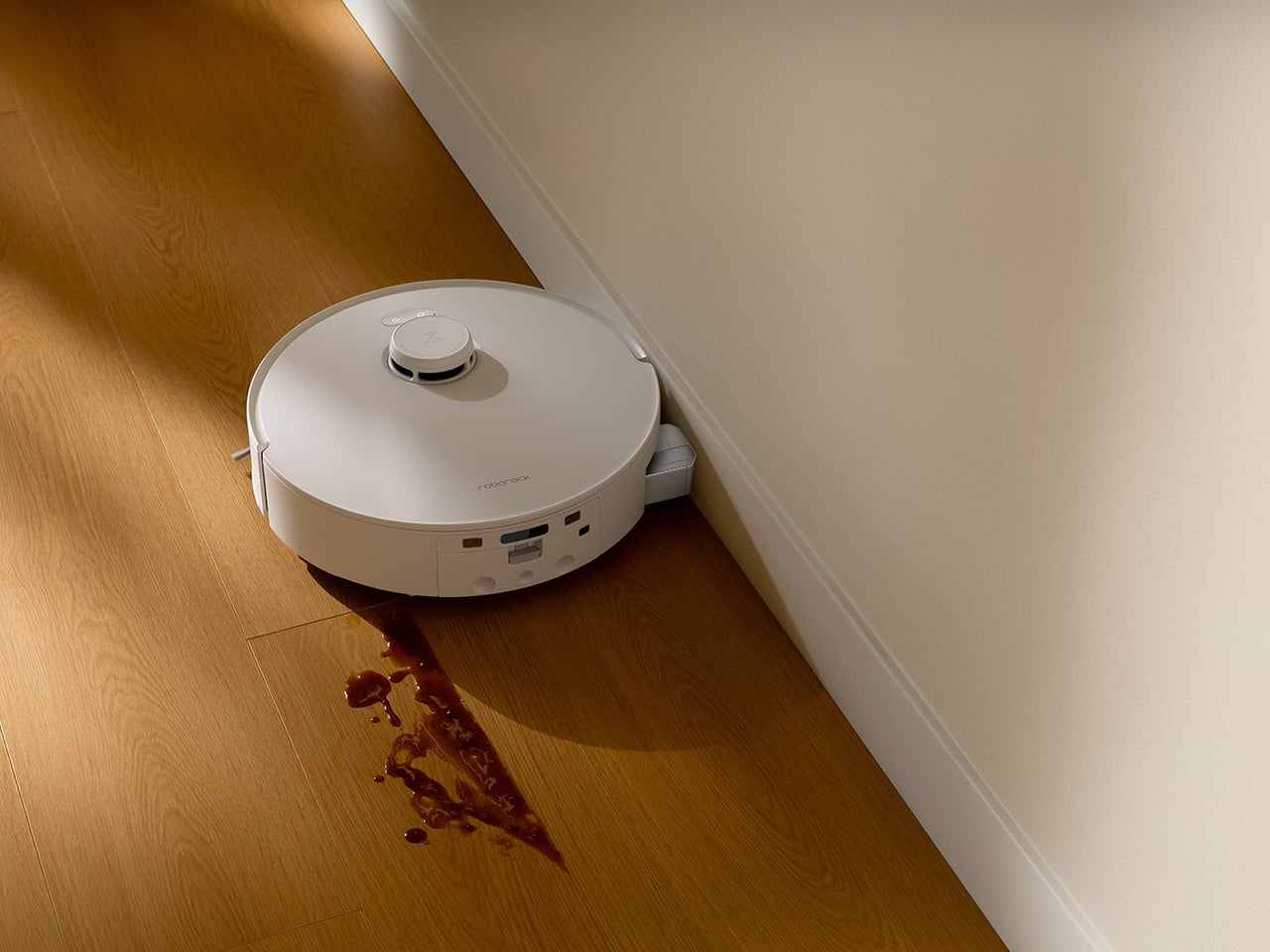
Getting close to walls has always been a trade-off: stay back and leave a visible dirt line, or bump repeatedly into trim and sound like the robot is attacking the baseboards. The Qrevo Curv 2 Flow uses an edge-adaptive roller mop that extends outward to reach within about 10mm of the wall, rather than relying entirely on side brushes. The precision extension mechanism activates when the robot detects an edge, allowing the roller to cover areas that would normally be missed without requiring the entire robot body to press against the wall.
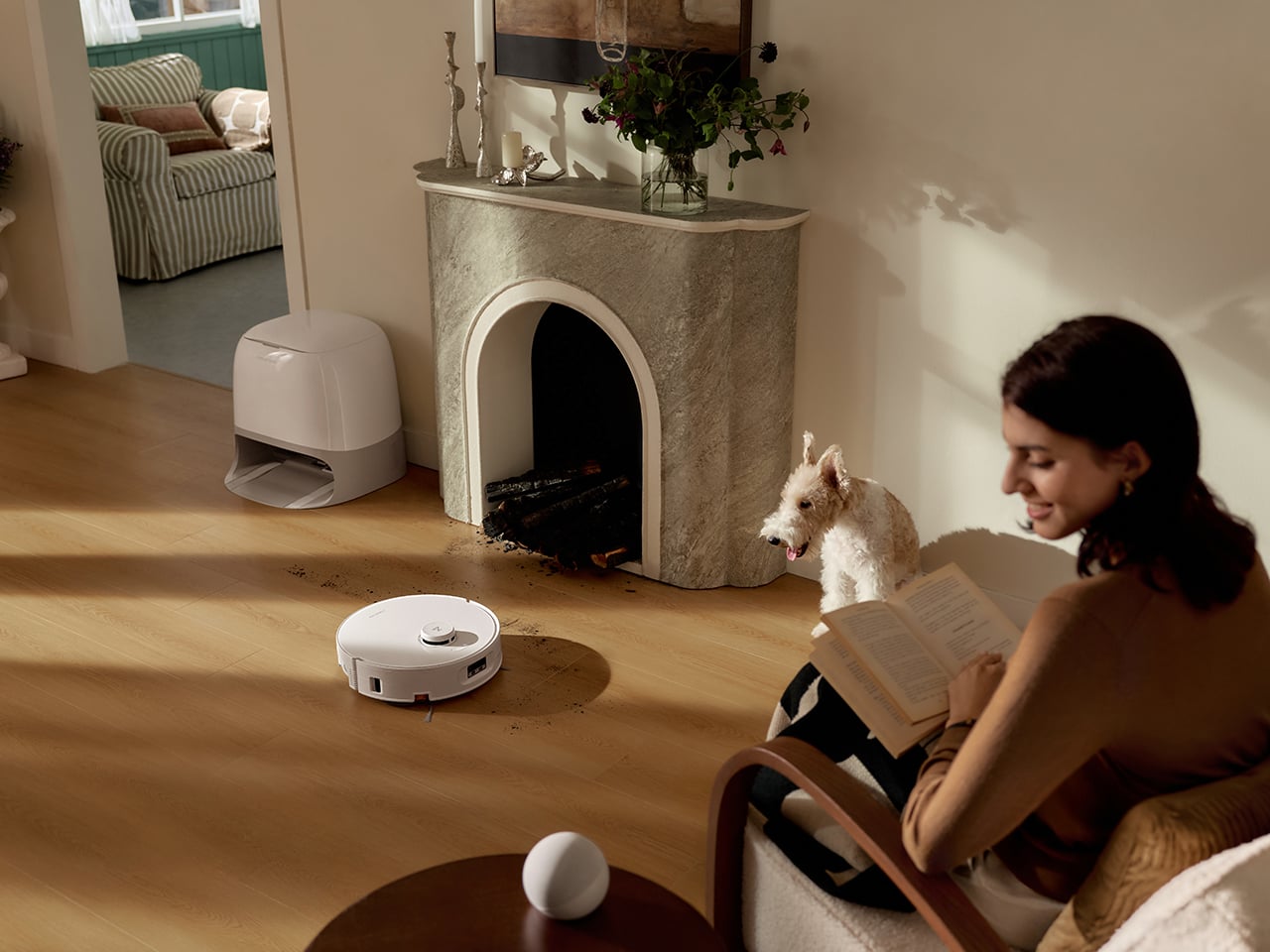
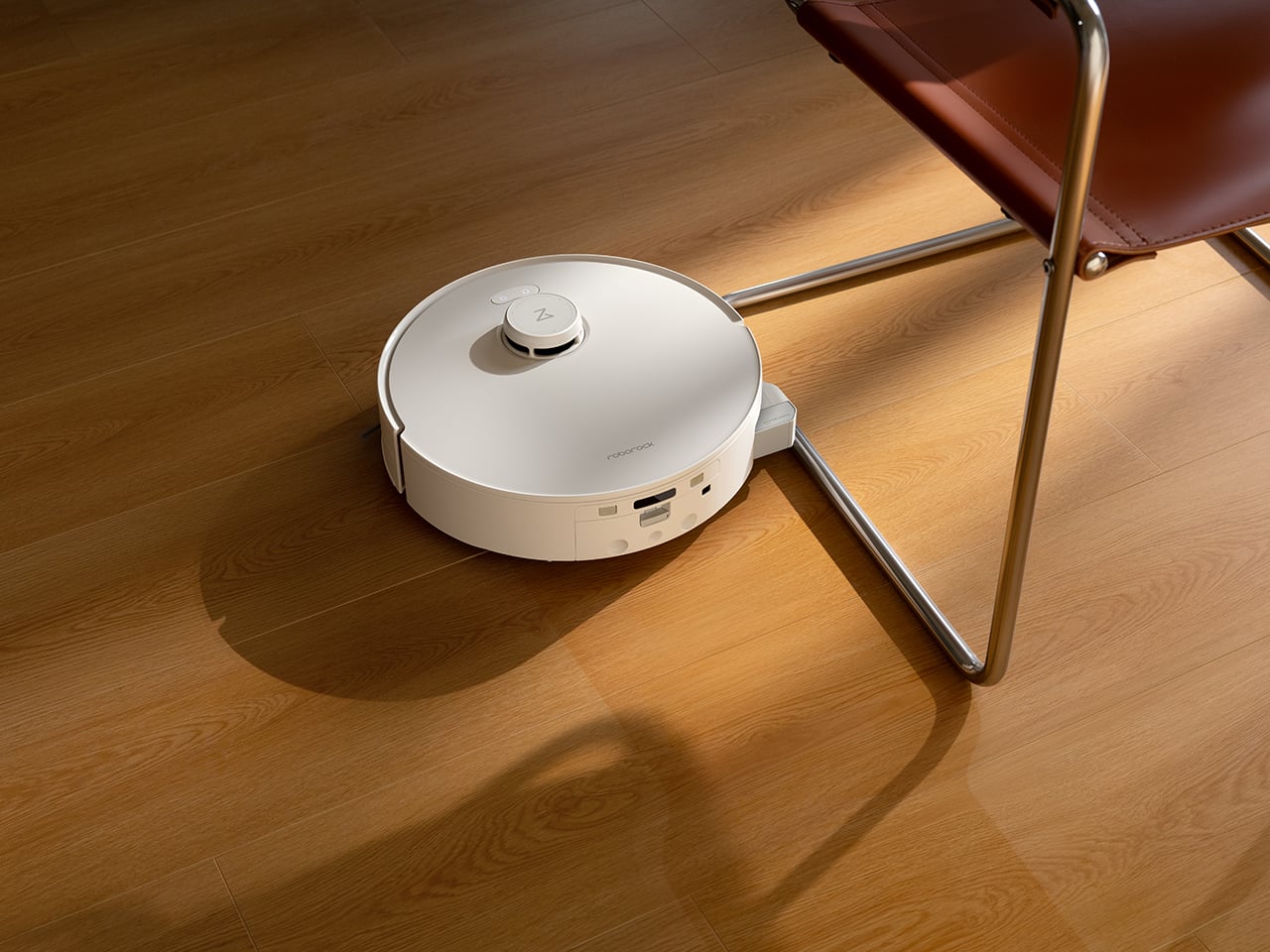
In booth demos around skirting boards, TV cabinet legs, and furniture corners, the coverage is noticeably better than non-extendable designs, which typically leave a 2-3cm gap that accumulates dust. The other advantage is noise and wear. Robots that compensate for short rollers by repeatedly bumping into walls create scraping sounds and can scuff paint over time. The extendable design means the robot maintains a few millimeters of clearance while still getting the roller right up to the edge, reducing both noise and long-term cosmetic damage.
4. Hair Management That Doesn’t Turn Into Weekly Surgery
The DuoDivide main brush uses a split design with two counter-rotating arms that move hair from both ends toward the center, cutting transport distance in half. At the center gap, the two brushes spin at slightly different speeds, creating a differential effect that tears apart bundled hair rather than letting it wrap into a solid ring. A precision scraper strips the hair off, and high-flow suction pulls it into the dustbin. After a simulated hair test at the booth (long hair and pet fur spread across hard floor and low-pile carpet), the brush remains visibly clean with no wrapping at the ends and no hair stuck in the dustbin inlet.

The side brushes use dual lifting arc designs with an asymmetrical spiral arc shape. As the brush rotates, centrifugal force pushes hair outward toward the bristle ends instead of letting it spiral inward toward the hub, and a soft rubber baffle at the base blocks hair from wrapping around the mounting point. Both side brushes also lift automatically when switching to mop-only mode or approaching wet messes, preventing them from getting caked with damp debris. Whether the zero-tangle performance holds up over weeks in a real home is the open question, but the engineering choices are mechanically sound approaches to the hair problem.
5. A Dock That Cleans Like a Mini Washer, Not Just a Parking Spot
When the robot returns to wash its roller, the dock first drains the dirty water from the previous clean, then rinses the roller with fresh water, rather than back-washing dirty water into the roller. While the roller is being cleaned, it alternates between forward and reverse rotation while dual scrapers comb through the fibers from both directions. The dock heats wash water to 75°C (Roborock claims 99% bacteria removal) and runs 55°C warm air drying afterward to prevent mildew and odor. Intelligent dirt detection monitors how dirty the water is during washing, and if it detects heavy soiling, it automatically extends wash duration and can trigger the robot to return to heavily soiled areas for an additional mopping pass.
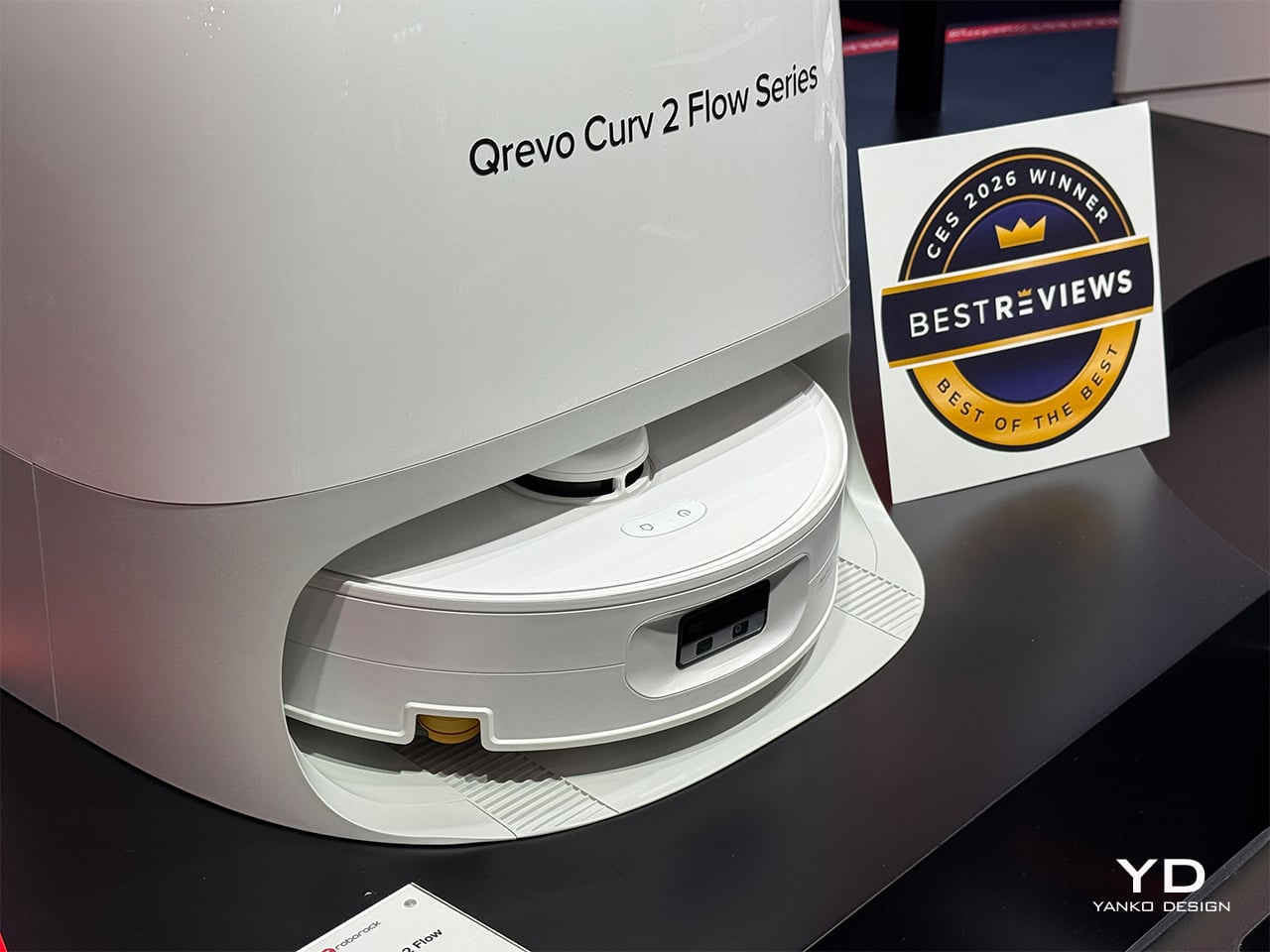
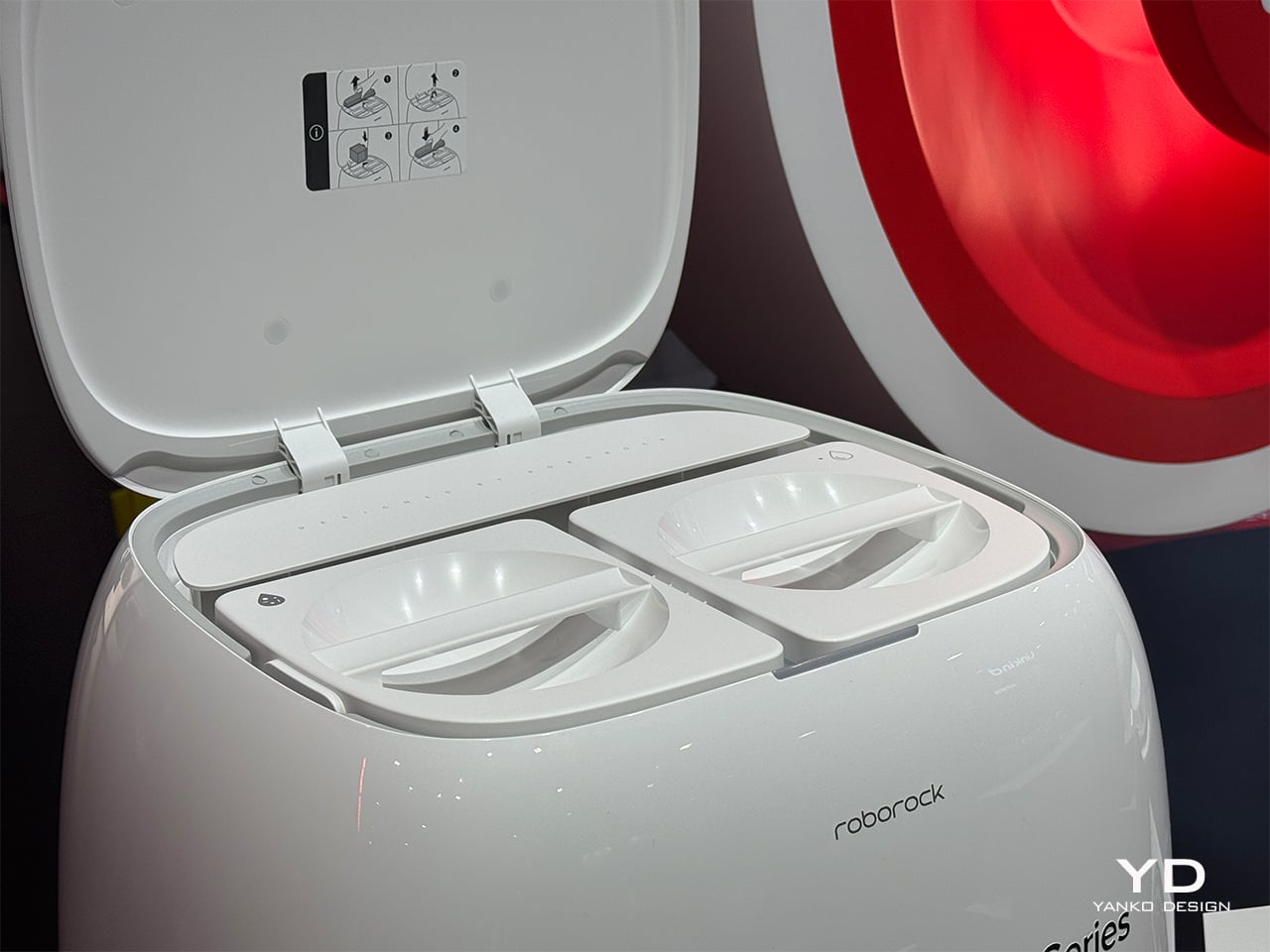
The dock handles auto dust emptying with a 2.5L bag capacity (roughly 65 days under typical use), and more importantly, the roller, roller shield, dirty water tank, and dock base are all designed for quick removal and manual cleaning. Unlike competitor docks with non-removable shields and narrow gaps that accumulate hidden grime, everything that touches dirty water can be pulled out and rinsed. The trade-off is complexity: more sensors, more moving parts, and likely higher consumable costs. But the design philosophy is clear: take on more of the maintenance burden at the dock level so the user does not have to babysit the system daily.