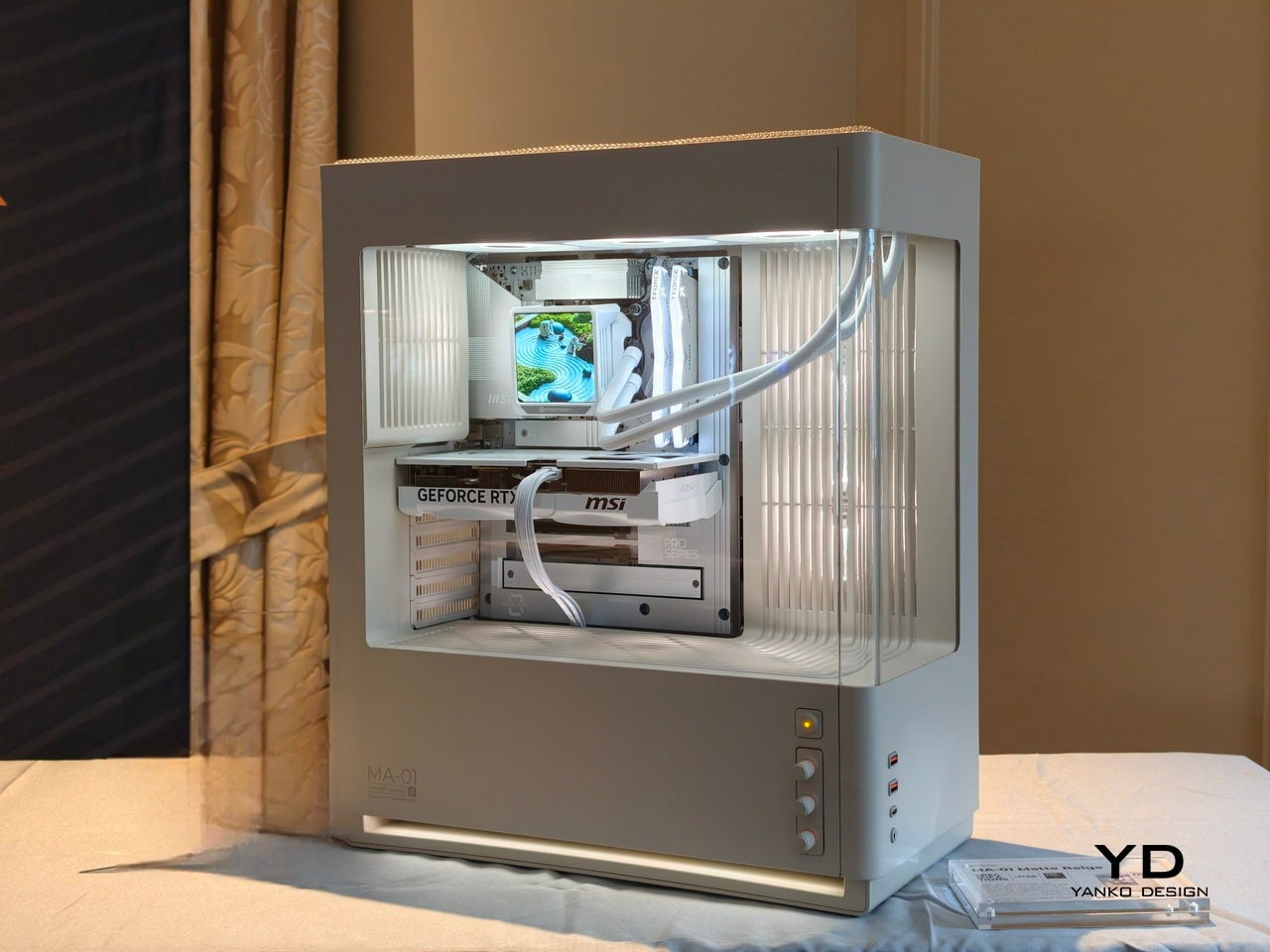

Most high-end PC towers still shout for attention with exposed fans, RGB strips, and visible screws. That clashes with calmer, more considered interiors, especially when a tower lives on a desk next to a monitor and chair that look like real furniture. The MA-01 comes from the idea that performance hardware can grow up without losing its edge, treating a gaming rig as something you want to see every day instead of something you tolerate.
The MA-01 Modern Analog Series chassis is CyberPowerPC’s attempt to design a case around the beauty of what you do not see. It hides the usual clutter, guides air and light through sculpted vents and woven mesh, and frames only the GPU, CPU cooler, and memory. It is a mid-tower that wants to disappear into the room until you look closely, at which point the details start to reveal themselves, analog knobs, corner-less glass, and a top surface that looks more like furniture than electronics.
Designer: CyberPowerPC
Hiding Complexity, Framing Performance
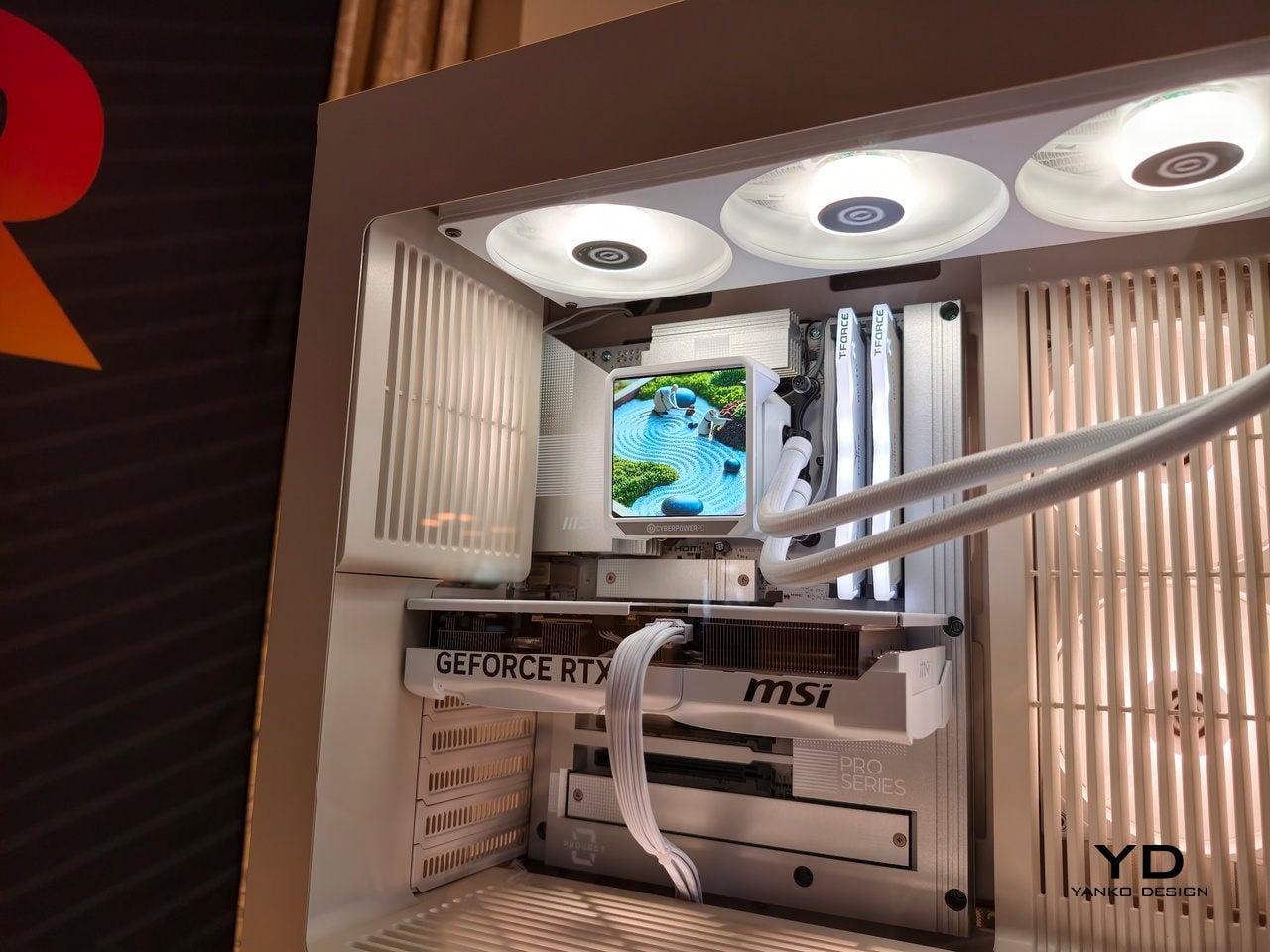
The internal architecture conceals fans, radiators, and cabling behind multi-piece intake covers and internal shrouds, so the interior reads as a clean composition rather than a tangle of parts. The focus shifts to the GPU, cooler, and RAM, which are treated almost like objects on a stage, with consistent geometry and minimal visible mounting points. The chassis does not feel like a kit waiting to be assembled. Rather, it feels like a display case for the hardware that actually matters.
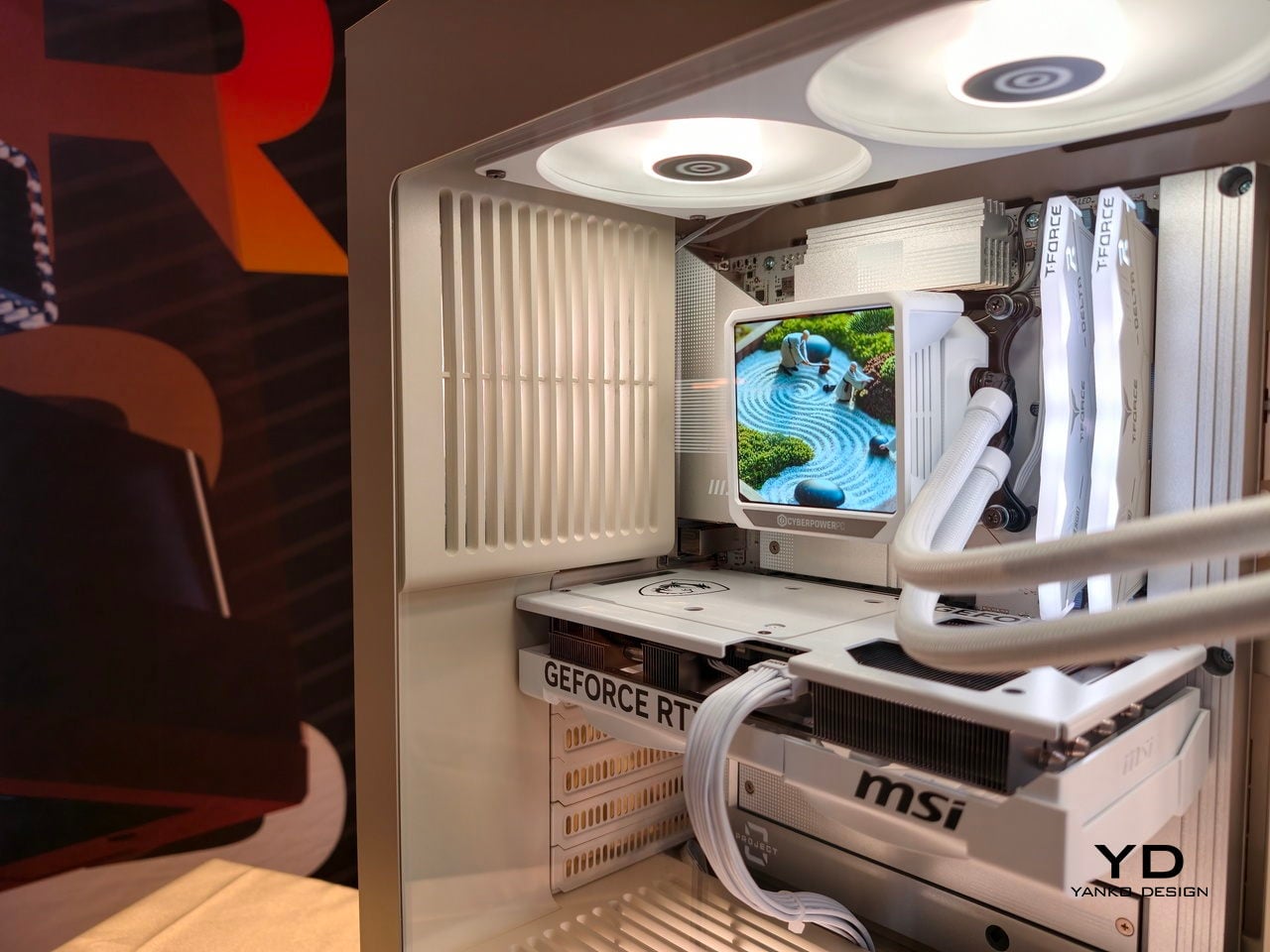
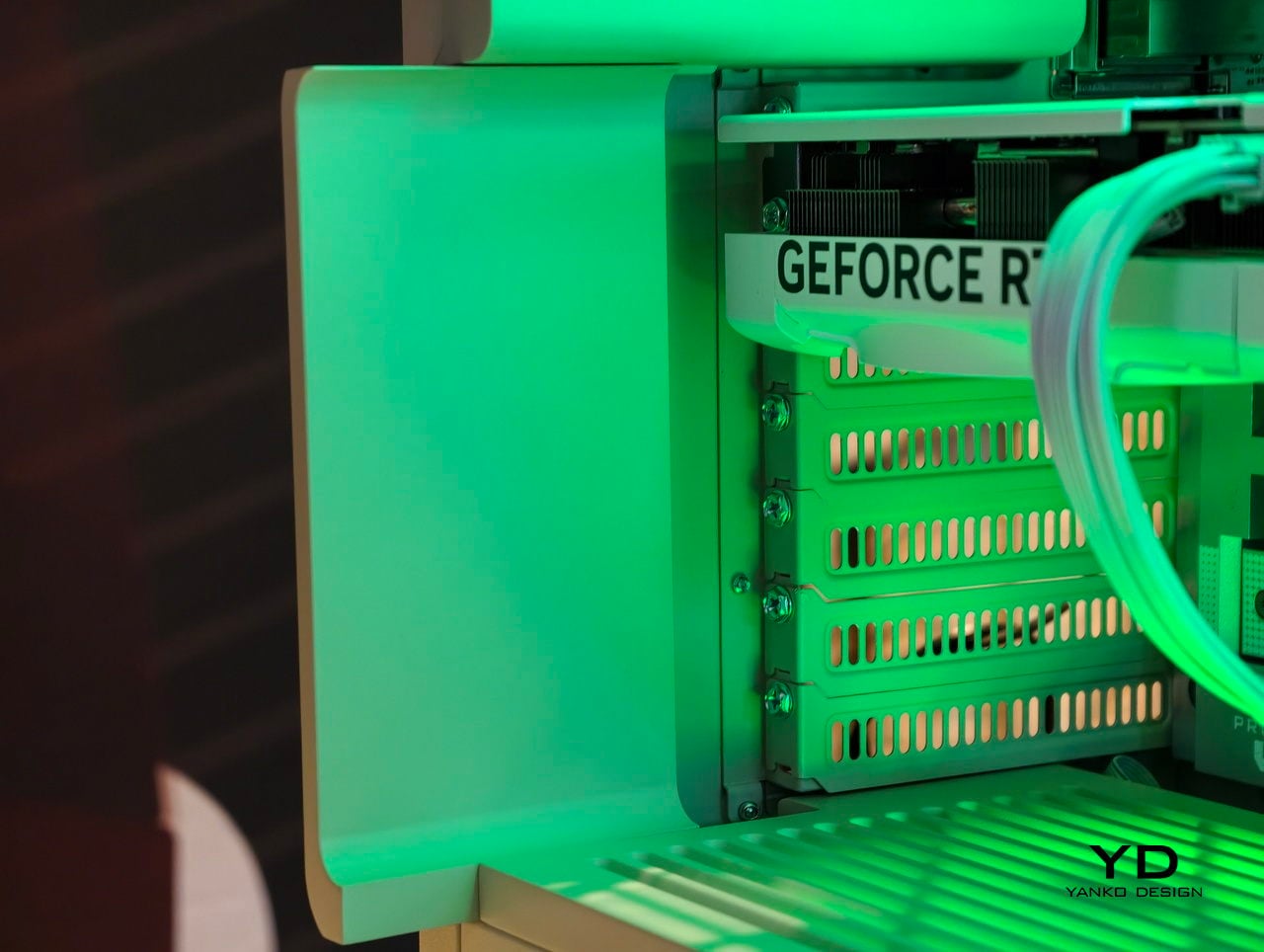

The dual curved glass panels meet without a corner pillar, creating an open-corner view that lets you see the main components from multiple angles without a vertical bar cutting through the scene. Hidden PCI bracket covers and minimized screw heads support the same idea, making the case feel more like a finished appliance than a bin of screws and panels. When you turn the case, the components stay visible and framed, not obscured by structural elements or visual clutter.
Airflow and Acoustics as Design Tools
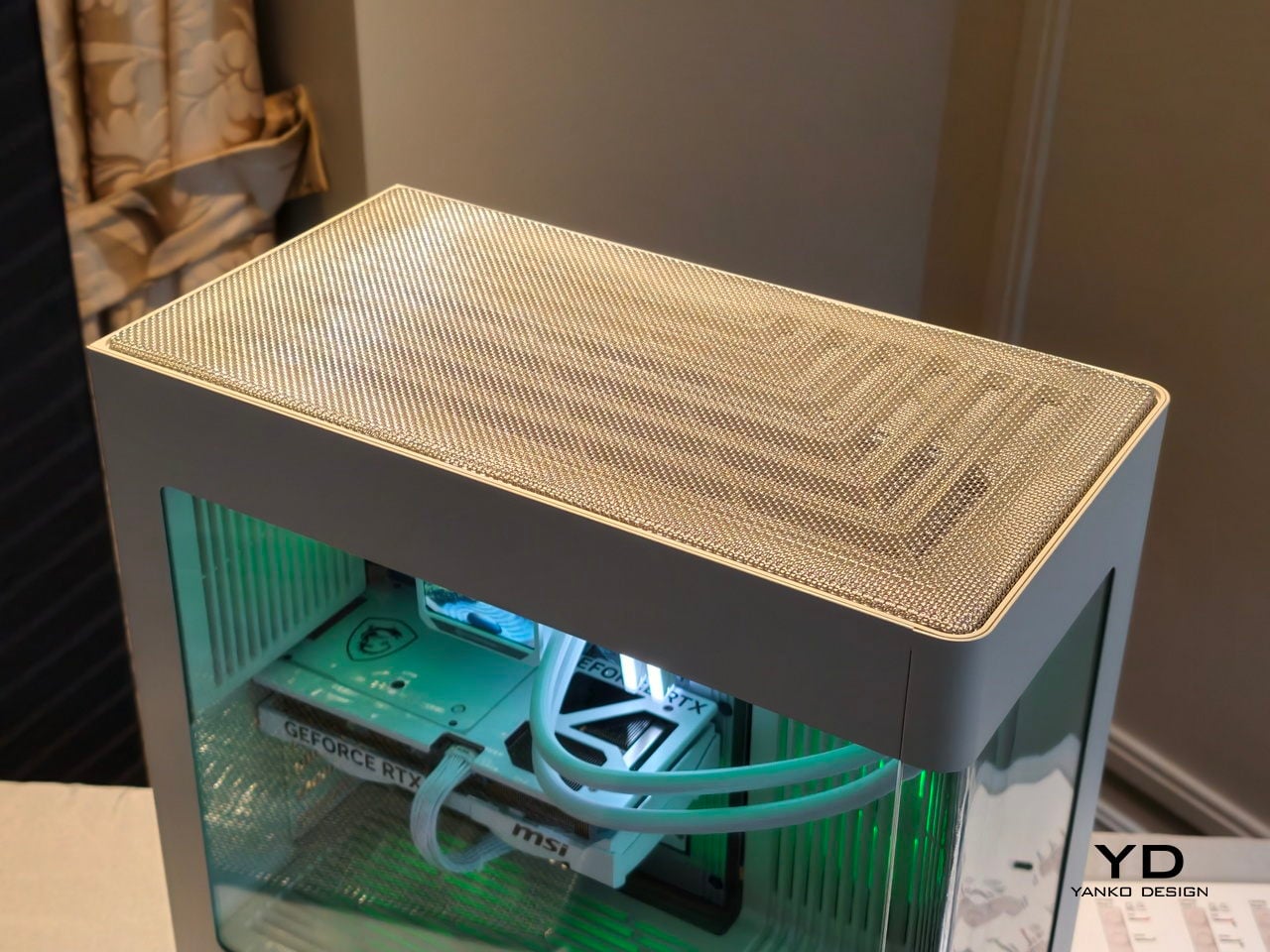
The woven steel mesh top is one of the defining features, a surface where varying porosity and depth help break up high-frequency resonance that traditional punched vents can amplify. CyberPowerPC claims a 20-30% reduction in exhaust noise, which matters when the tower sits at ear level on a desk. The goal is to make power quieter rather than louder, so fans can spin up during intense sessions without filling the room with the usual high-pitched whine.
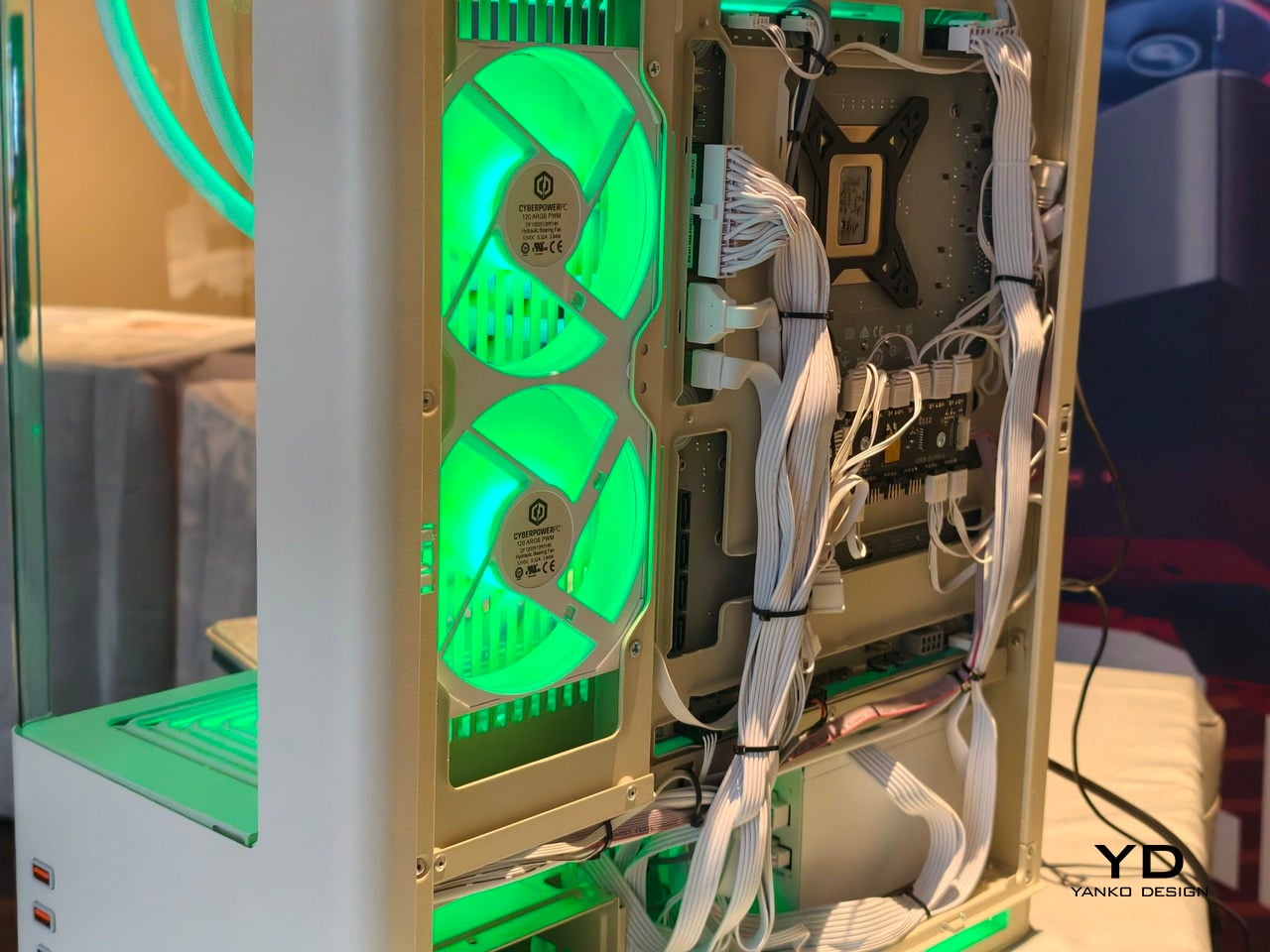
A full-length internal vent cover runs from the right-side intake across the bottom and up to the rear exhaust, with angled vents that redirect intake air directly onto heat-critical components. That guided airflow reduces wasted intake air and helps radiators and GPU coolers work more efficiently, which in practice means lower fan speeds and a calmer acoustic profile. It is not just about moving air, it is about moving it deliberately so the case stays quieter while still keeping temperatures in check.
Analog Controls and Tactile I/O
Three analog RGB knobs sit on the front panel, mapping to red, green, and blue in one mode and to color, brightness, and effect mode in another. You can sweep through the full 16.7-million-color spectrum and adjust effects without opening software, which appeals to builders who prefer hardware-level control and a more analog, tactile interaction. Pressing each knob activates secondary functions, so the same three controls handle color jumping, brightness, and lighting modes without menus or drivers.
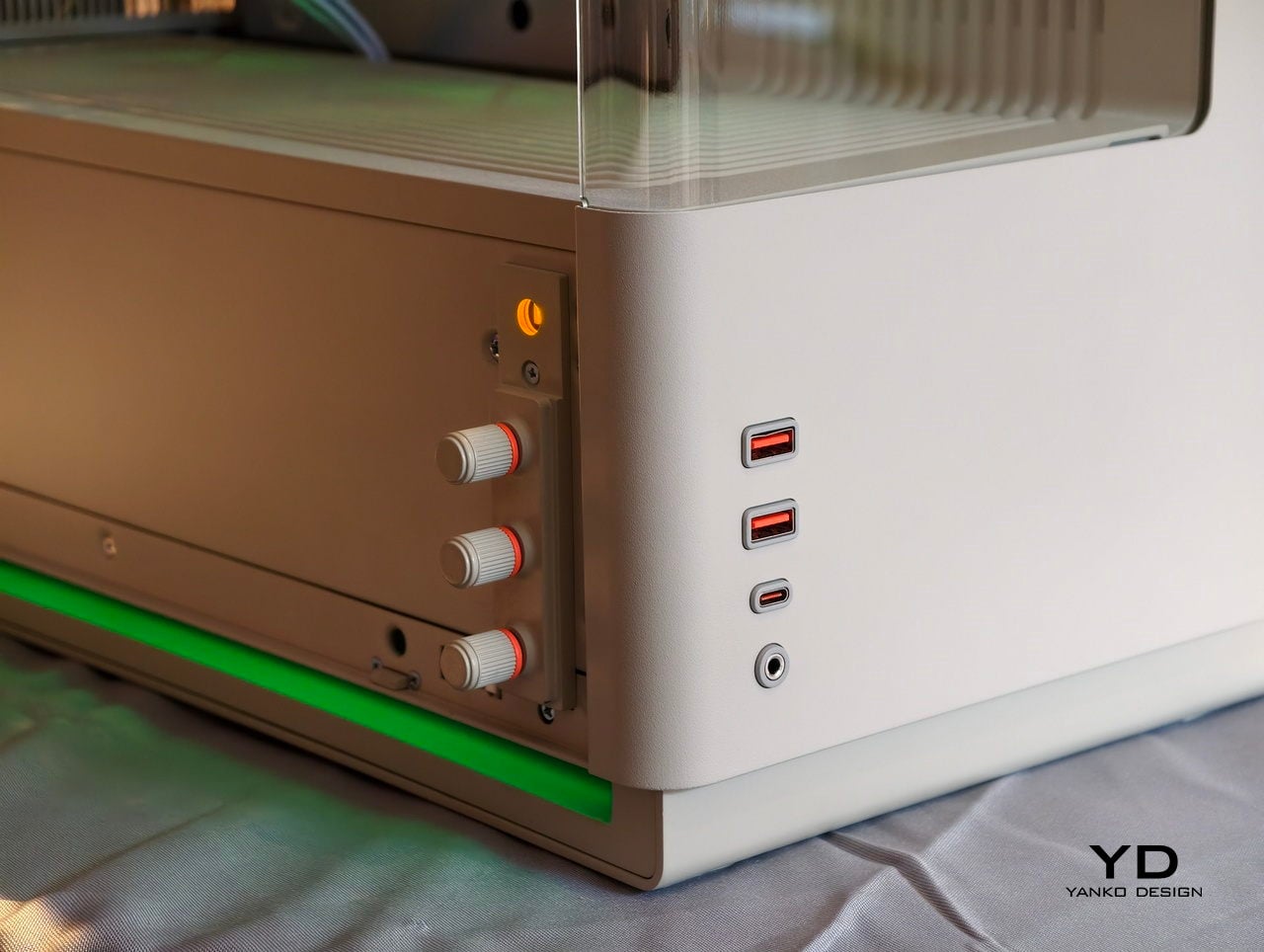
The precision-molded I/O shrouds around the USB-A, USB-C, and audio ports are designed to self-center cables, absorb side impacts, and reduce insertion wear. That small detail makes daily use feel less fragile, especially when the case is on a desk where ports are used often. The framing of the ports contributes to the overall architectural, finished look, turning functional elements into part of the visual language rather than afterthoughts drilled into a panel.
Finishes, Compatibility, and Longevity
The three finishes each serve different desk environments. The warm matte off-white nods to classic beige machines while feeling contemporary, suitable for creative studios that lean toward lighter, Scandinavian palettes. The dark steel gray is a cooler alternative to black with a subtle hint of blue, fitting more traditional setups. The metallic dark silver is a more industrial counterpoint to familiar aluminum aesthetics, bridging productivity and gaming without leaning too hard into either category.
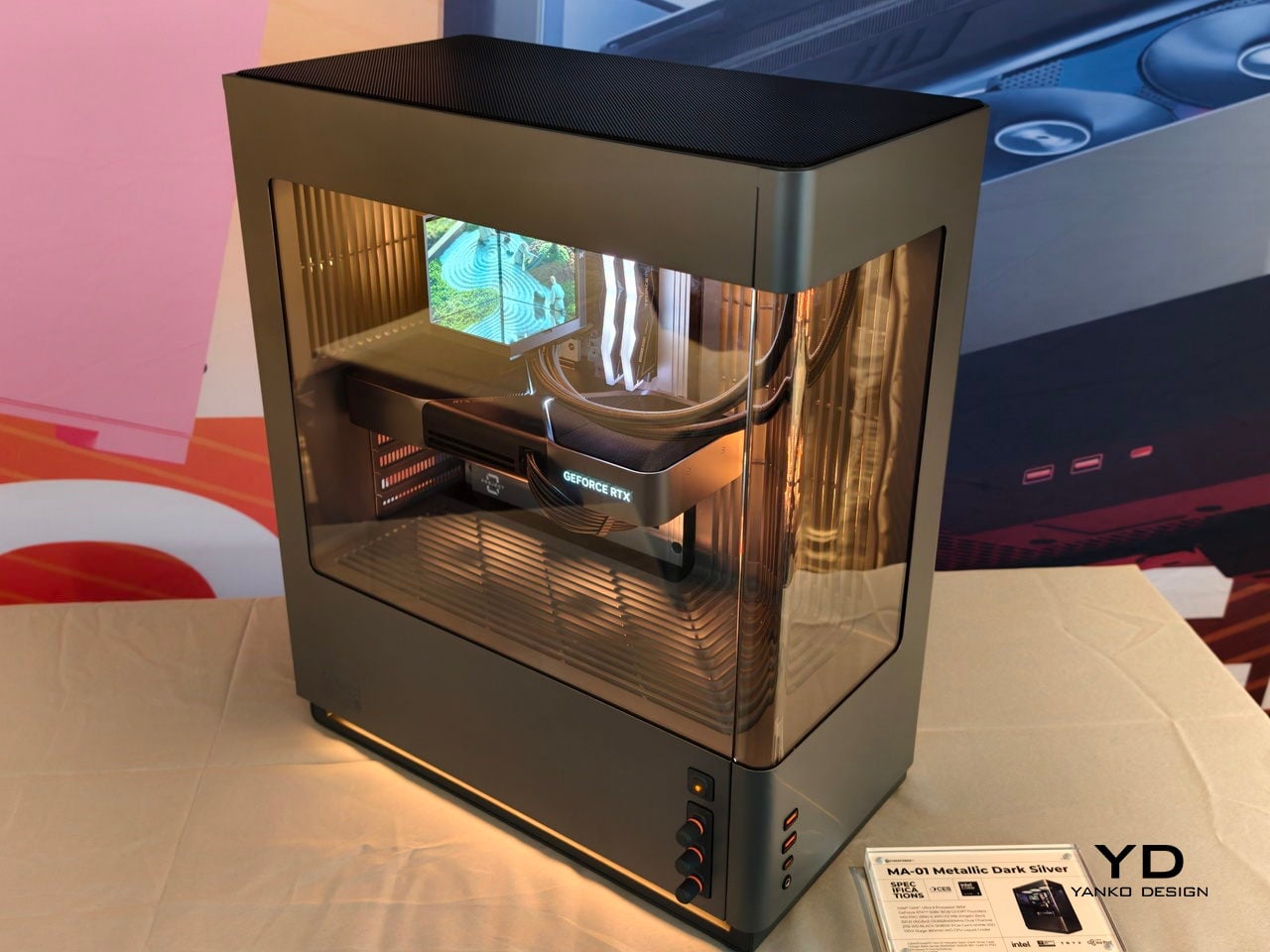
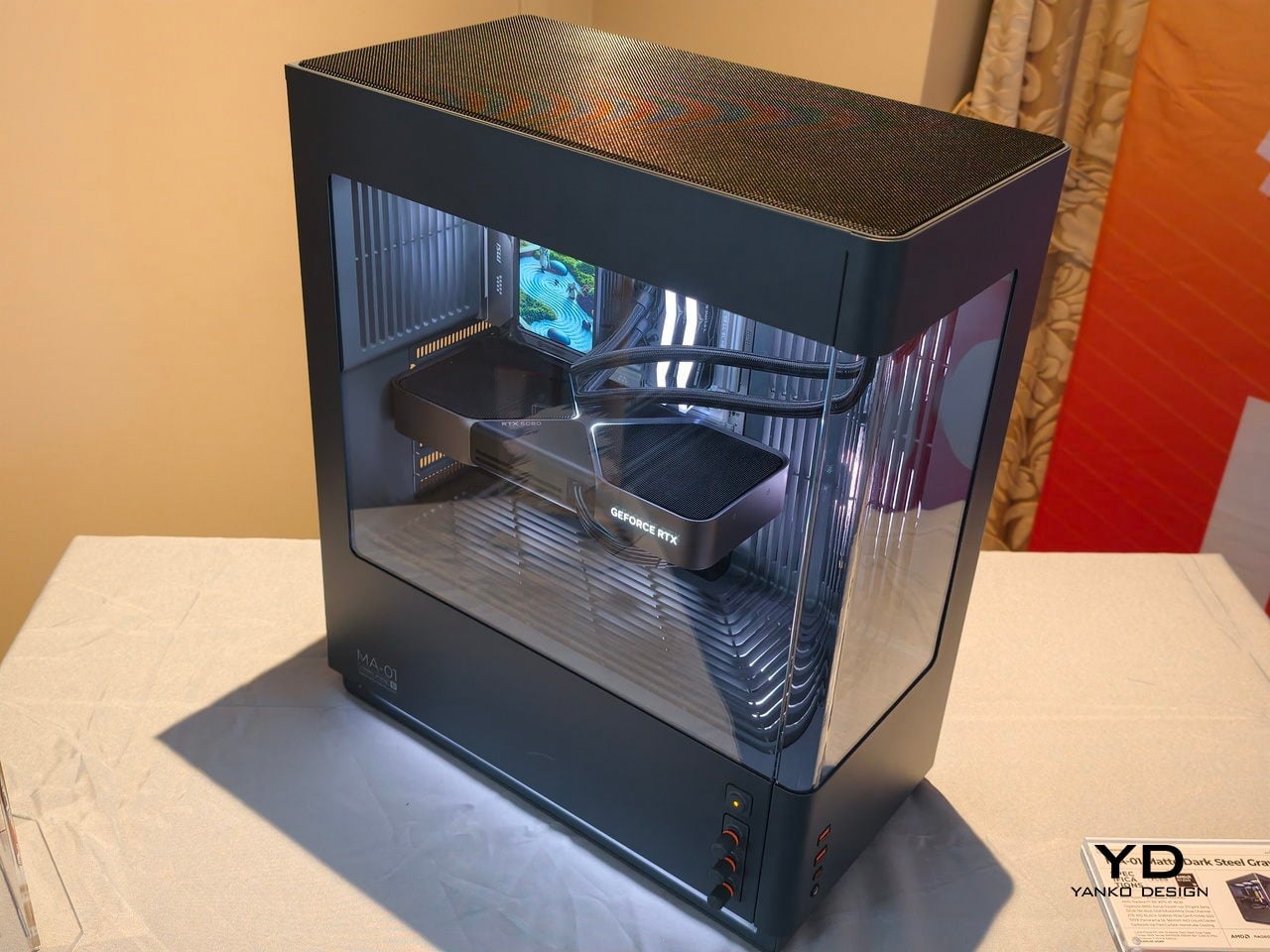
On the practical side, the MA-01 supports ATX and micro-ATX boards, including BTF-standard layouts for cleaner cable routing, and offers space for long GPUs, tall air coolers, and 360 mm radiators at the top and motherboard side. Hidden fasteners and seven expansion slots signal that the case is built for multiple hardware generations, not just a single build cycle. The compatibility range means it can handle everything from a mid-range productivity build to a high-end gaming rig with a large GPU and custom cooling loop.
CyberPowerPC at CES 2026: The Beauty of What You Don’t See
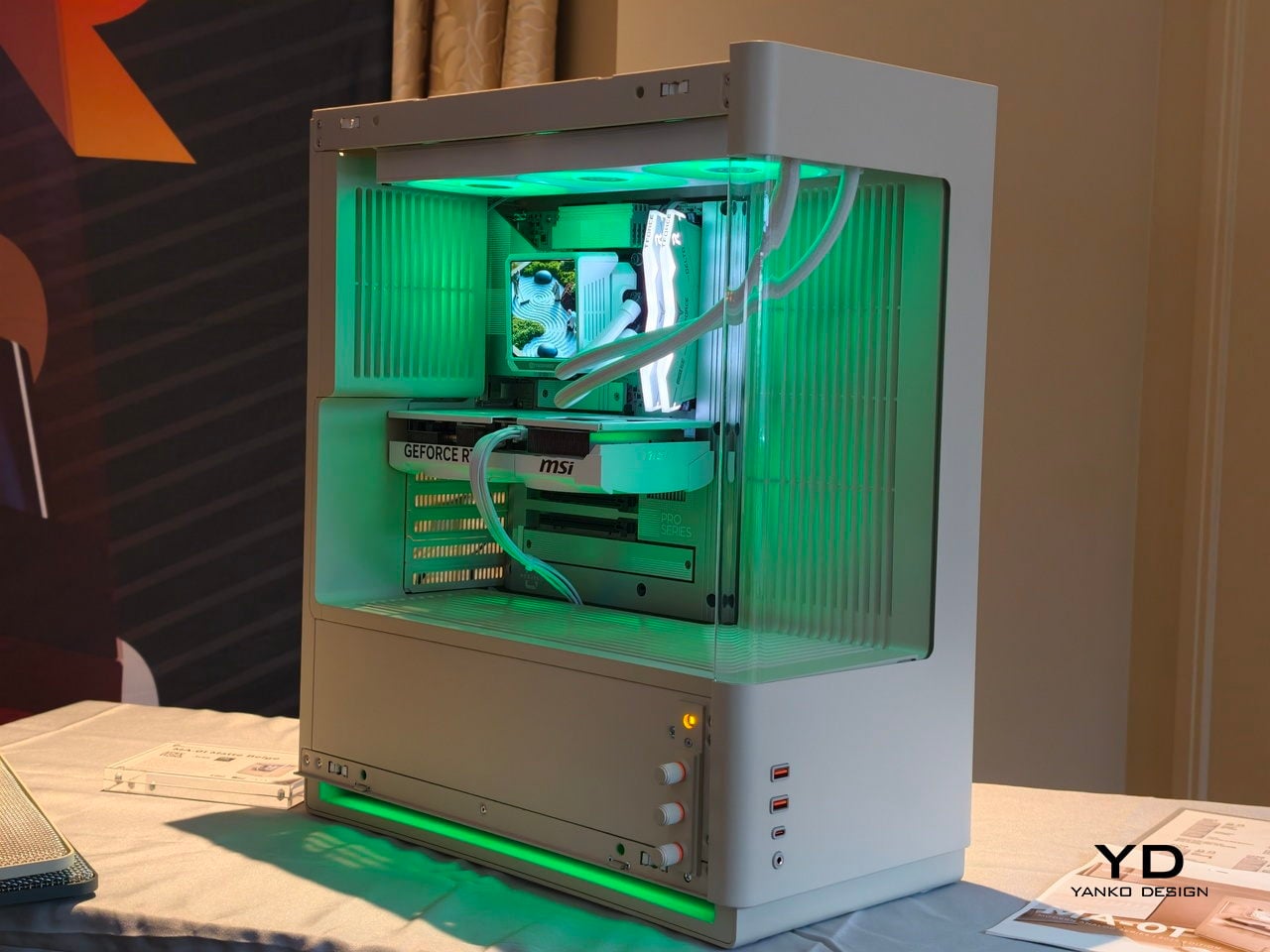
The MA-01 is a sign that gaming-class hardware can finally behave like a mature object in the room, not just a spectacle. It still moves a lot of air and lights up in any color you want, but it does so through woven mesh, sculpted vents, and analog controls that feel considered and deliberate. For people who want a powerful tower that can live on a desk without shouting, that shift in attitude is the real headline, and it suggests that the future of PC hardware might look less like a science experiment and more like something you would actually choose to keep visible in a living room or studio.