The Wright Brothers changed the course of history when they took the first ever flight on December 1903. Their biplane, crafted from wood and fabric, had a rudder for yaw control, wing warping for roll control, and front elevators for pitch control. The first flight lasted for just 12 seconds, driven by the custom 12-horsepower engine and propellers.
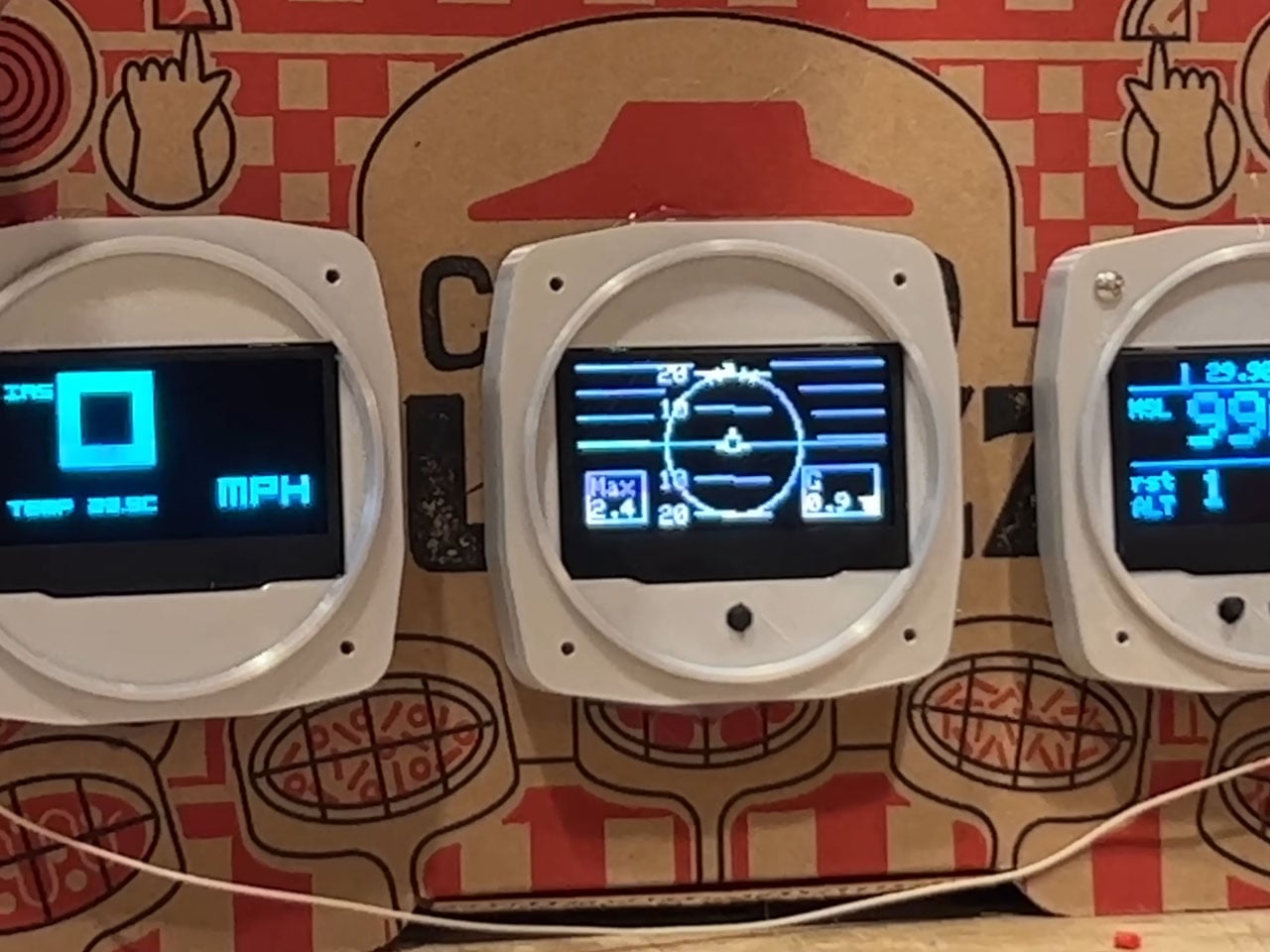
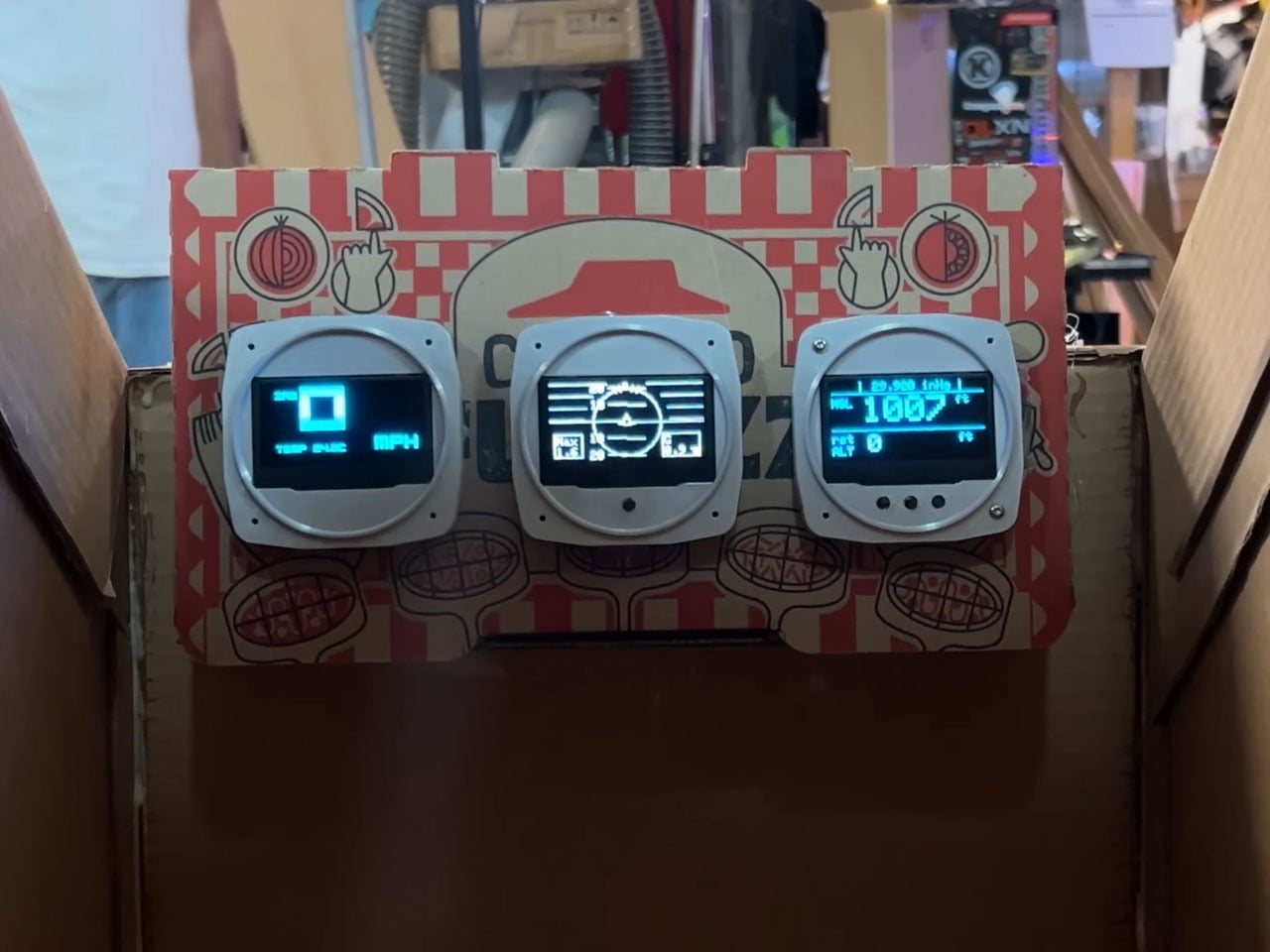
The aviation industry has come a long way since that decisive event, and it’s always good to have a similar nostalgic feel again. Peter Sripol, along with his team, has built a cardboard airplane that has plywood-structured wings (just like the Wright Brothers’ airplane) and is capable of flying one person with ease. Interestingly, the DIYer uses a Pizza box to fit in the altimeter, air speed gauge, and the attitude indicator. According to his estimation, the plane is a giant shipping box, given that it has around 95 percent cardboard parts, which in itself is a feat.
Designer: Peter Sripol
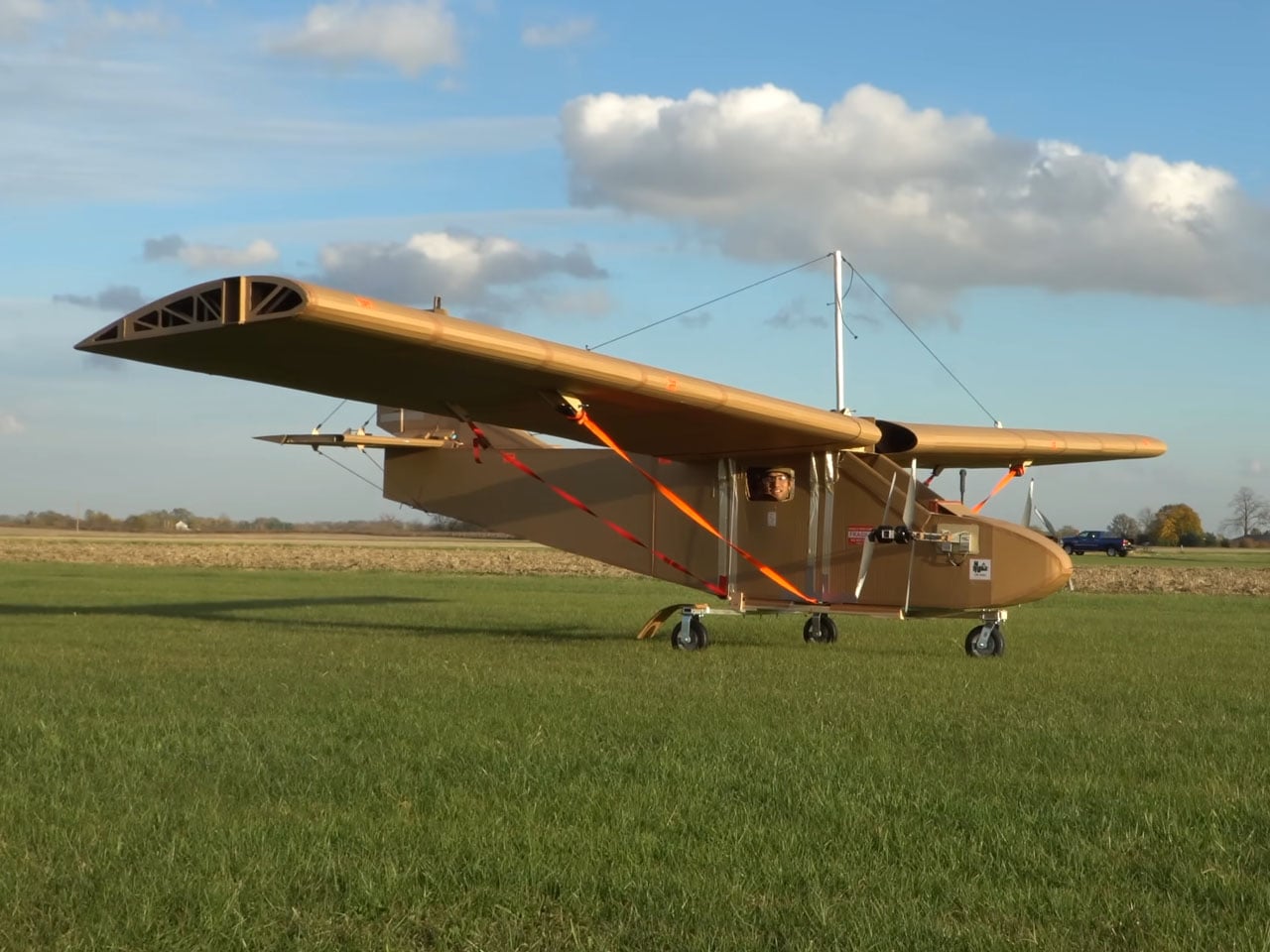

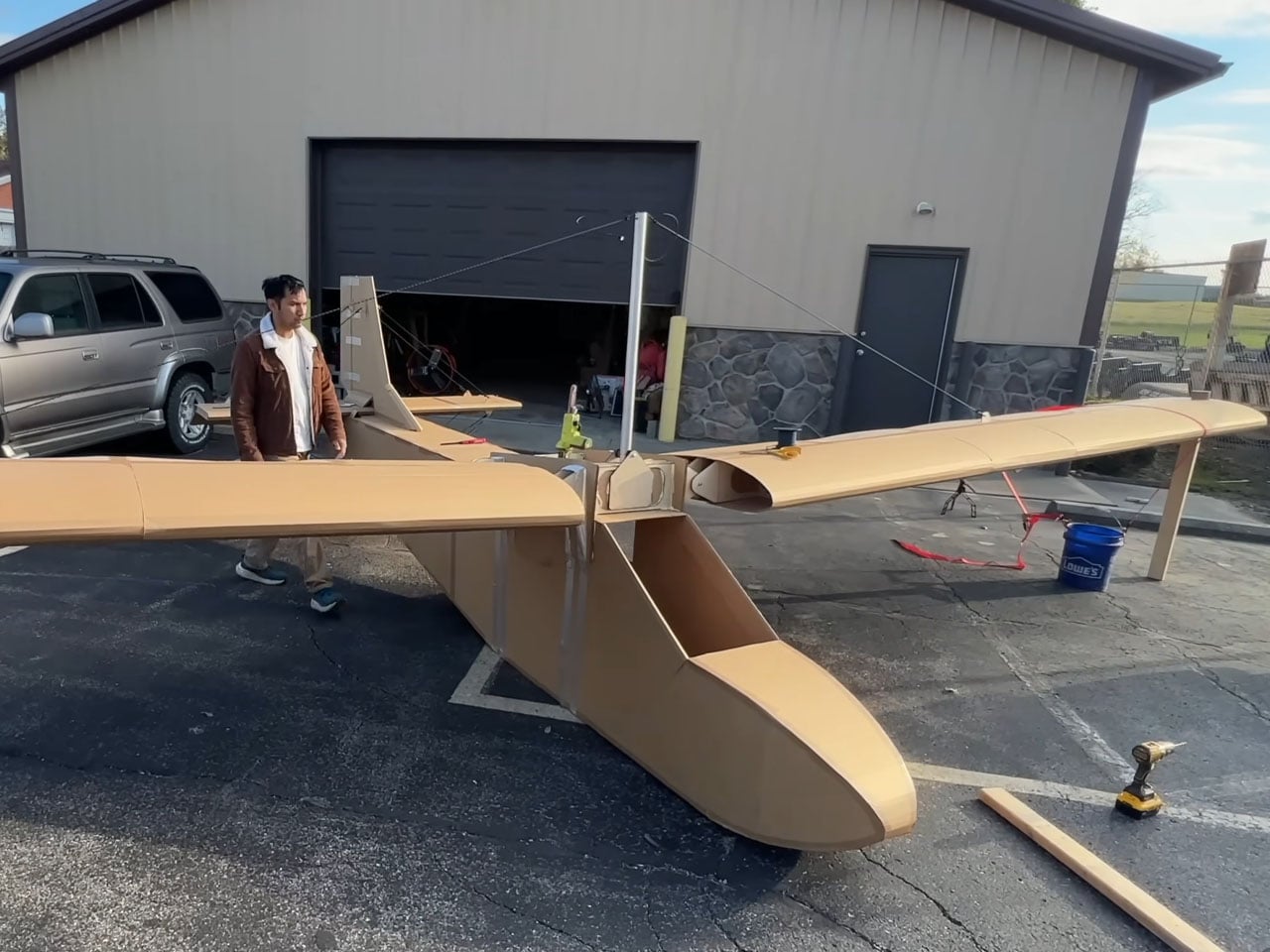
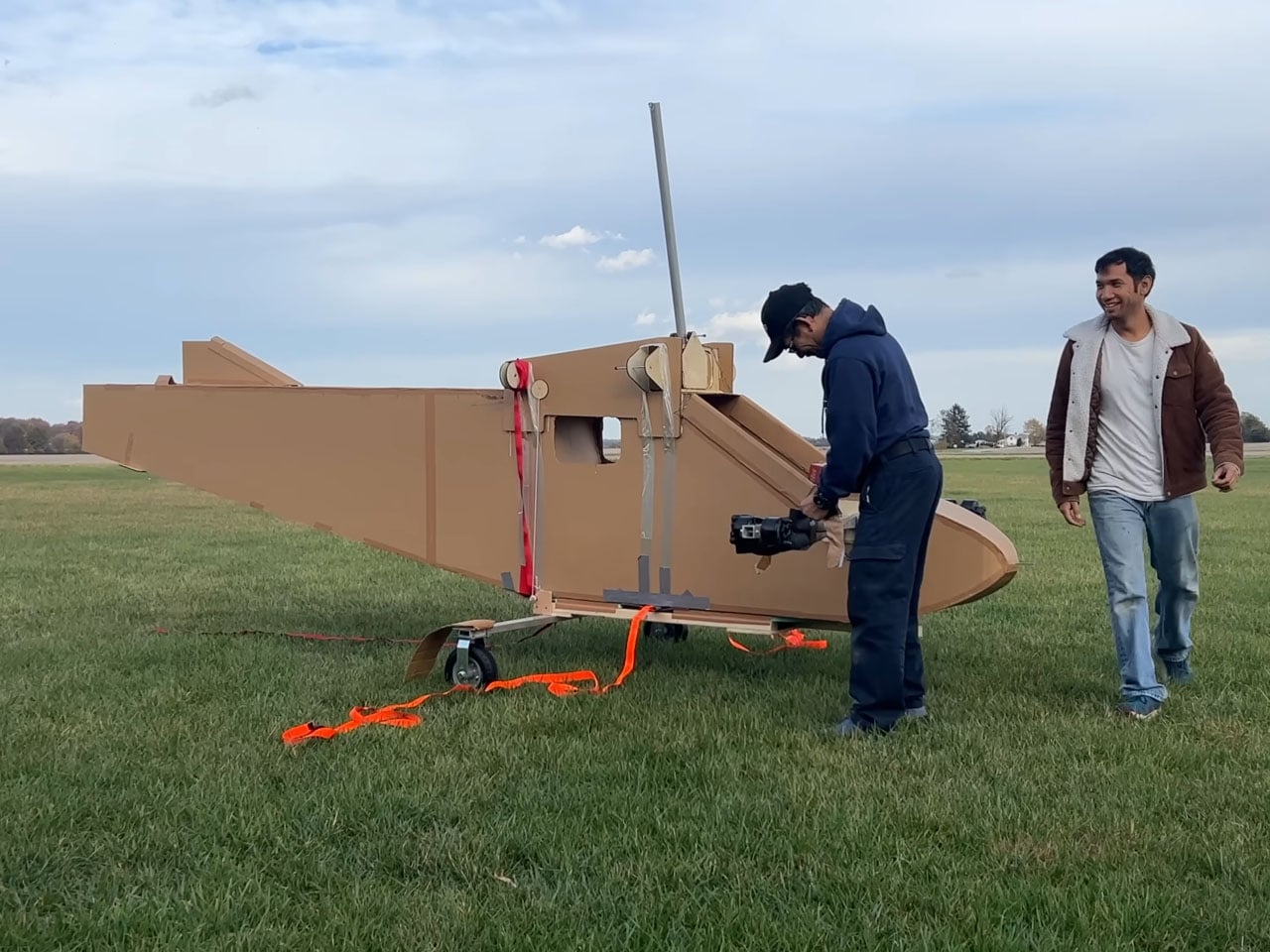
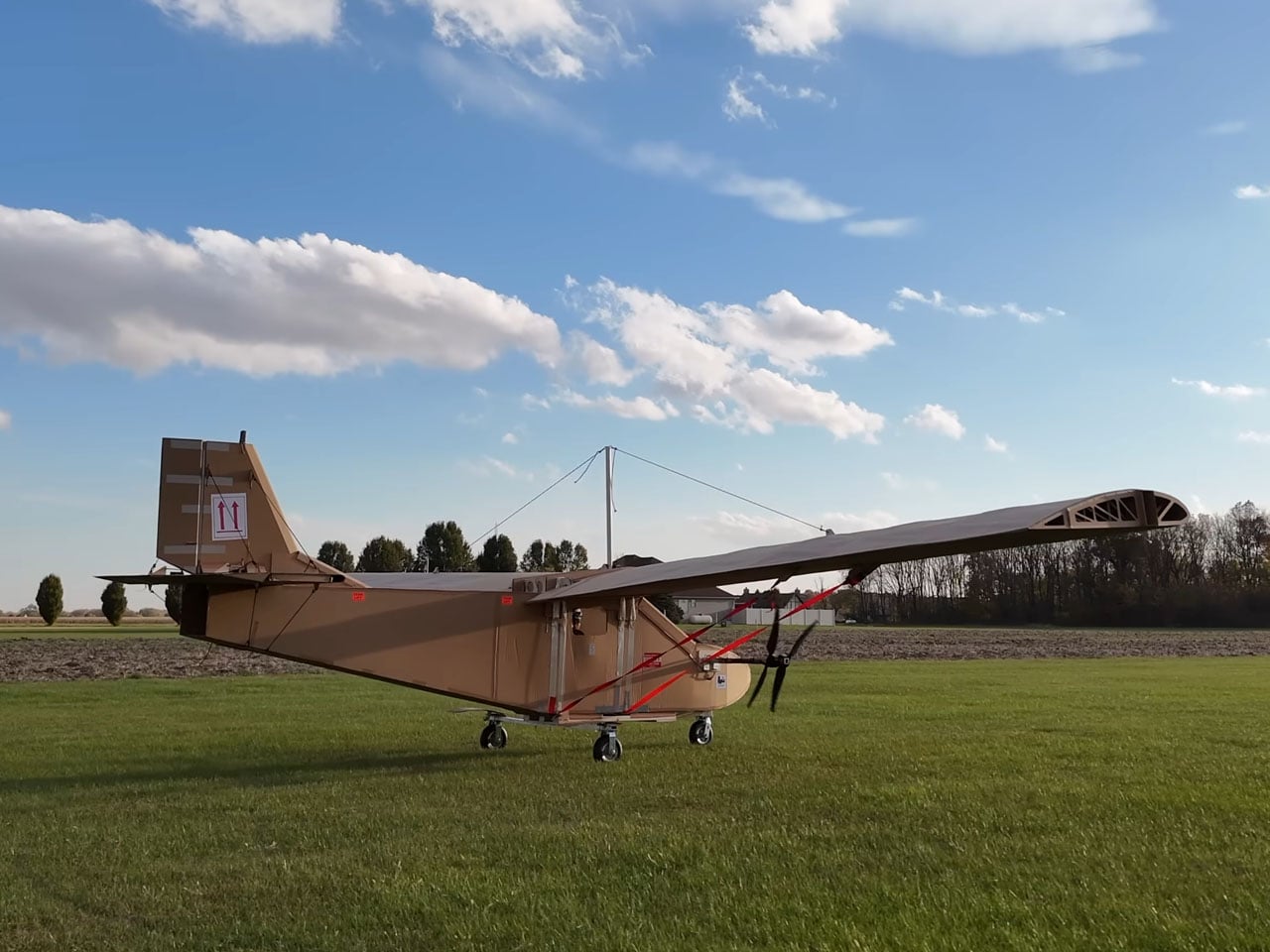
The shape of the fully assembled airplane is just like any other double-propeller plane that’s commercially produced. It is narrower on the tail end and wider near the seating section for aerodynamic efficiency. Just that it’s not as polished and fine-tuned since it is just a prototype for now. After putting together the fuselage, wings, and the custom-made wheel assembly that ejects once the thing is airborne to shed extra weight, Peter drove around the plane in taxing mode to check if all the basics are working fine. The wheels seemed to drag a little, and the batteries powering the thing were not enough for the flight speed.
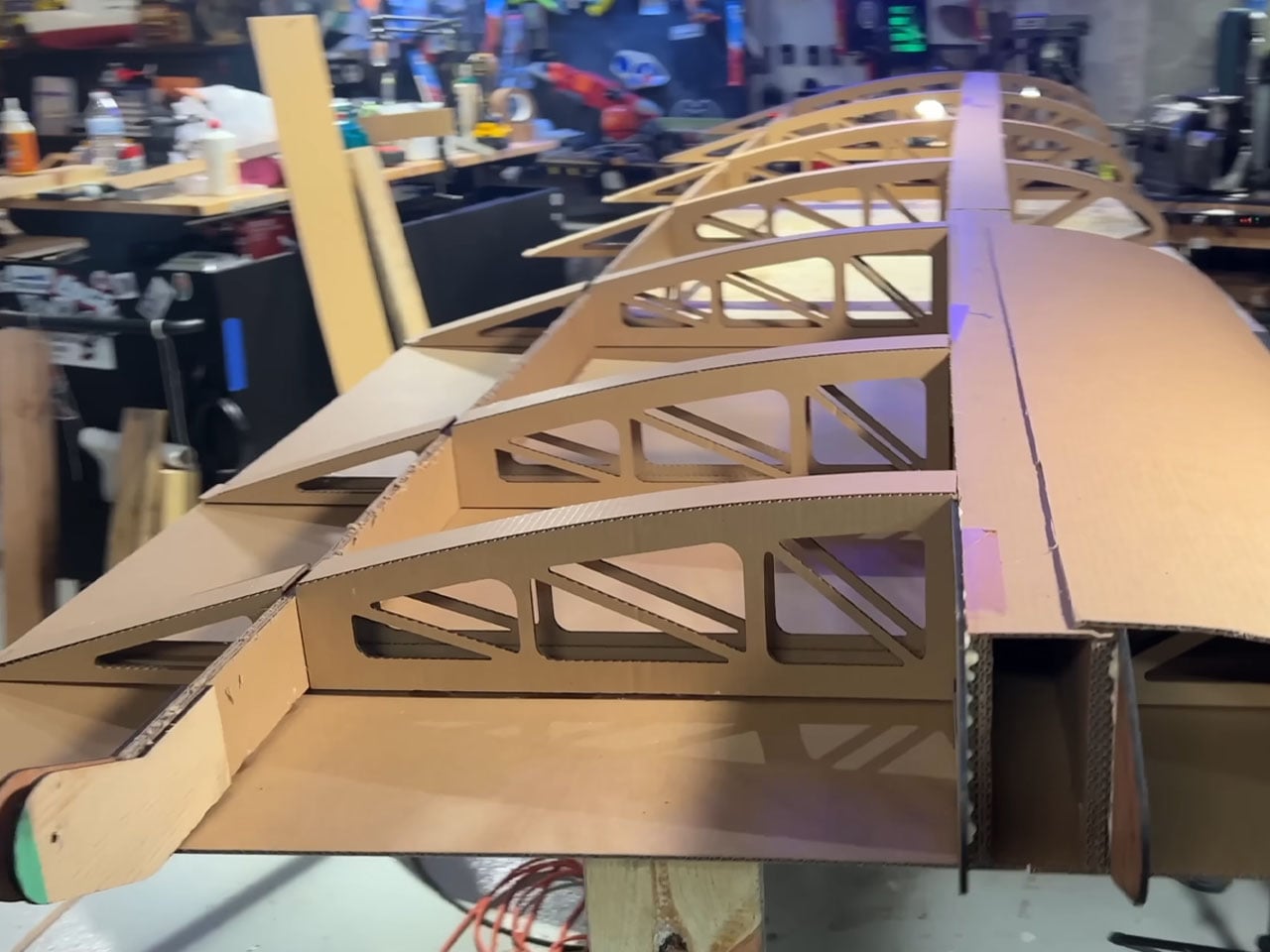
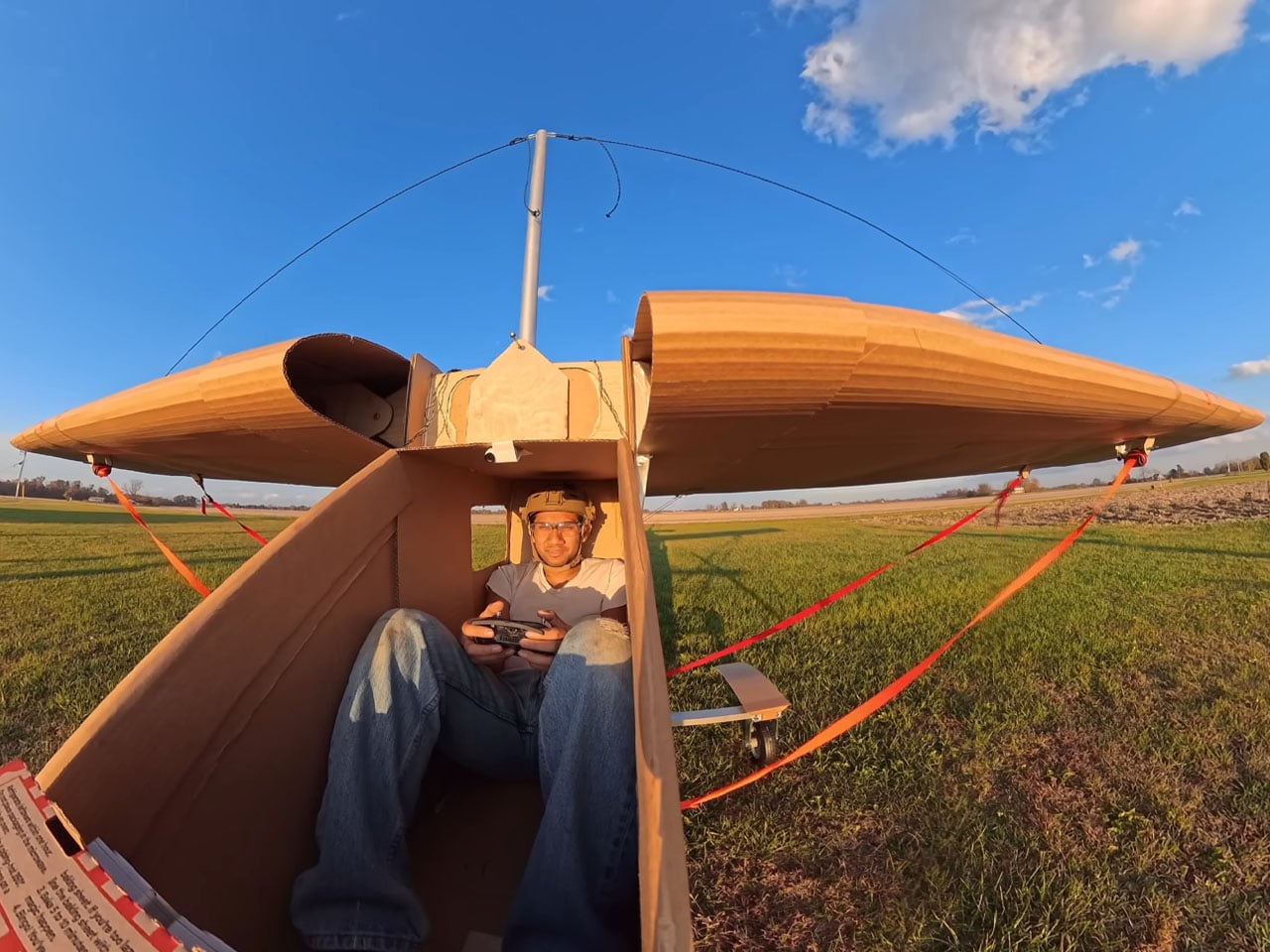
After fixing the initial kinks, he managed to get off the ground a few feet, but as soon as the landing gear assembly detached, the cardboard airplane flew for a few feet and veered off course to land abruptly. Coming back to the design, the corrugated cardboard parts of the plane are glued together for structural integrity. There are small cutouts on the sides and on the front to have a clear view. The DIY project is in work, and the maker plans to install the controls on the sides and the rudder pedals on the floor. For now, Peter uses the wireless controller to actuate the inputs for the drive and flight tests. Fitting the flight controls inside is going to be touch-and-go, given that there is only one entry and exit opening on the plane from the front. The tail section has folded cardboard skins that take the shape of the stabilizers, elevator, and rudder.
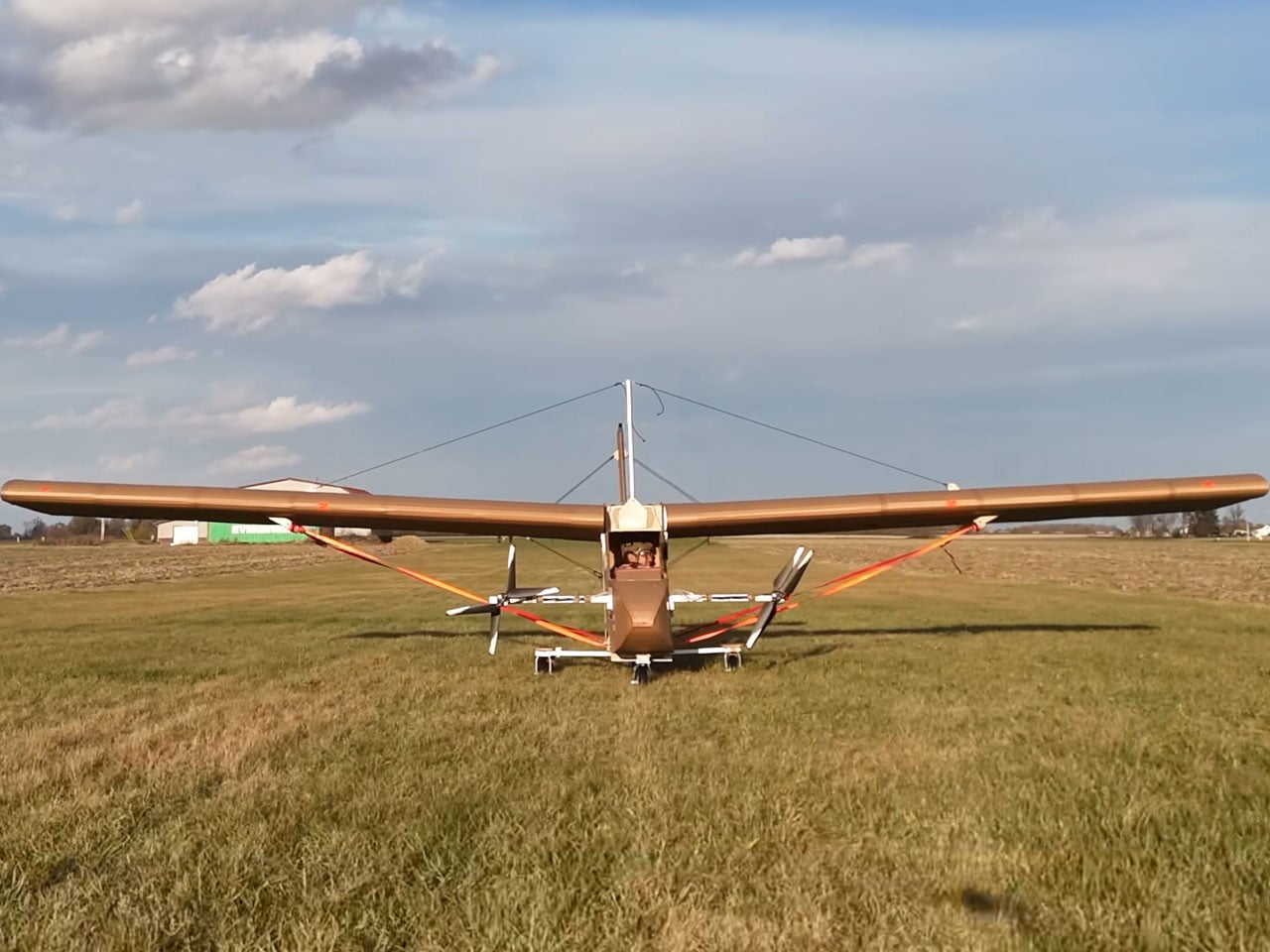
The wing is the most challenging section to build, as during flight, cardboard is not the most ideal material due to its low compression tolerance, hence the small plywood plates embedded inside the wing structure. For a secure embodiment, the wings are attached to the fuselage with bolts and reinforced cardboard doublers. The electric motors for propulsion are mounted on the reinforced cardboard structure, while the batteries, speed controls, and the messy wiring are housed inside the fuselage. We’ll have to wait for a few weeks, when the next video arrives, and hopefully Peter will take flight in this DIY cardboard airplane.