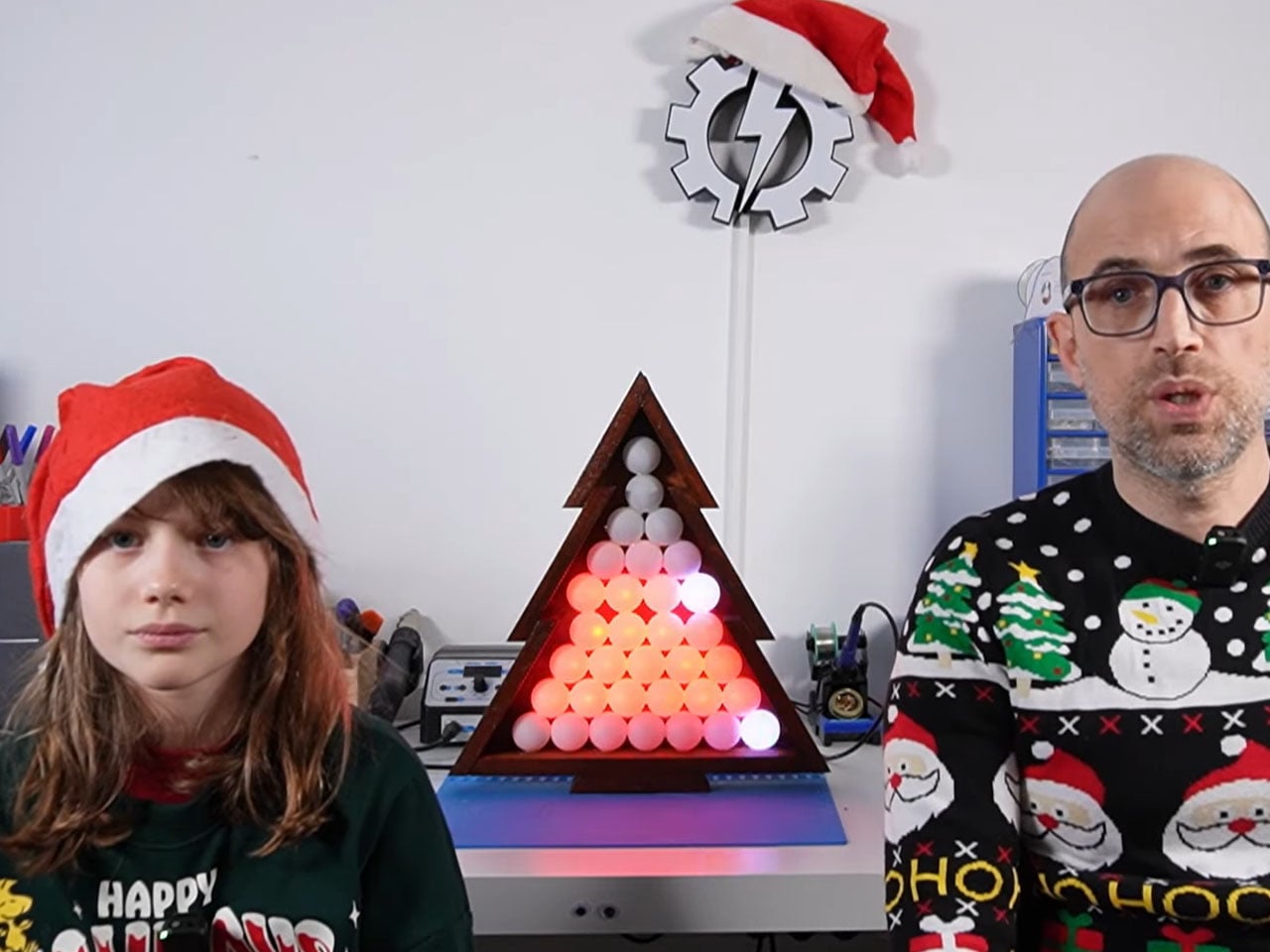
Holiday lighting has long relied on repeated patterns and static effects, but this music-reactive LED Christmas tree brings a new dimension to seasonal decor by turning sound into visual effects. The project is a simple wooden frame with off-the-shelf LEDs and an audio sensor to create a festive display that animates in real time with sound. Built around an ESP32 microcontroller running the open-source WLED software, the assembly combines woodworking, basic electronics, and wireless configuration into a project that is both instructive and visually striking.
The core of this DIY is an ESP32-D1 mini microcontroller, chosen for its built-in Wi-Fi, processing capability, and compatibility with WLED, a flexible lighting control platform. WLED runs on the ESP32 and provides a web-based interface for configuring LED lighting effects, colors, and patterns without requiring deep coding knowledge. In this tree, WLED’s audio-reactive mode analyzes sound input and drives the LED effects so that the lights flash, pulse, and change in response to music playing nearby. A small INMP441 digital microphone module is wired to the ESP32 to capture ambient audio, enabling this interaction between the physical decorations and sound.
Designer: DB Making
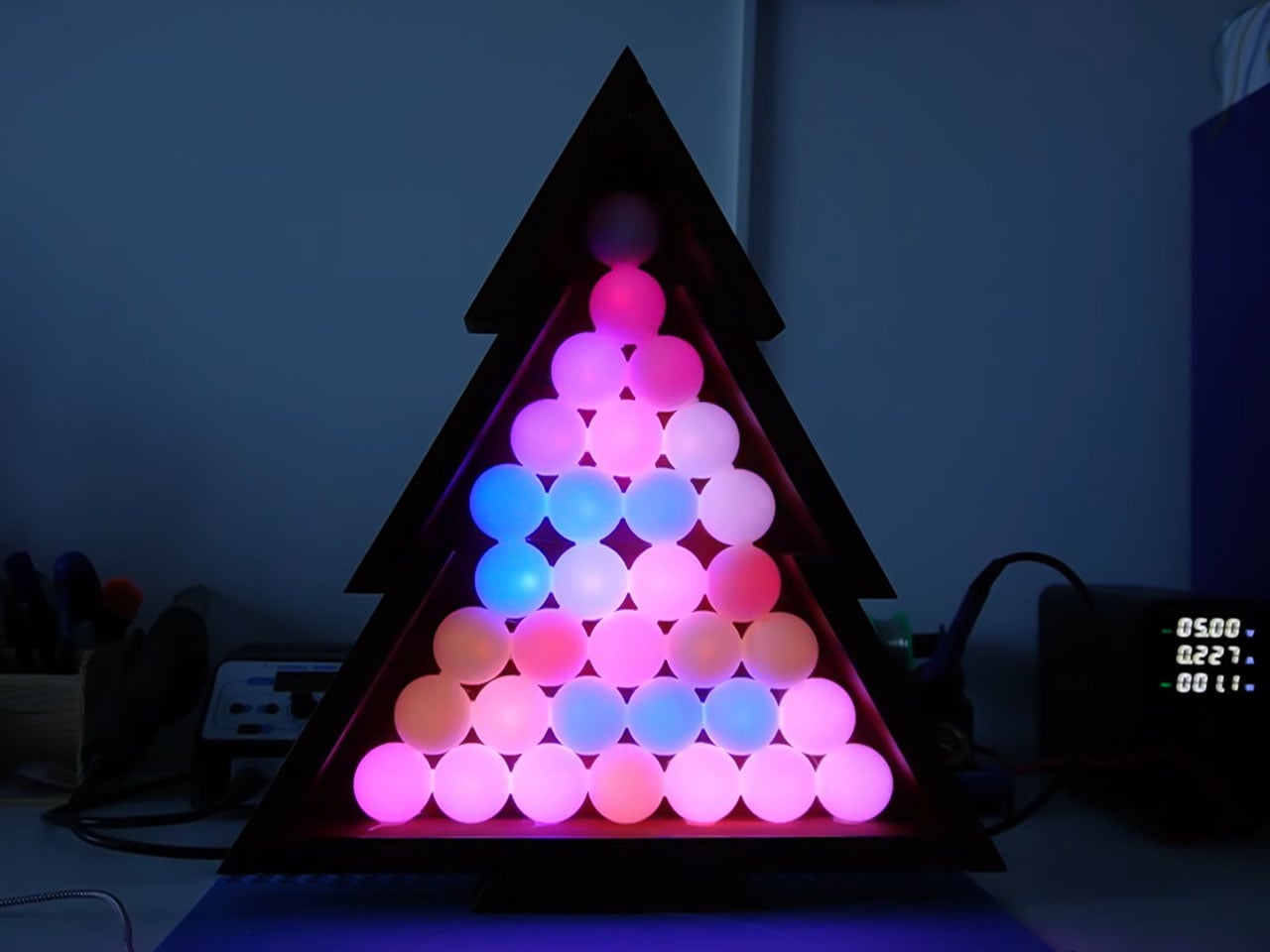

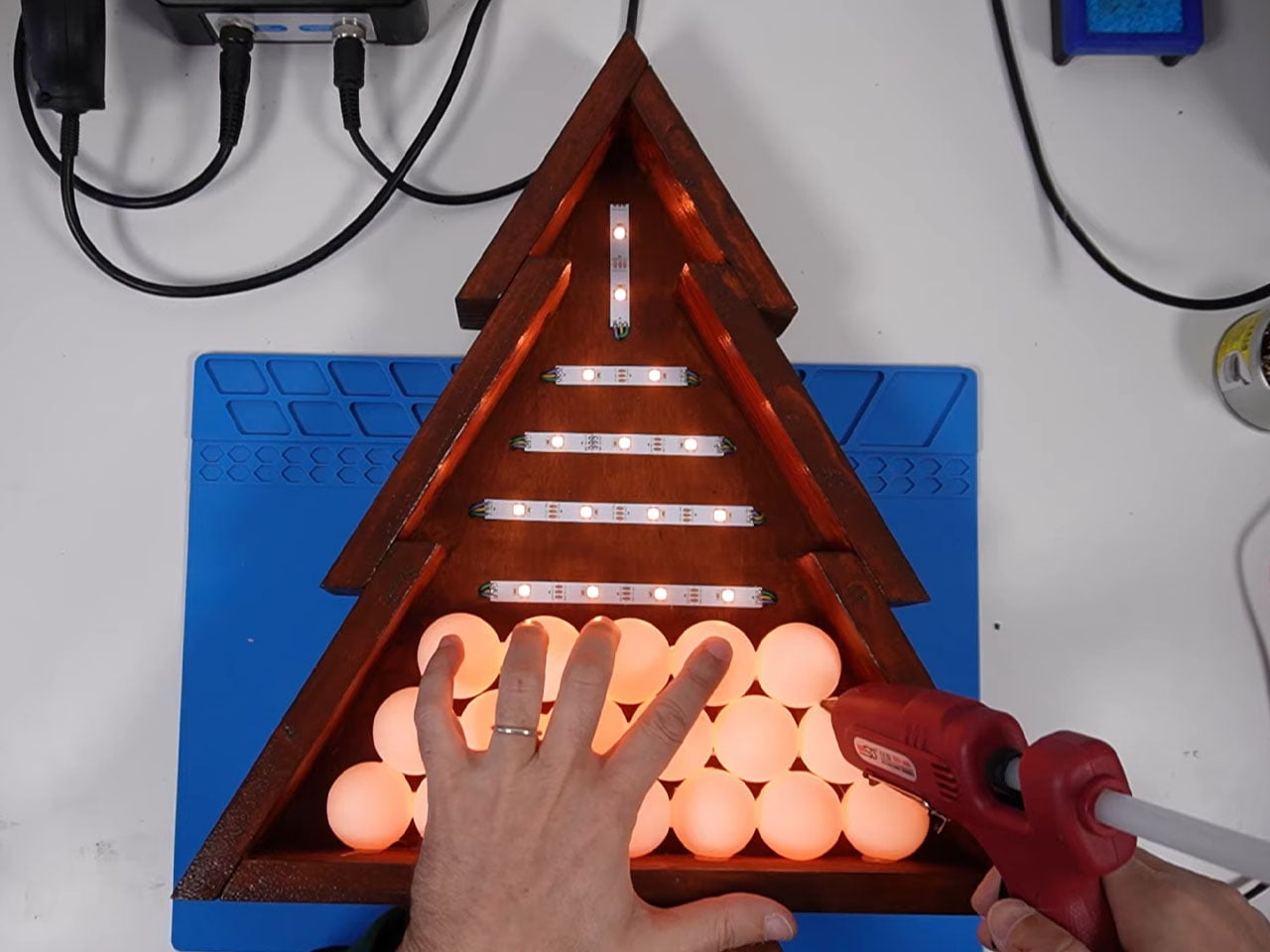
Structurally, the tree is made from common materials. A wooden frame cut into the triangular silhouette of a Christmas tree serves as the backbone. Addressable WS2812B LED strips are mounted along this frame, arranged to expose each LED through a round opening in a corresponding ping-pong ball acting as the light diffuser. These balls soften and spread the light emitted by each LED, creating a uniform glow rather than pinpoint beams. A 3D-printed jig assists in cutting consistent openings in the balls, which are then glued in orderly rows to complete the tree’s face.
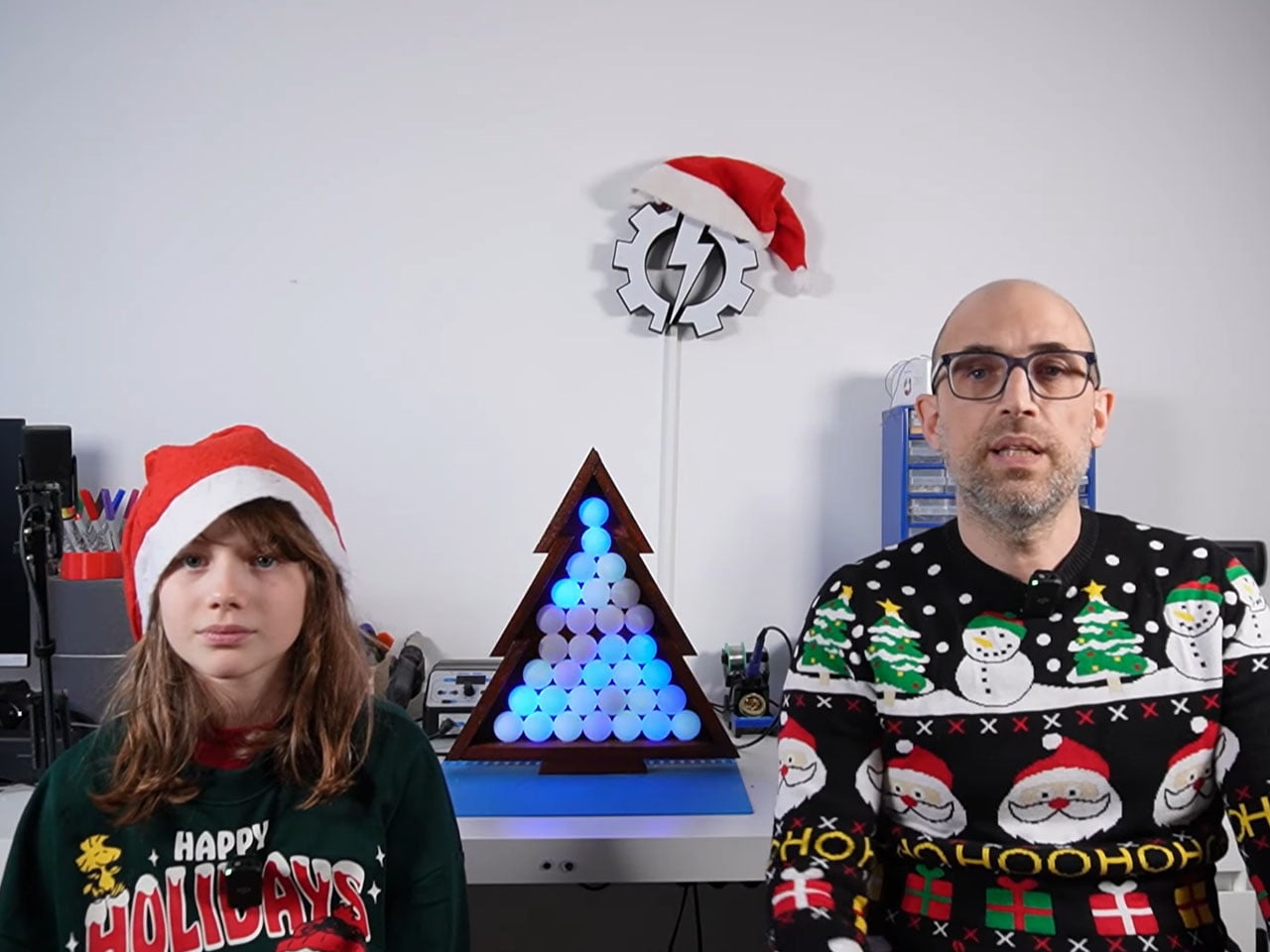
Electronic assembly happens on a small perfboard, where the ESP32, microphone module, power connector, and LED strip connector are soldered together. Wiring the LEDs to follow the correct data flow direction and securing the controller board in a neat enclosure ensures reliable operation. Once built, a 5V DC supply powers the tree, and the ESP32 is connected to a computer or network to install WLED firmware via the official web installer. Within WLED’s setup interface, users enter Wi-Fi credentials, set the total number of LEDs, assign the correct data pin, and enable audio-reactive settings along with microphone parameters.
After configuration, the tree’s lighting can be controlled from a smartphone or computer, allowing owners to adjust brightness, choose effects, or simply enjoy music-responsive visuals. The sound-reactive mode responds to ambient audio captured by the microphone, translating beats and rhythms into dynamic light patterns that bring an interactive element to holiday decorations.

Beyond its immediate festive appeal, the project provides a learning platform for hobbyists seeking hands-on experience with microcontrollers, programmable lighting, and real-time sensor integration. By using off-the-shelf components and open-source software, builders can expand or modify the design. This can be done by increasing the number of LEDs, experimenting with alternative diffuser materials, or adding networked effects.