

Last year, every other product at CES had a chatbot slapped onto it. Your TV could talk. Your fridge could answer trivia. Your laptop had a sidebar that would summarize your emails if you asked nicely. It was novel for about five minutes, then it became background noise. The whole “AI revolution” at CES 2024 and 2025 felt like a tech industry inside joke: everyone knew it was mostly marketing, but nobody wanted to be the one company without an AI sticker on the booth.
CES 2026 is shaping up differently. Coverage ahead of the show is already calling this the year AI stops being a feature you demo and starts being infrastructure you depend on. The shift is twofold: AI is moving from the cloud onto the device itself, and it is evolving from passive assistants that answer questions into agentic systems that take action on your behalf. Intel has confirmed it will introduce Panther Lake CPUs, AMD CEO Lisa Su is headlining the opening keynote with expectations around a Ryzen 7 9850X3D reveal, and Nvidia is rumored to be prepping an RTX 50 “Super” refresh. The silicon wars are heating up precisely because the companies making chips know that on-device AI is the only way this whole category becomes more than hype. If your gadget still depends entirely on a server farm to do anything interesting, it is already obsolete. Here’s what to expect at CES 2026… but more importantly, what to expect from AI in the near future.
Your laptop is finally becoming the thing running the models
Intel, AMD, and Nvidia are all using CES 2026 as a launching pad for next-generation silicon built around AI workloads. Intel has publicly committed to unveiling its Panther Lake CPUs at the show, chips designed with dedicated neural processing units baked in. AMD’s Lisa Su is doing the opening keynote, with strong buzz around a Ryzen 7 9850X3D that would appeal to gamers and creators who want local AI performance without sacrificing frame rates or render times. Nvidia’s press conference is rumored to focus on RTX 50 “Super” cards that push both graphics and AI inference into new territory. The pitch is straightforward: your next laptop or desktop is not a dumb terminal for ChatGPT; it is the machine actually running the models.
What does that look like in practice? Laptops at CES 2026 will be demoing live transcription and translation that happens entirely on the device, no cloud round trip required. You will see systems that can summarize browser tabs, rewrite documents, and handle background removal on video calls without sending a single frame to a server. Coverage is already predicting a big push toward on-device processing specifically to keep your data private and reduce reliance on cloud infrastructure. For gamers, the story is about AI upscaling and frame generation becoming table stakes, with new GPUs sold not just on raw FPS but on how quickly they can run local AI tools for modding, NPC dialogue generation, or streaming overlays. This is the year “AI PC” might finally mean something beyond a sticker.
Agentic AI is the difference between a chatbot and a butler
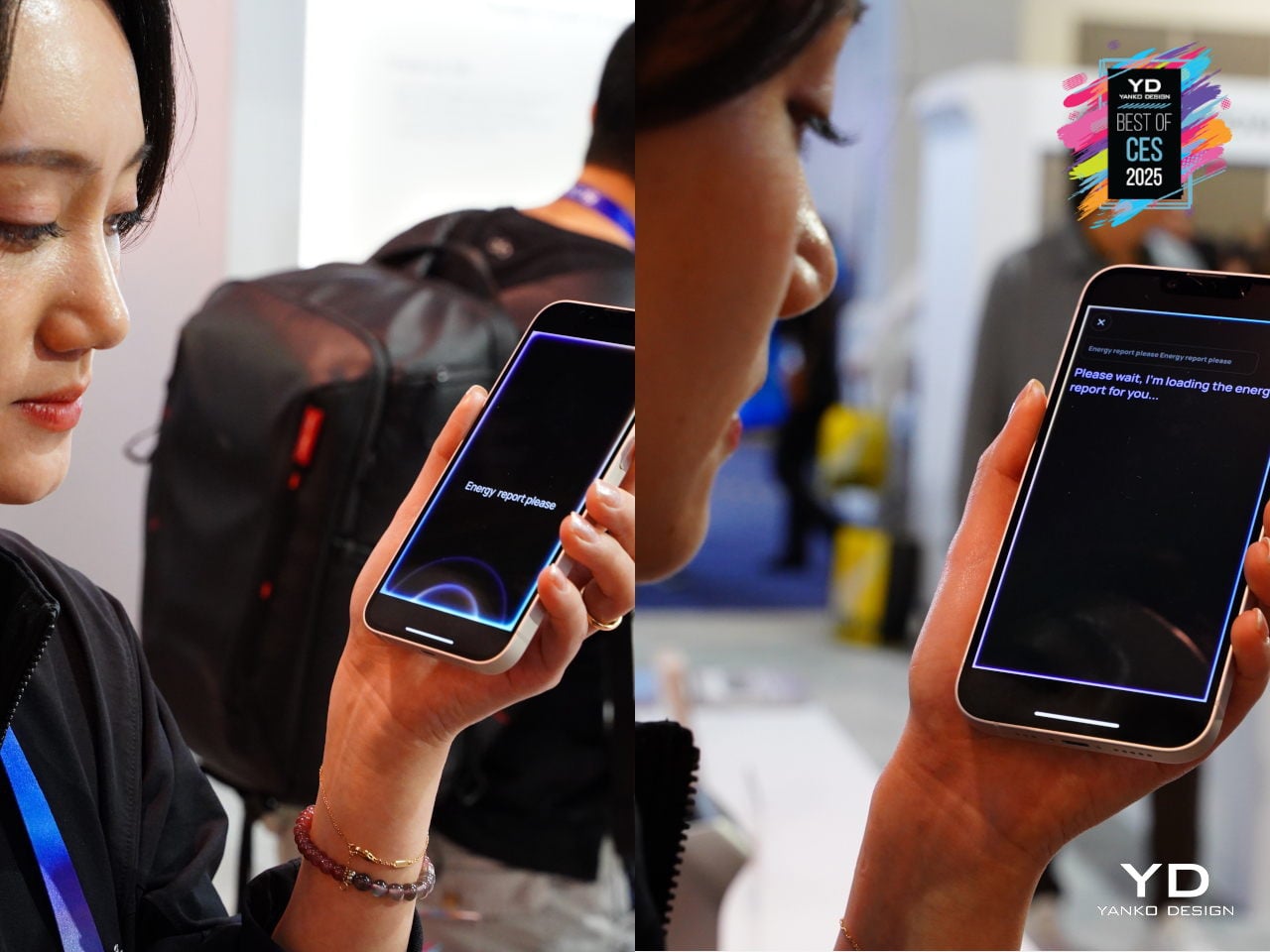
Pre-show coverage is leaning heavily on the phrase “agentic AI,” and it is worth understanding what that actually means. Traditional AI assistants answer questions: you ask for the weather, you get the weather. Agentic AI takes goals and executes multi-step workflows to achieve them. Observers expect to see devices at CES 2026 that do not just plan a trip but actually book the flights and reserve the tables, acting on your behalf with minimal supervision. The technical foundation for this is a combination of on-device models that understand context and cloud-based orchestration layers that can touch APIs, but the user experience is what matters: you stop micromanaging and start delegating.
Samsung is bringing its largest CES exhibit to date, merging home appliances, TVs, and smart home products into one massive space with AI and interoperability as the core message. Imagine a fridge, washer, TV, robot vacuum, and phone all coordinated by the same AI layer. The system notices you cooked something smoky, runs the air purifier a bit harder, and pushes a recipe suggestion based on leftovers. Your washer pings the TV when a cycle finishes, and the TV pauses your show at a natural break. None of this requires you to open an app or issue voice commands; the devices are just quietly making decisions based on context. That is the agentic promise, and CES 2026 is where companies will either prove they can deliver it or expose themselves as still stuck in the chatbot era.
Robot vacuums are the first agentic AI success story you can actually buy
CES 2026 is being framed by dedicated floorcare coverage as one of the most important years yet for robot vacuums and AI-powered home cleaning, with multiple brands receiving Innovation Awards and planning major product launches. This category quietly became the testing ground for agentic AI years before most people started using the phrase. Your robot vacuum already maps your home, plans routes, decides when to spot-clean high-traffic areas, schedules deep cleans when you are away, and increasingly maintains itself by emptying dust and washing its own mop pads. It does all of this with minimal cloud dependency; the brains are on the bot.
LG has already won a CES 2026 Innovation Award for a robot vacuum with a built-in station that hides inside an existing cabinet cavity, turning floorcare into an invisible, fully hands-free system. Ecovacs is previewing the Deebot X11 OmniCyclone as a CES 2026 Innovation Awards Honoree and promising its most ambitious lineup to date, pushing into whole-home robotics that go beyond vacuuming. Robotin is demoing the R2, a modular robot that combines autonomous vacuuming with automated carpet washing, moving from daily crumb patrol to actual deep cleaning. These bots are starting to integrate with broader smart home ecosystems, coordinating with your smart lock, thermostat, and calendar to figure out when you are home, when kids are asleep, and when the dog is outside. The robot vacuum category is proof that agentic AI can work in the real world, and CES 2026 is where other product categories are going to try to catch up.

TVs are getting Micro RGB panels and AI brains that learn your taste
LG has teased its first Micro RGB TV ahead of CES 2026, positioning it as the kind of screen that could make OLED owners feel jealous thanks to advantages in brightness, color control, and longevity. Transparent OLED panels are also making appearances in industrial contexts, like concept displays inside construction machinery cabins, hinting at similar tech eventually showing up in living rooms as disappearing TVs or glass partitions that become screens on demand. The hardware story is always important at CES, but the AI layer is where things get interesting for everyday use.
TV makers are layering AI on top of their panels in ways that go beyond simple upscaling. Expect personalized picture and sound profiles that learn your room conditions, content preferences, and viewing habits over time. The pitch is that your TV will automatically switch to low-latency gaming mode when it recognizes you launched a console, dim your smart lights when a movie starts, and adjust color temperature based on ambient light without you touching a remote. Some of this is genuine machine learning happening on-device, and some of it is still marketing spin on basic presets. The challenge for readers at CES 2026 will be figuring out which is which, but the direction is clear: TVs are positioning themselves as smart hubs that coordinate your living room, not just dumb displays waiting for HDMI input.
Gaming gear is wiring itself for AI rendering and 500 Hz dreams
HDMI Licensing Administrator is using CES 2026 to spotlight advanced HDMI gaming technologies with live demos focused on very high refresh rates and next-gen console and PC connectivity. Early prototypes of the Ultra96 HDMI cable, part of the new HDMI 2.2 specification, will be on display with the promise of higher bandwidth to support extreme refresh rates and resolutions. Picture a rig on the show floor: a 500 Hz gaming monitor, next-gen GPU, HDMI 2.2 cable, running an esports title at absurd frame rates with variable refresh rate and minimal latency. It is the kind of setup that makes Reddit threads explode.
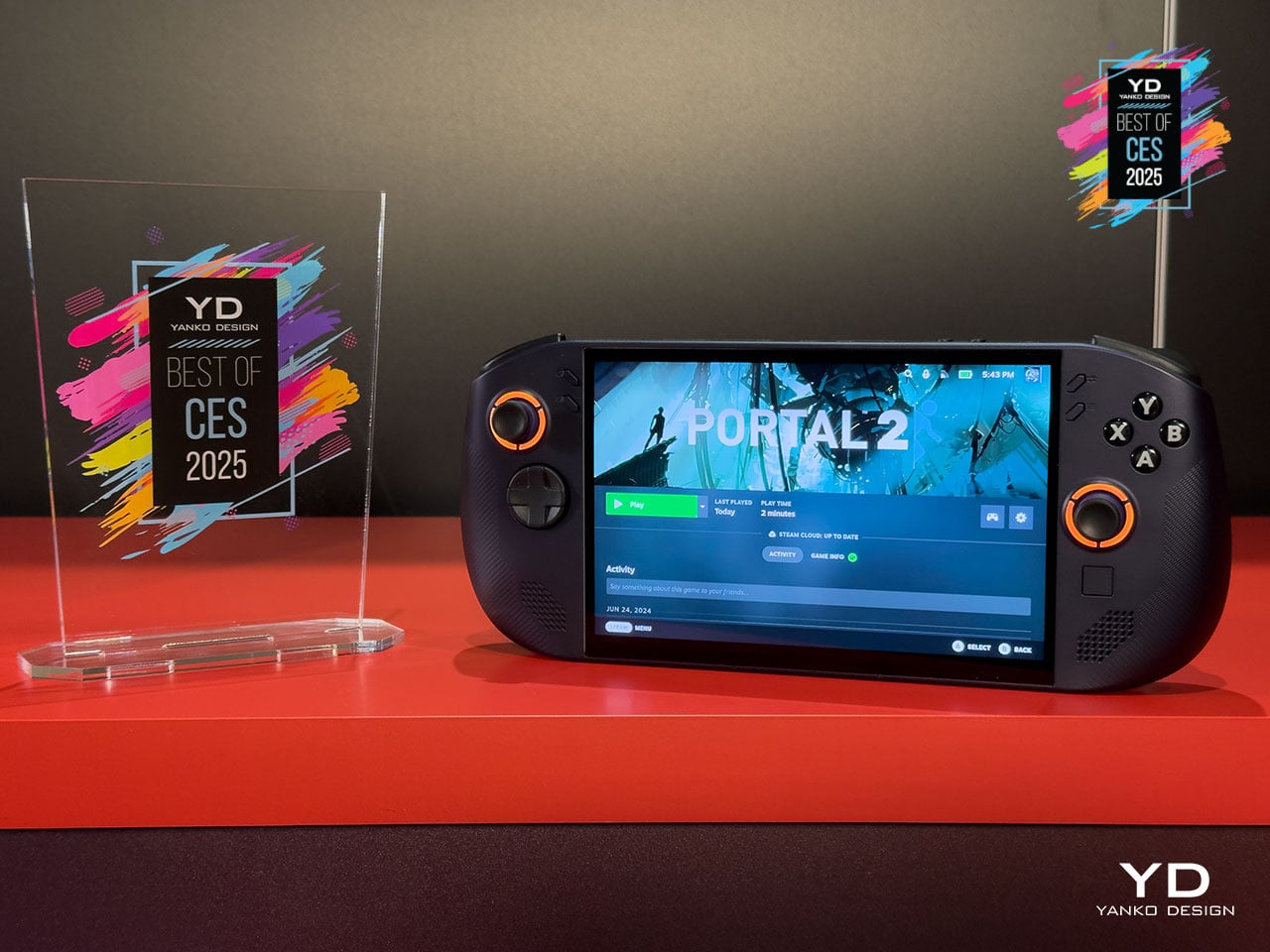
GPUs are increasingly sold not just on raw FPS but on AI capabilities. AI upscaling like DLSS is already table stakes, but local AI is also powering streaming tools for background removal, audio cleanup, live captions, and even dynamic NPC dialogue in future games that require on-device inference rather than server-side processing. Nvidia’s rumored RTX 50 “Super” refresh is expected to double down on this positioning, selling the cards as both graphics and AI accelerators. For gamers and streamers, CES 2026 is where the industry will make the case that your rig needs to be built for AI workloads, not just prettier pixels. The infrastructure layer, cables and monitors included, is catching up to match that ambition.
What CES 2026 really tells us about where AI is going
The shift from cloud-dependent assistants to on-device agents is not just a technical upgrade; it is a fundamental change in how gadgets are designed and sold. When Intel, AMD, and Nvidia are all racing to build chips with dedicated AI accelerators, and when Samsung is reorganizing its entire CES exhibit around AI interoperability, the message is clear: companies are betting that local intelligence and cross-device coordination are the only paths forward. The chatbot era served its purpose as a proof of concept, but CES 2026 is where the industry starts delivering products that can think, act, and coordinate without constant cloud supervision.
What makes this year different from the past two is that the infrastructure is finally in place. The silicon can handle real-time inference. The software frameworks for agentic behavior are maturing. Robot vacuums are proving the model works at scale. TVs and smart home ecosystems are learning how to talk to each other without requiring users to become IT managers. The pieces are connecting, and CES 2026 is the first major event where you can see the whole system starting to work as one layer instead of a collection of isolated features.
The real question is what happens after the demos
Trade shows are designed to impress, and CES 2026 will have no shortage of polished demos where everything works perfectly. The real test comes in the six months after the show, when these products ship and people start using them in messy, real-world conditions. Does your AI PC actually keep your data private when it runs models locally, or does it still phone home for half its features? Does your smart home coordinate smoothly when you add devices from different brands, or does it fall apart the moment something breaks the script? Do robot vacuums handle the chaos of actual homes, or do they only shine in controlled environments?
The companies that win in 2026 and beyond will be the ones that designed their AI systems to handle failure, ambiguity, and the unpredictable messiness of how people actually live. CES 2026 is where you will see the roadmap. The year after is where you will see who actually built the roads. If you are walking the show floor or following the coverage, the most important question is not “what can this do in a demo,” but “what happens when it breaks, goes offline, or encounters something it was not trained for.” That is where the gap between real agentic AI and rebranded presets will become impossible to hide.