The Sazae Radio was a Japanese novelty radio built into a turban shell, sold by lottery in 2016 with just 100 units available for 8,350 applicants. The odds were 83.5 to one. Losing that lottery left a maker named hide-key with a simple choice: accept the disappointment or build something better. The DIY pivot turned into the Steampunk Nautilus, a haptic speaker project that takes a similar idea and pushes it considerably further.
The choice was a nautilus shell, a living fossil that has barely changed in 500 million years. Discovering that its English name matched Jules Verne’s submarine sealed the decision. The goal became not just a speaker, but a piece of audio art with three rules: steampunk-kintsugi repair, where metal celebrates the shell’s imperfections, conservation-minded reversibility, where every adhesive can be removed with acetone, and a haptic drive that turns the shell itself into a vibrating diaphragm.
Designer: hide-key
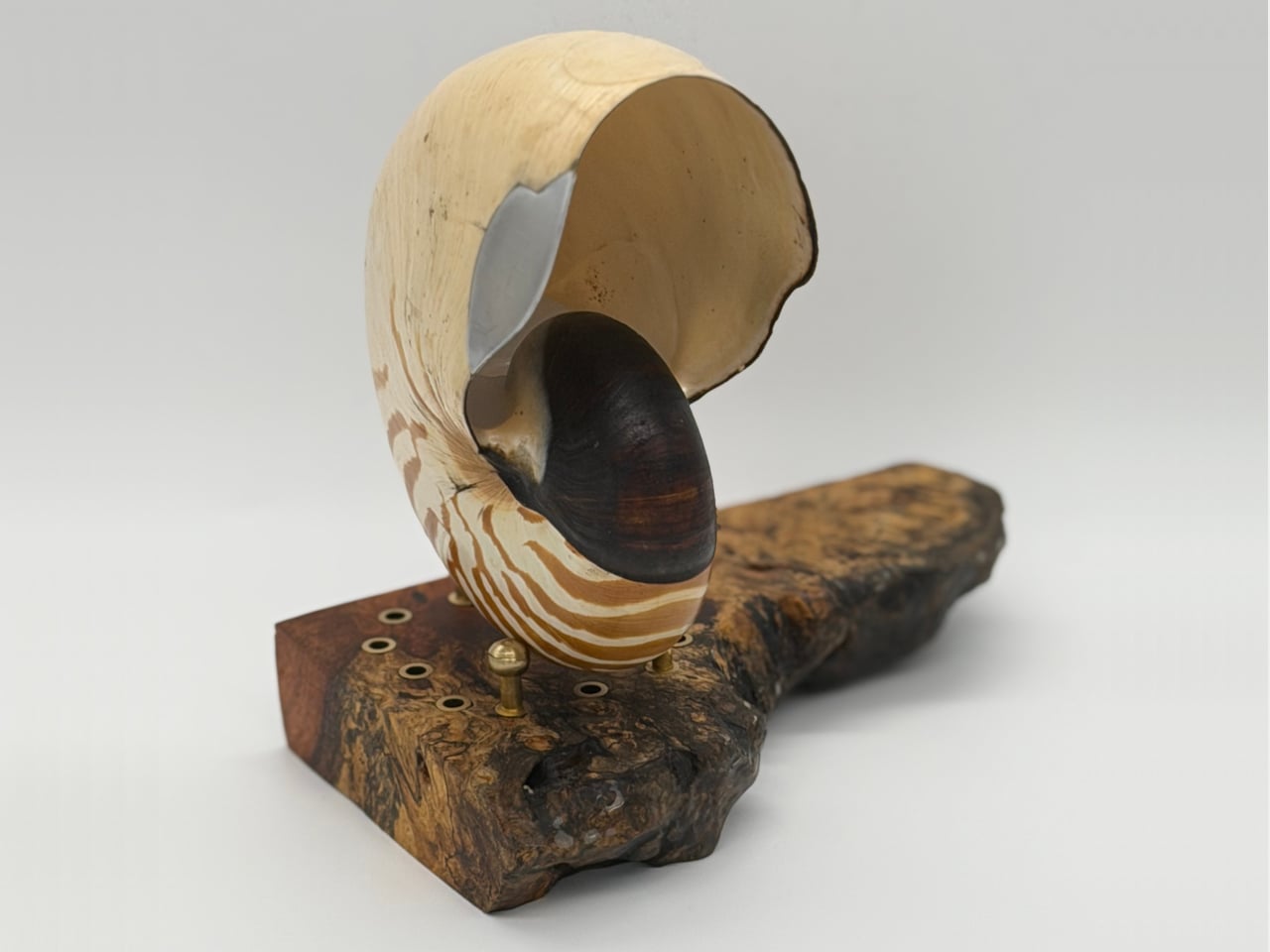

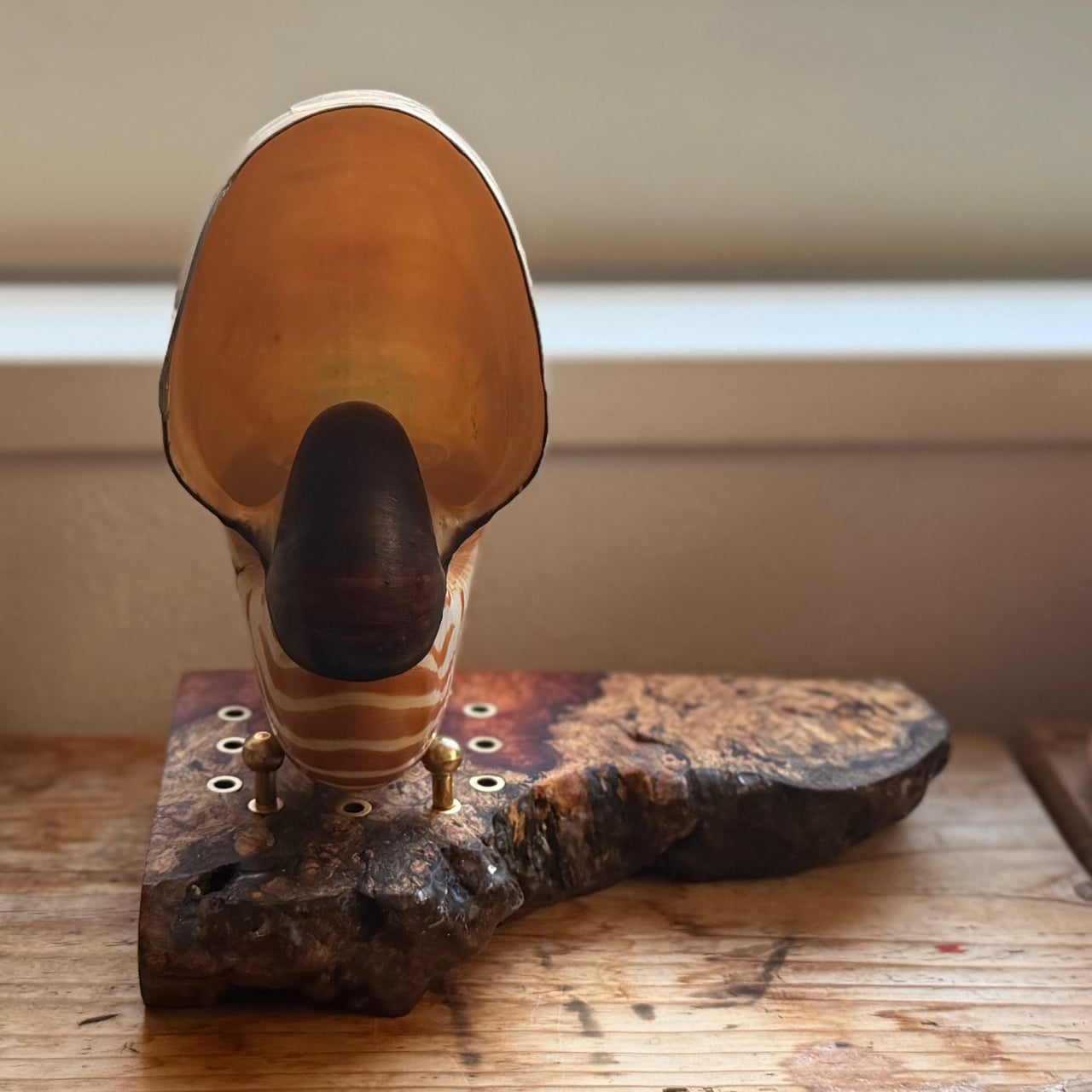

Early experiments failed. A massive sea snail shell refused to vibrate, too thick and heavy for a small exciter to drive. The nautilus, by contrast, worked immediately. Its thin, lightweight structure, built for buoyancy, behaves like a violin body or speaker cone, with internal ribs adding resonance without mass. The project quietly became a study in bioacoustics, where shell biology dictated whether the fossil could sing, and heavy shells behaved like bricks.
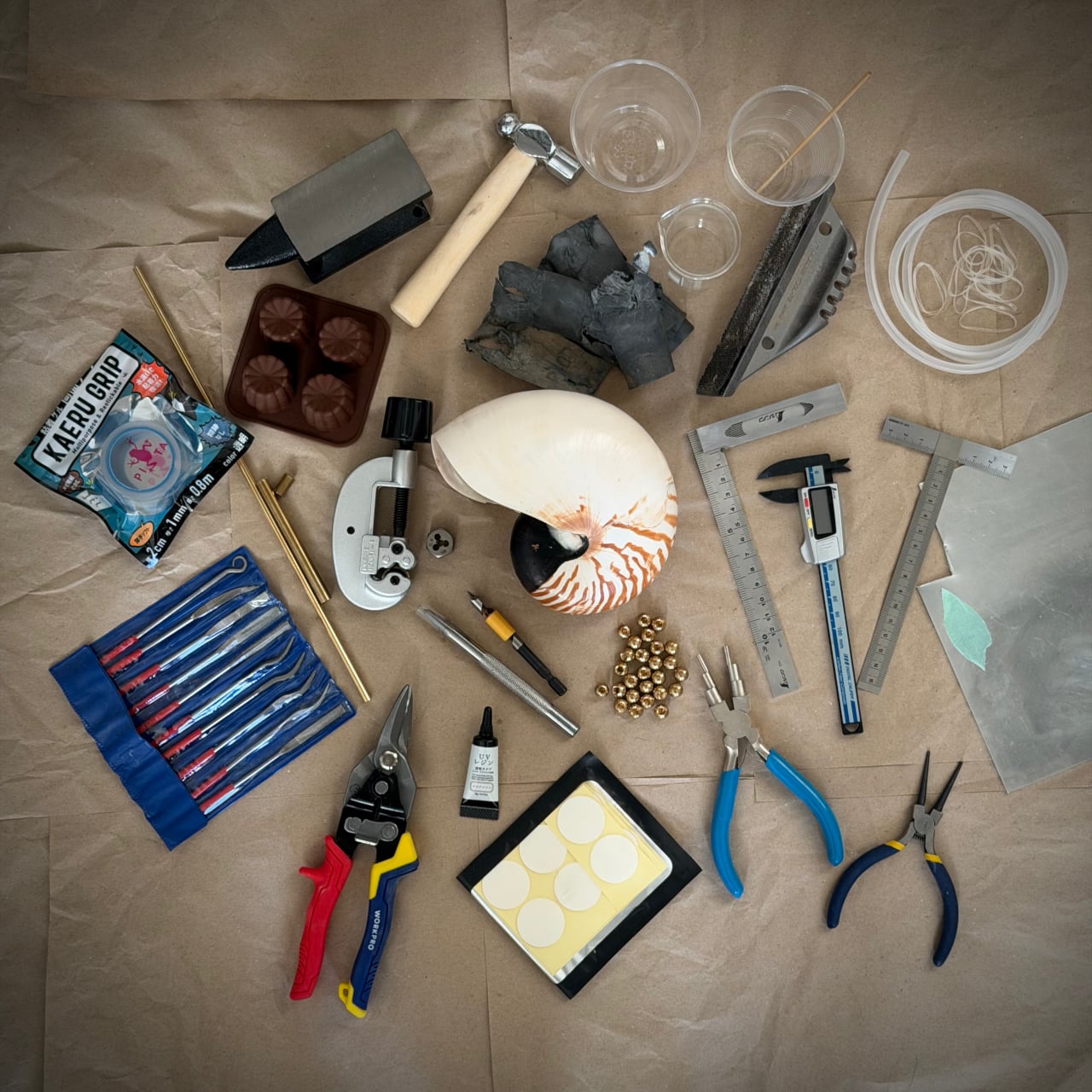
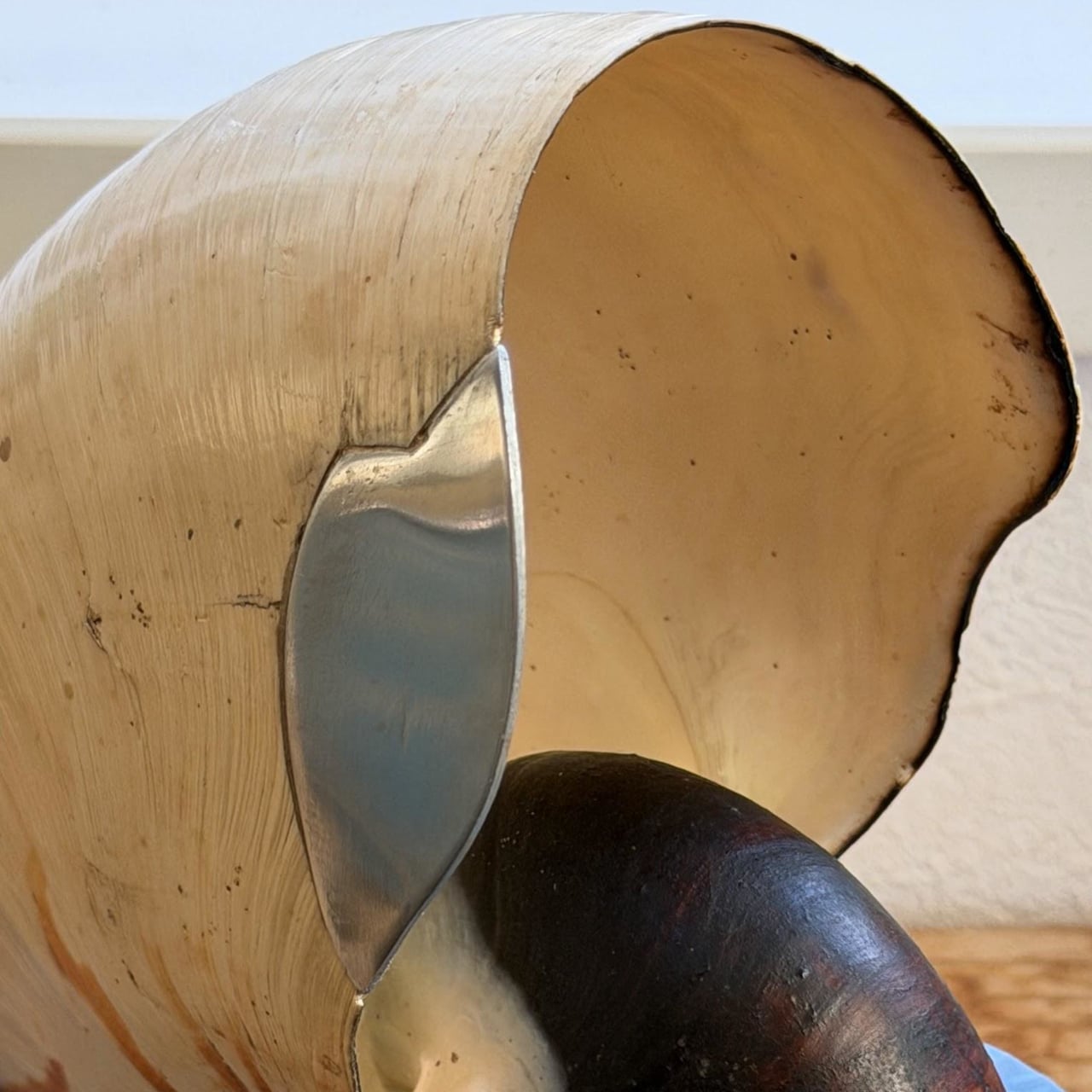
The build starts with a chipped shell and leans into the damage. The broken area is traced, and a 1.2 mm aluminum sheet is hammered and filed to match the organic curve, polished to a mirror, and attached with cyanoacrylate and brass-colored epoxy putty. All adhesives were chosen so they can be removed with acetone, leaving the shell intact underneath. Reversibility was treated as a hard constraint, respecting the specimen while giving it a new function.
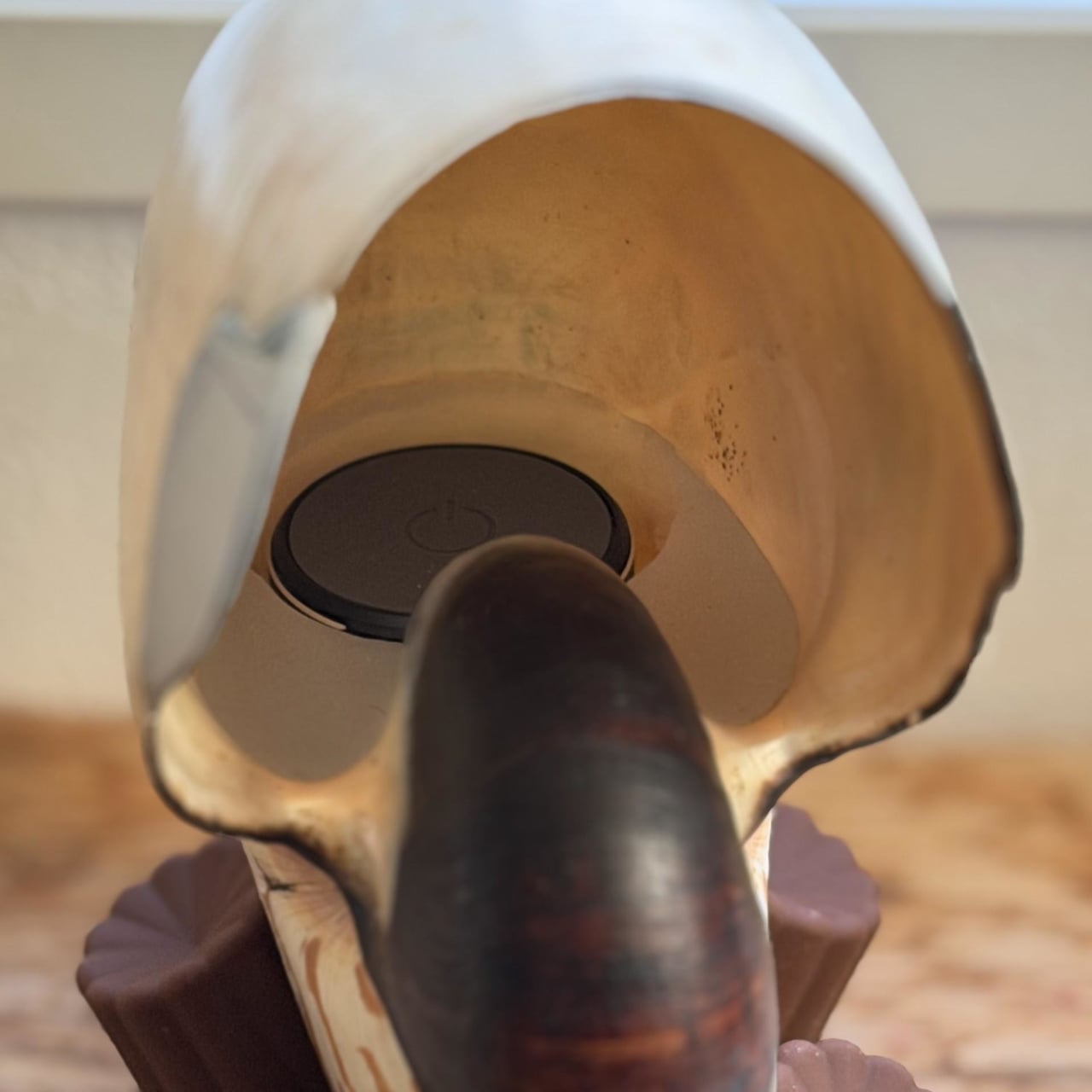
The haptic core moved from a boring internal speaker to a vibration exciter mounted in a custom silicone cartridge that fits the shell’s living chamber. Water displacement measured the volume at just 50 cc, and Shore 15A silicone was poured to create a perfect seat. A transparent hair band acts as a hidden pull tab, and a silicone cap hides the exciter and diffuses its faint blue LED into a heartbeat-like glow deep in the spiral.
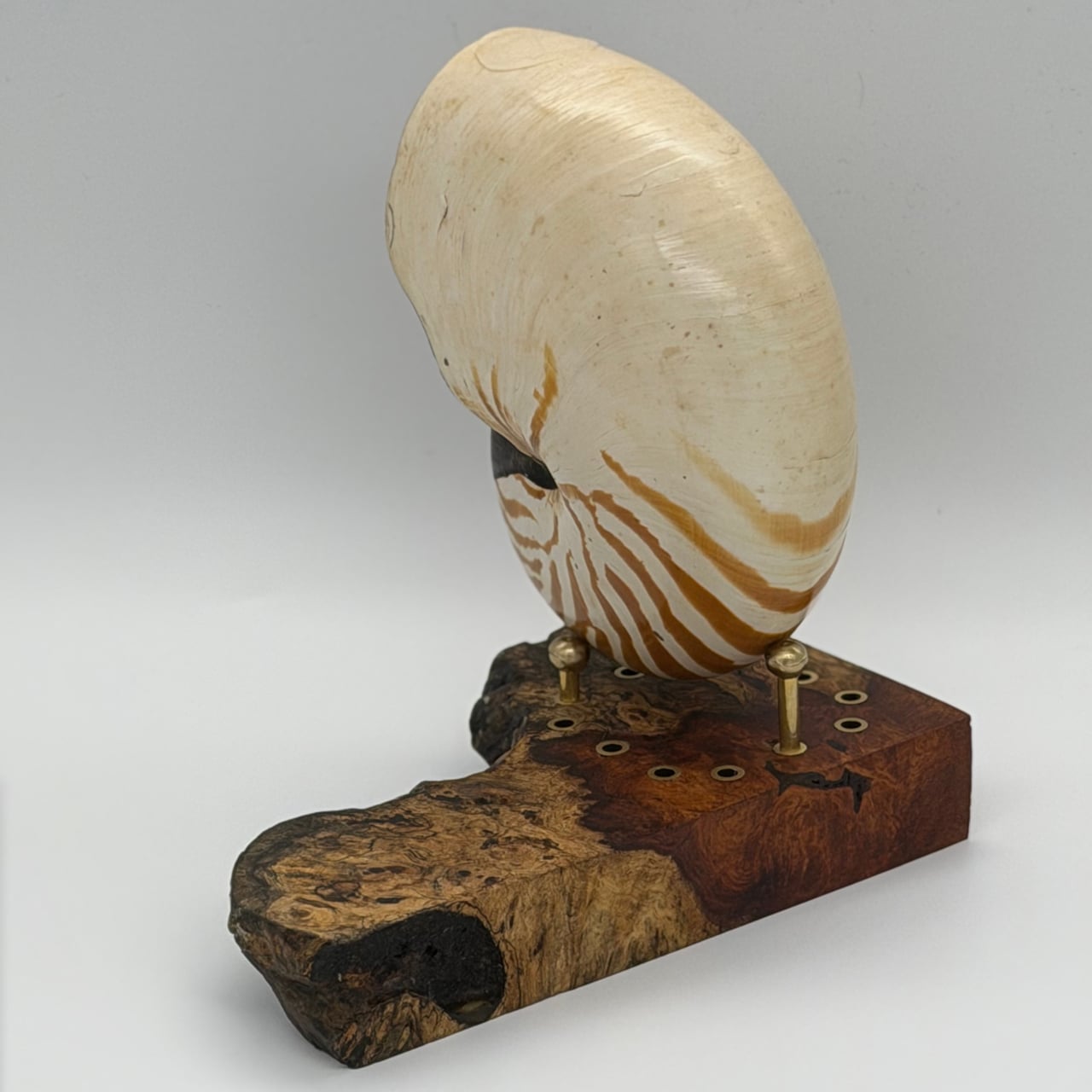
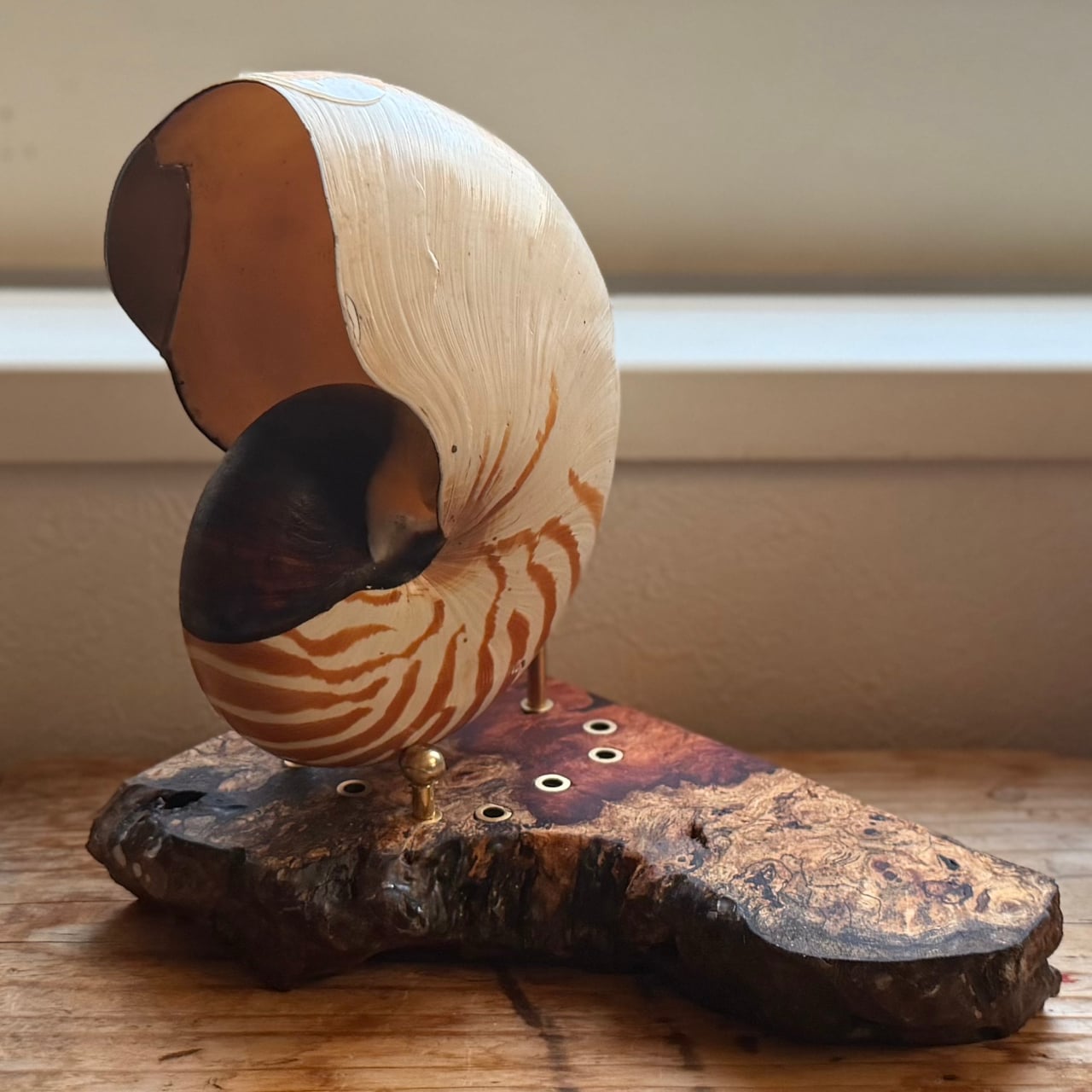
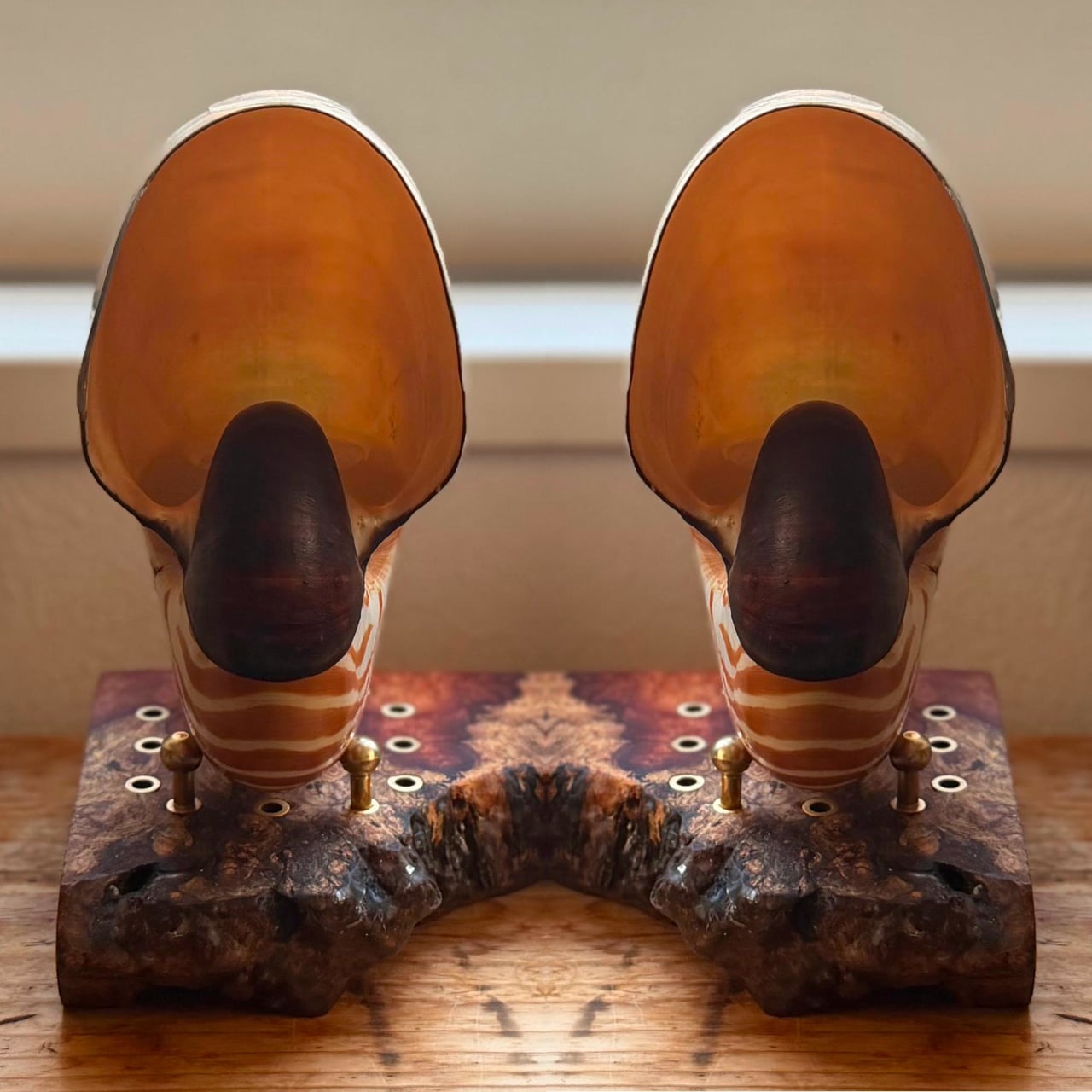
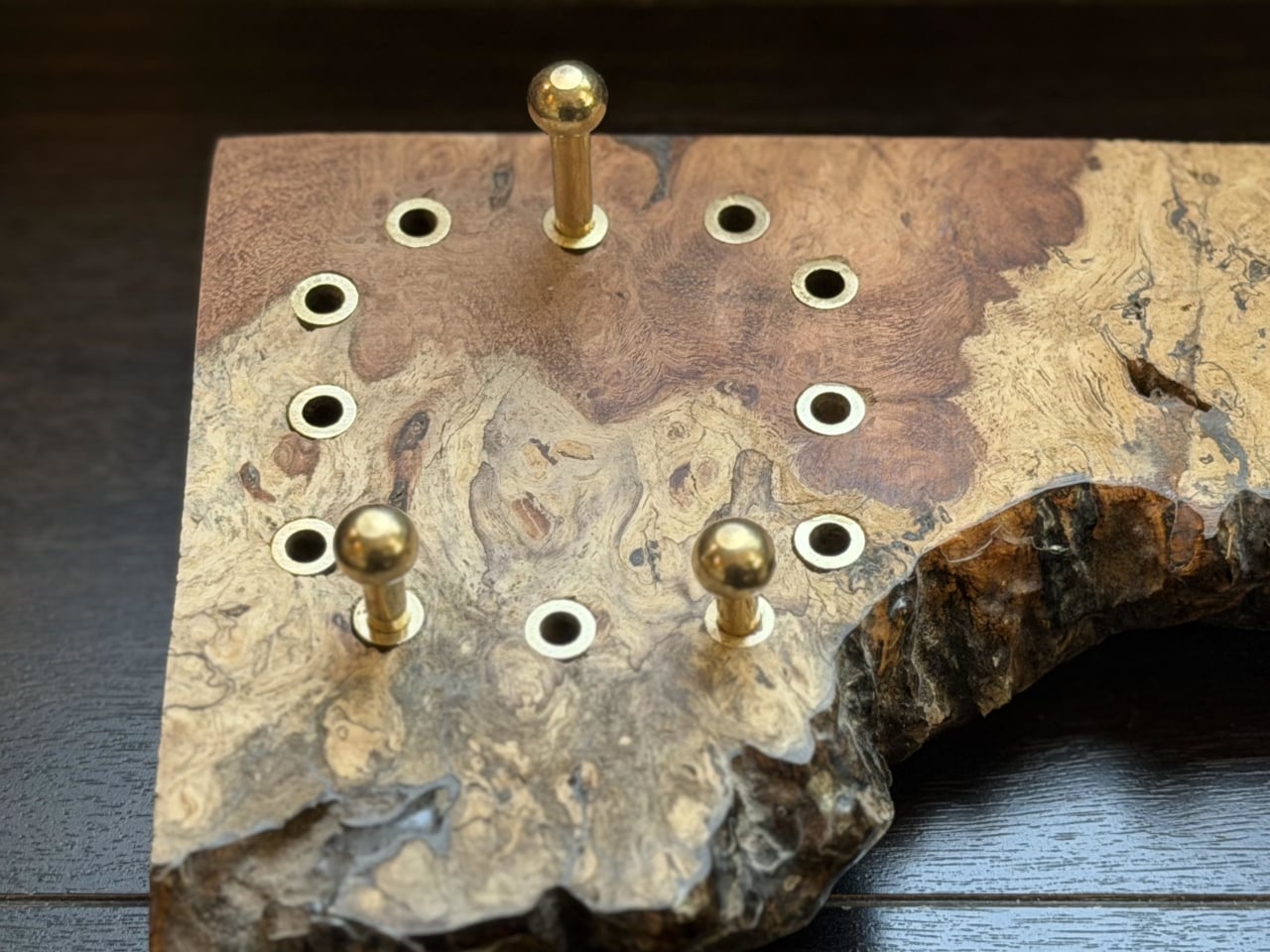
The base is a Quince burl chosen for its red, white, and black grain that echoes the shell’s pattern. A Magic Circle layout of brass bushings lets the shell’s angle be changed by moving three brass pillars. Threaded brass rods with ball nuts support the shell, and a drop of soft UV resin on each contact point prevents buzzing, making the heavy fossil appear to float while staying mechanically quiet.

Three hidden modes emerge. Holding the shell in your hands for bone-conducted haptic listening, shifting the exciter between internal and external mounts to change the sound from lo-fi radio to a sharper, more direct tone, and the dream of a stereo pair if a second shell appears. The Steampunk Nautilus turns a broken specimen into a reversible, vibrating instrument that asks you to feel the music as much as hear it, turning disappointment from a lottery into something tactile, strange, and surprisingly beautiful.