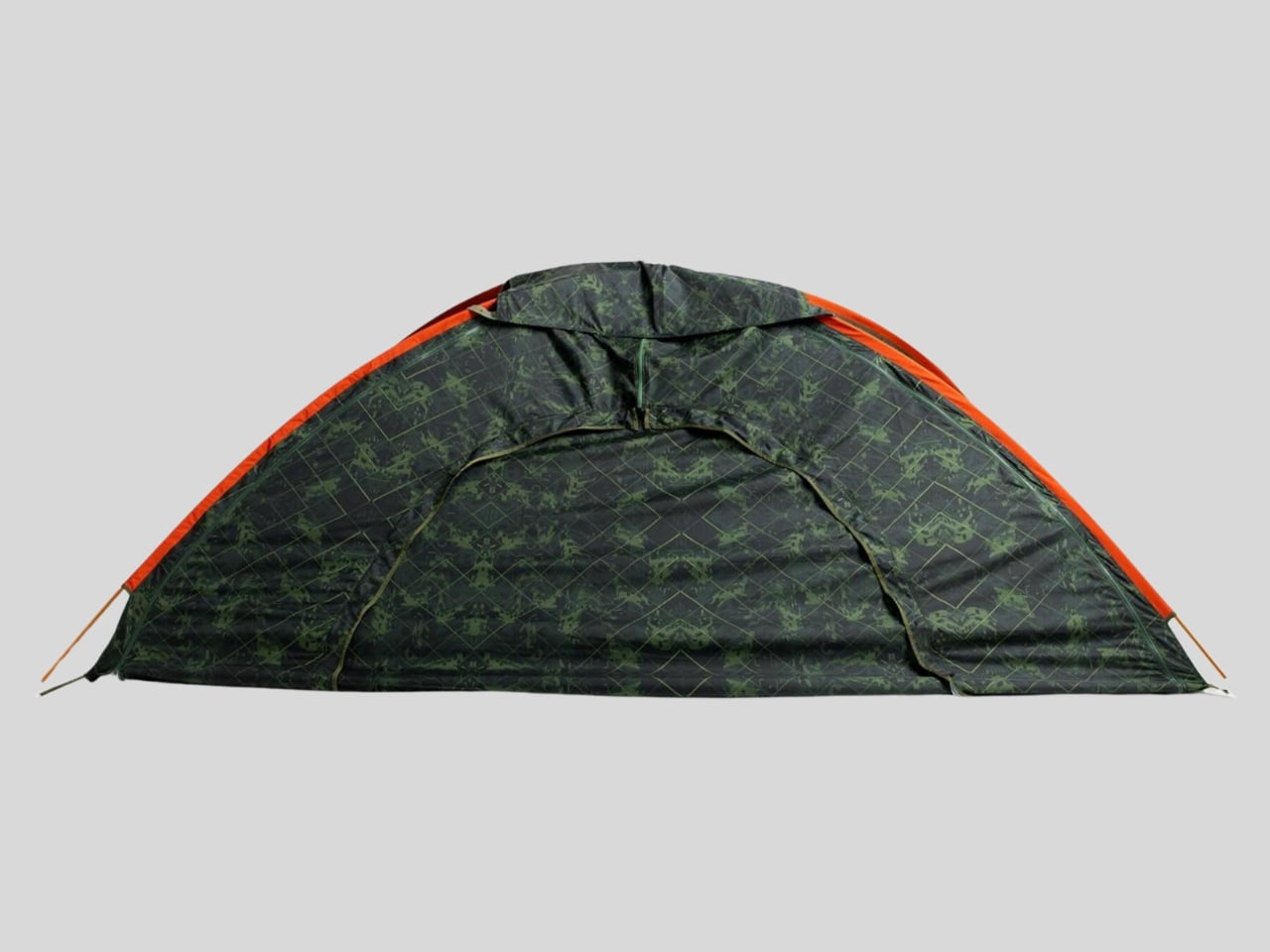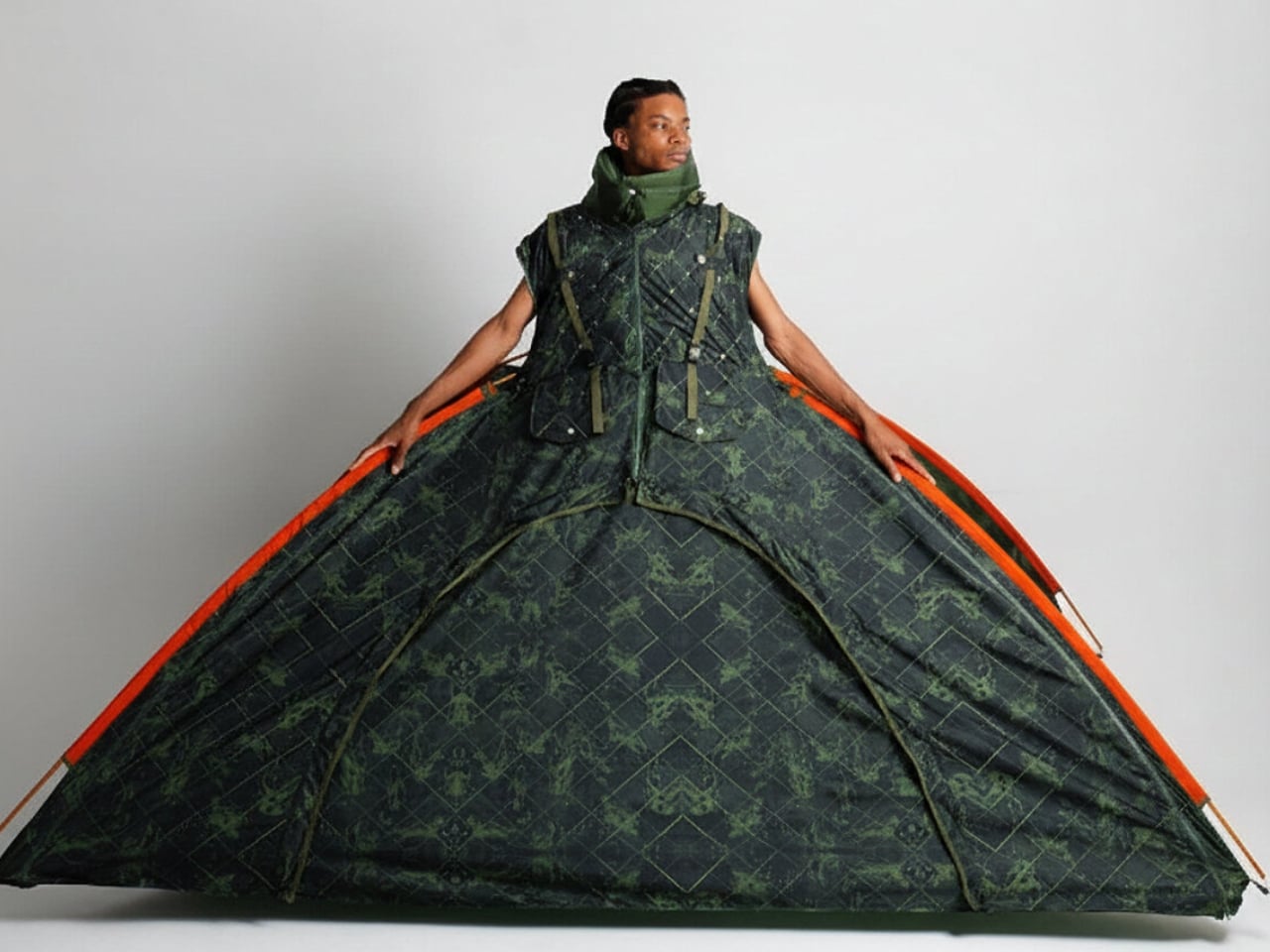

What if your jacket could save your life? Not in the metaphorical sense, but literally. Tokyo-based fashion student Yoon Myat Su Lin has designed something that sounds like it belongs in a sci-fi movie but is rooted in very real human need. It’s called Shelter Wear, and it’s exactly what it sounds like: a wearable garment that transforms into a functional tent.
The concept didn’t come from a design studio brainstorm or a trendy pitch deck. It came from memory and trauma. Yoon experienced an earthquake in Myanmar, where she witnessed people suddenly displaced, left scrambling for safety without any temporary shelter. That image stuck with her. She started thinking differently about what clothing could do, beyond looking cool or expressing identity.
Designer: Yoon Myat Su Lin
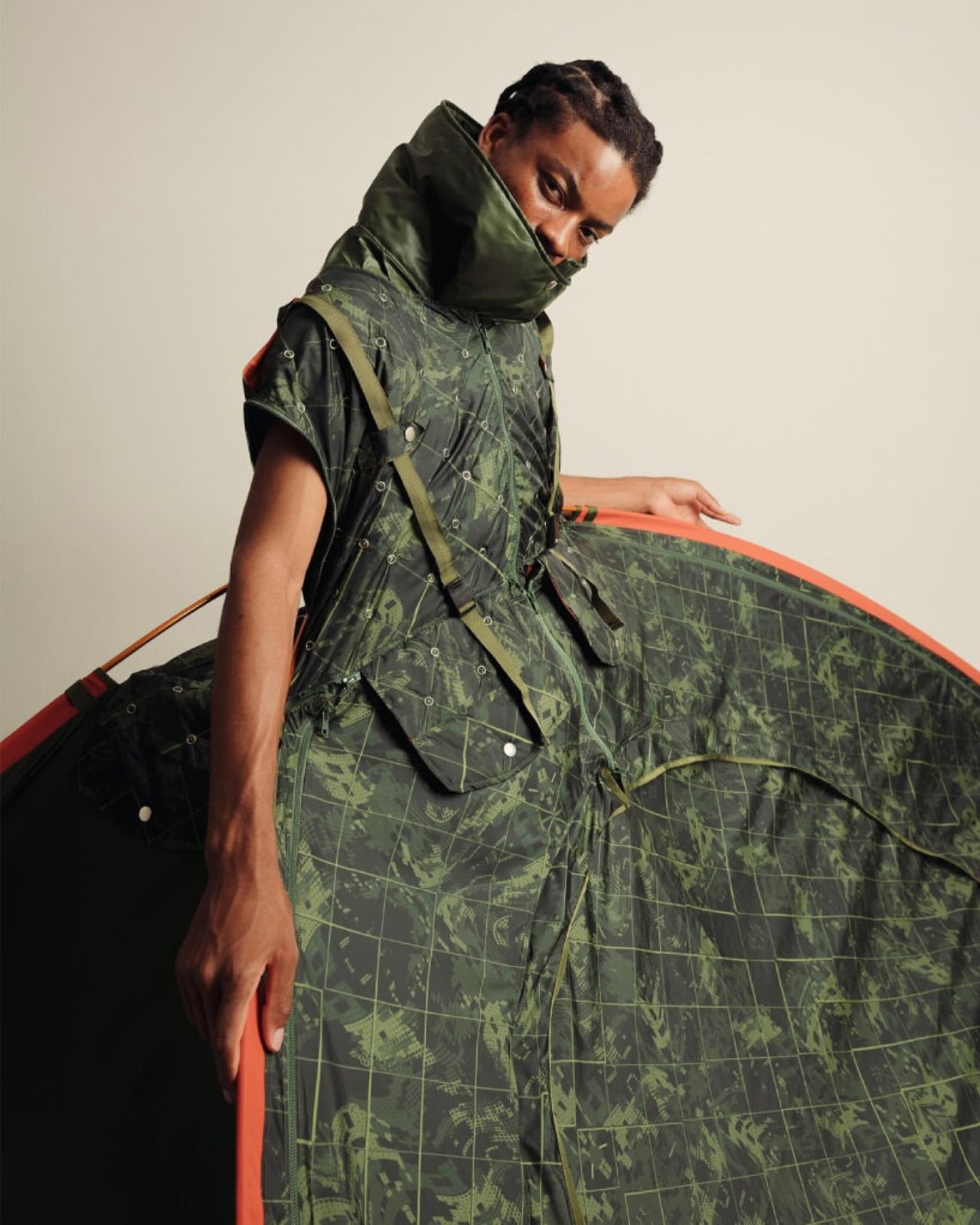

What if the thing you’re already wearing could become the thing you desperately need? And that’s where Shelter Wear gets interesting. It challenges the entire idea of what fashion is supposed to be. We’re used to clothes being decorative, seasonal, expressive. But Yoon flips that script. She’s asking: why can’t a garment be infrastructure? Why can’t your outfit double as your emergency kit?
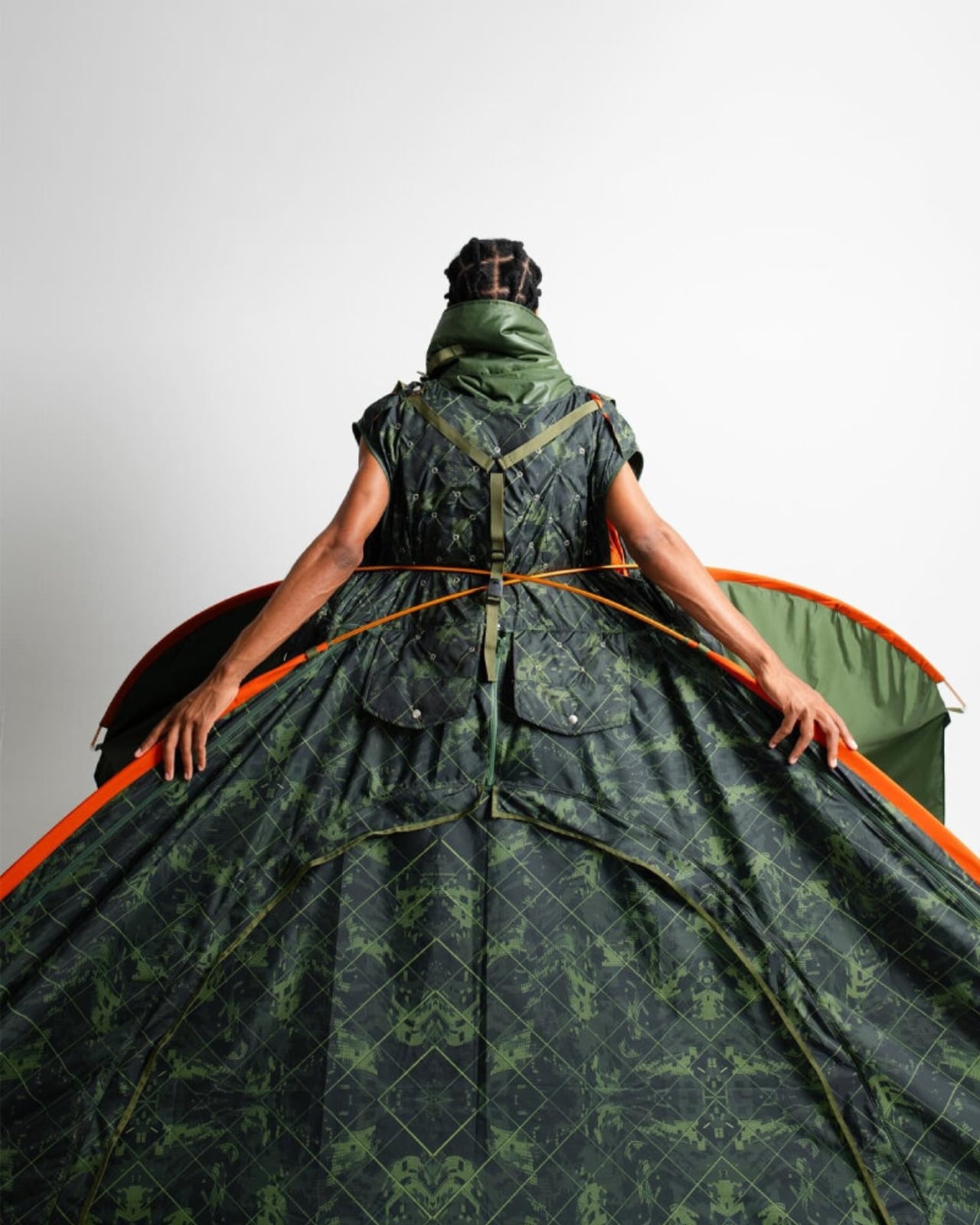
When you first look at Shelter Wear, it reads as a structured, utilitarian vest. Think sleeveless outerwear with a high protective collar and some seriously intentional paneling. It’s got that techwear aesthetic, the kind of thing you’d see on someone who’s into urban exploration or just really likes pockets. But here’s where it gets wild: those sleeves? They’re detachable backpacks. You’re literally wearing your storage.

Then comes the transformation. Unclip a few buckles, unfold the structure, and suddenly you’re inside a triangular tent that expands around your body. It’s not a gimmick or a prototype that barely works in controlled conditions. It’s a legitimate shelter that offers protection when everything else has failed. The tent resembles a wide skirt when worn, blending into the garment’s silhouette until you actually need it.
This isn’t about camping trips or festival fashion. This is crisis design. It’s for the moments when help hasn’t arrived yet, when infrastructure has collapsed, when all you have is what’s on your body. In those first critical hours after a disaster, traditional emergency supplies might be inaccessible. But if you’re already wearing your shelter, you’ve bought yourself time and safety. Yoon drew inspiration from designer Aojie Yang, who also works in the space of functional, transformative fashion. But where some conceptual designs feel distant from real application, Shelter Wear feels grounded. It’s portable without being bulky. It’s practical without sacrificing design integrity. And it makes you rethink the relationship between body and architecture.
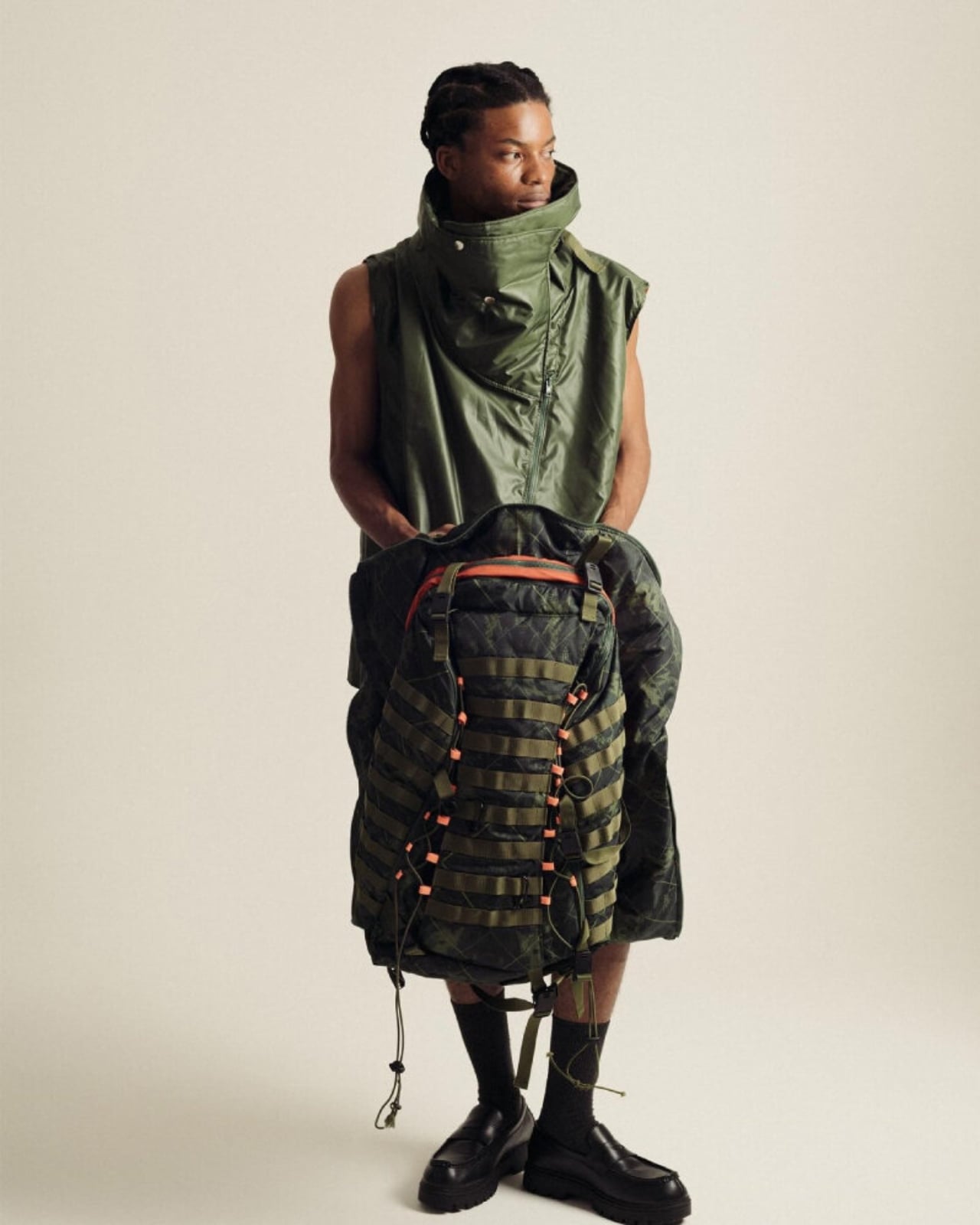
Because that’s really what this is about. The body as the first architecture. When buildings fall, when homes are destroyed, your body remains. Shelter Wear treats that body as a moving site of refuge. It’s a radical reframing of what clothing infrastructure can mean in vulnerable communities. The design also won the YKK Special Prize at the 25th YKK Fastening Award, which makes sense when you think about the engineering involved. This isn’t just fabric and good intentions. It’s ripstop materials, strategic folding mechanisms, and fasteners that need to hold up under actual emergency conditions.
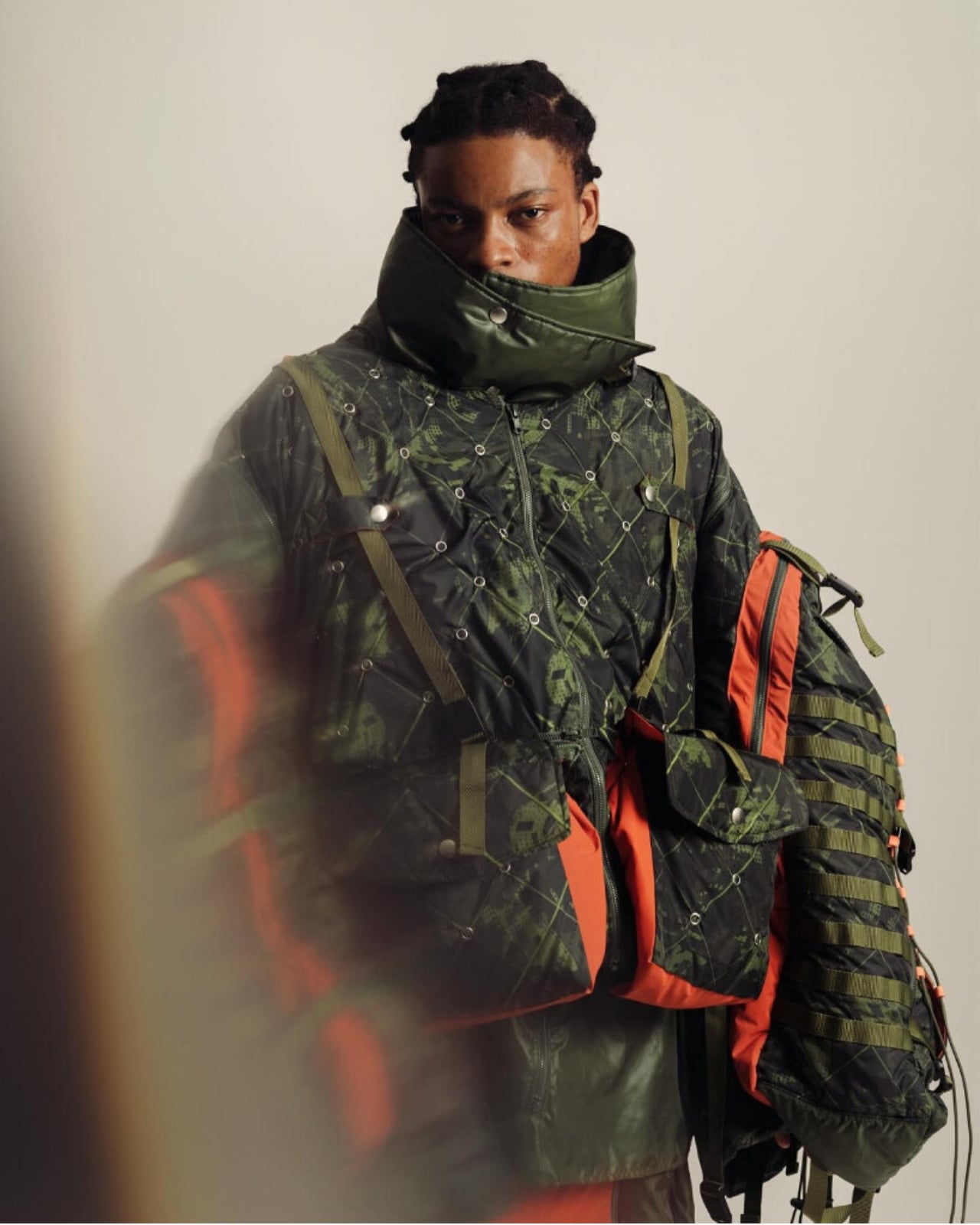
But beyond the technical specs, Shelter Wear is a gesture of solidarity. It acknowledges that displacement is real, that climate disasters are increasing, that millions of people worldwide face housing insecurity. Instead of looking away, Yoon designed toward that reality. Does it solve homelessness? No. Will it prevent earthquakes? Obviously not. But it does something equally important: it expands our imagination of what design can do. It proves that fashion students in Tokyo are thinking about Myanmar earthquakes, about refugee crises, about what happens when safety disappears. And they’re making things that might actually help. That’s the power of design when it refuses to just be decorative. When it insists on being useful, urgent, and human.