
Most cyclists who commute and ride recreationally face an uncomfortable choice: buy a dedicated ebike for weekday miles and a separate unassisted bike for weekend adventures, or pick one and accept its limitations. The garage fills with frames, the budget stretches thin, and neither bike does both jobs particularly well. Sonder and Skarper have looked at this problem and proposed something different.
The Sonder x Skarper Camino collaboration bundles three gravel bike configurations with the Skarper DiskDrive system pre-installed, creating what both companies call a “two bikes in one” solution. The concept is straightforward: clip on the motor for assisted commutes, unclip it for unencumbered gravel riding. What makes this interesting is not the idea itself, which conversion kits have promised for years, but the execution and the factory integration that distinguishes it from aftermarket retrofits.
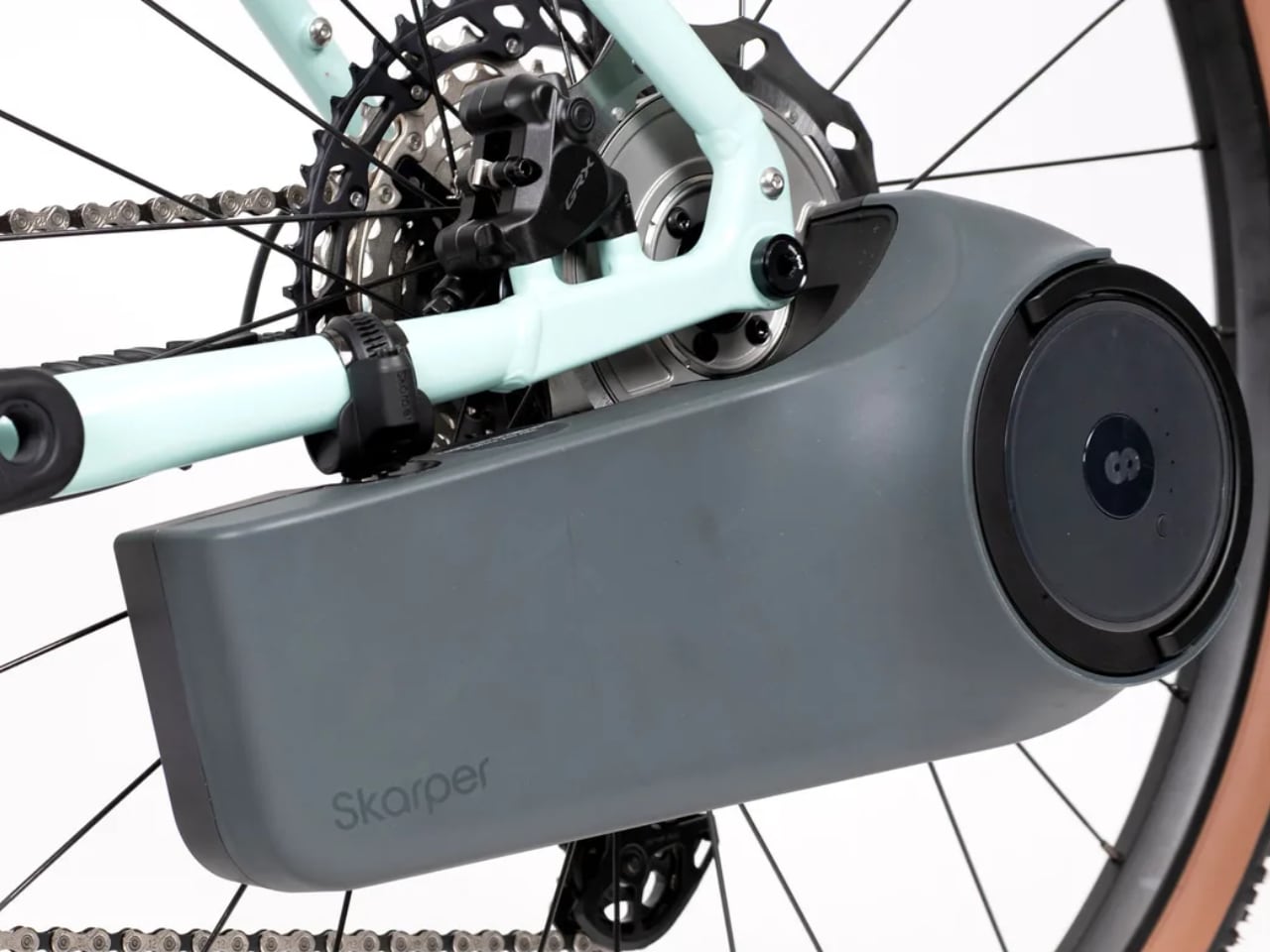
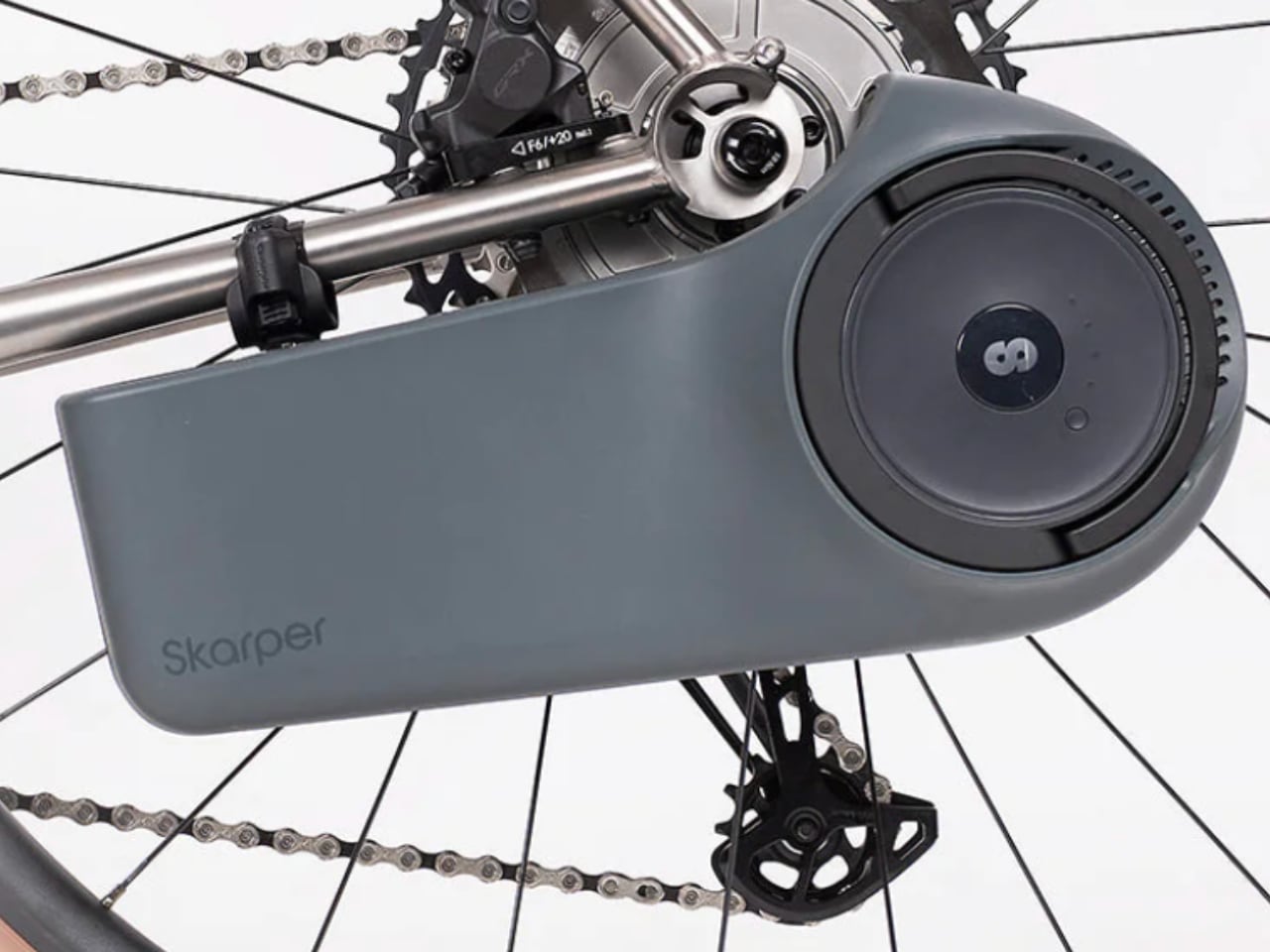
Skarper’s approach to electric assist differs fundamentally from hub motors or mid-drives. The DiskDrive unit locks onto a specially designed rear brake rotor and delivers torque through that interface rather than through the wheel axle or crankset. This rotor-drive architecture means the motor sits at the chainstay, clips on and off without tools, and leaves no permanent frame modifications when removed.
How the DiskDrive System Works
Rotor-Based Power Delivery
The Skarper unit contains a 250W motor rated at approximately 45 to 50 Nm of torque depending on generation. Rather than spinning the wheel directly or pushing through the chain, it grips the proprietary DiskDrive rotor and rotates it, which in turn rotates the wheel. This mechanically simple layout avoids the planetary gears found in hub motors and bypasses the drivetrain entirely, which may reduce wear on chains and cassettes over time.
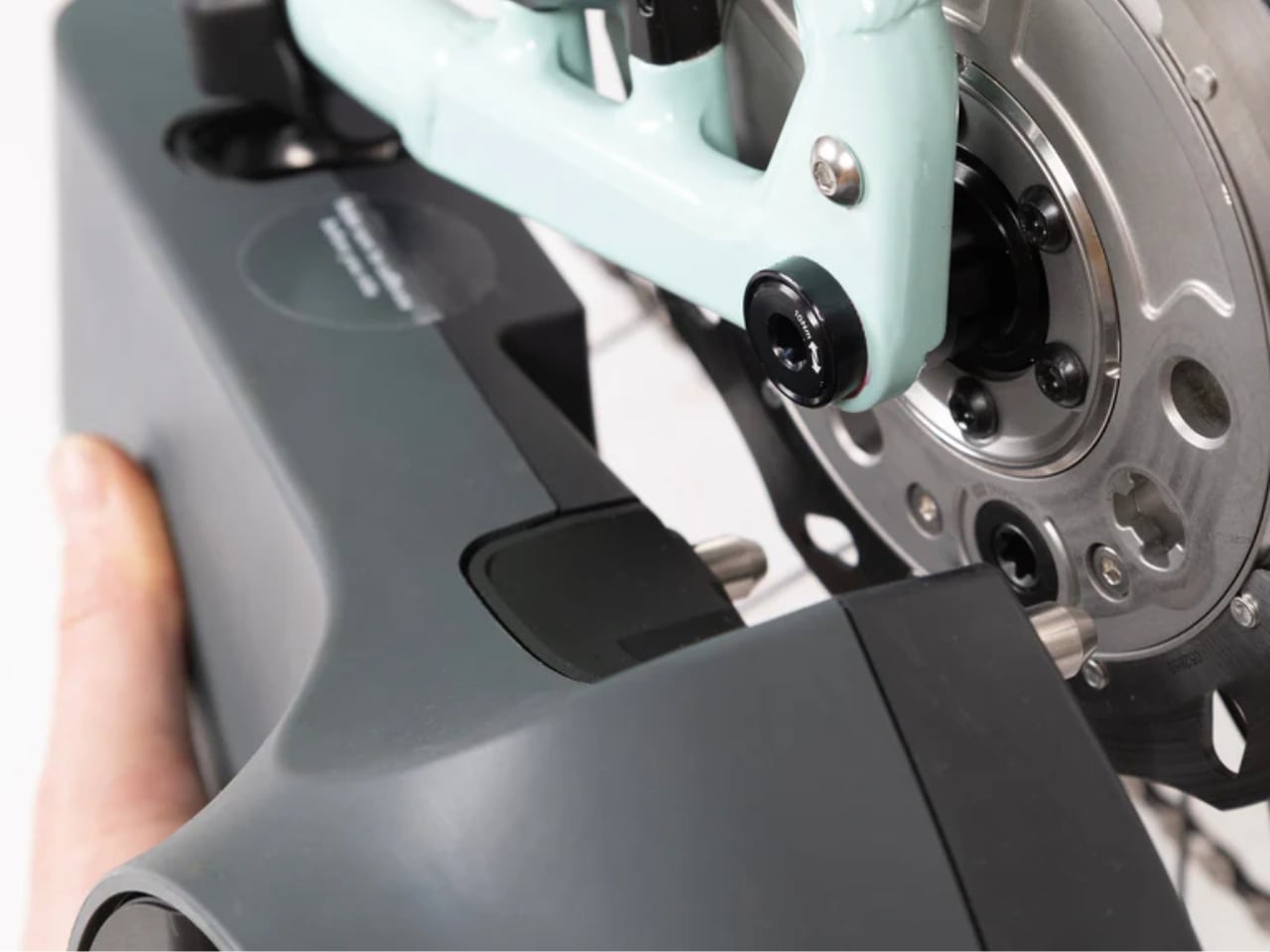
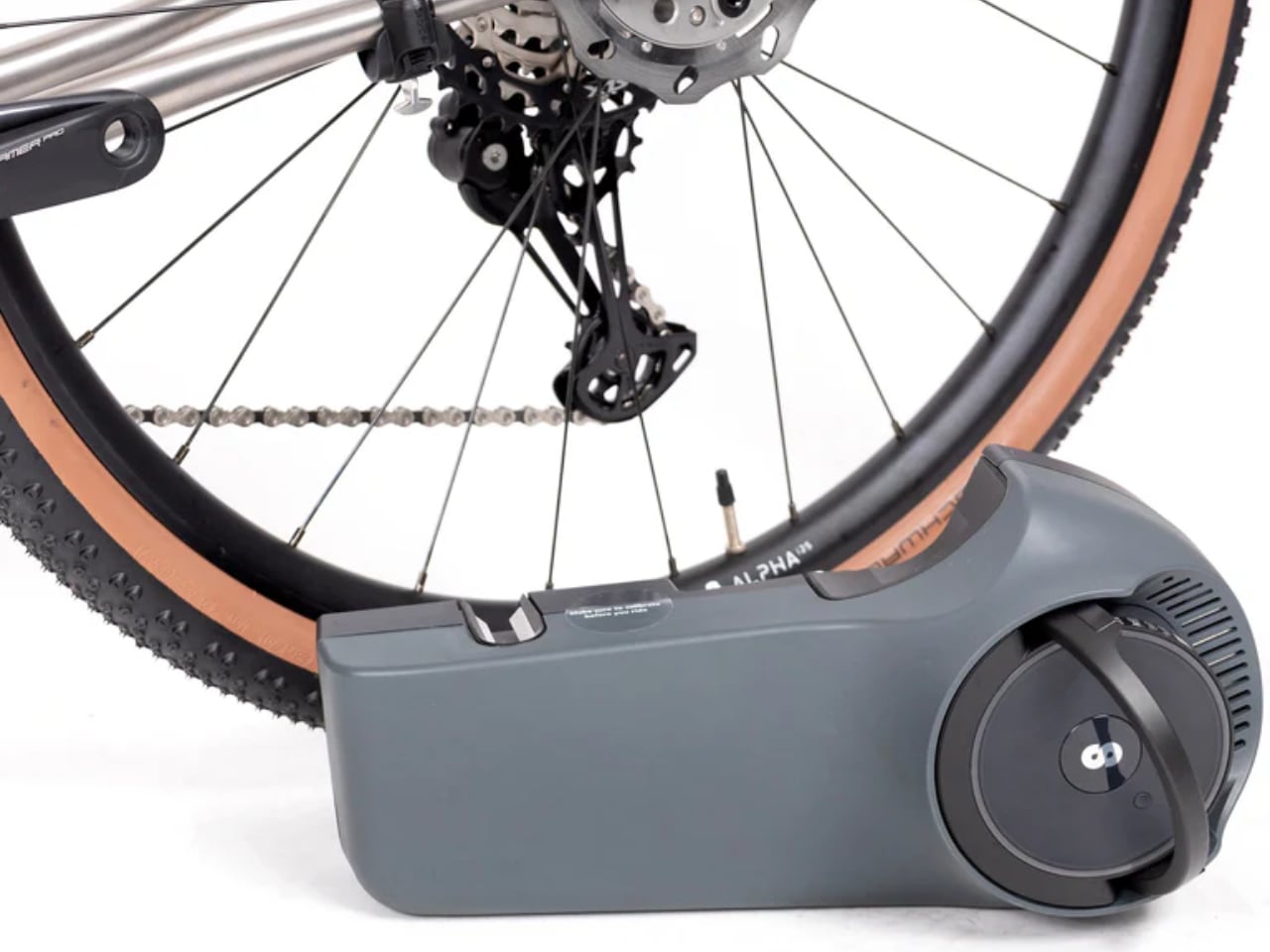
A 240 Wh internal battery provides the energy storage, with Skarper claiming a full charge time of roughly 2.5 hours. Range estimates land between 50 and 60 km in eco mode, dropping in higher power settings. These figures are modest compared to purpose-built ebikes with larger battery packs, but the trade-off is system weight: approximately 4.5 kg for the drive unit plus around 600 grams for the special rotor. Under 5.2 kg total when fitted, and zero added weight when the unit stays home.
Integration and Connectivity
The drive unit houses its control electronics alongside the motor and battery, incorporating wireless connectivity to apps and head units, including Bluetooth and, in some configurations, ANT+ and Wi-Fi. This allows communication with cycling computers and smartphone apps without requiring additional handlebar-mounted controllers or wiring runs along the frame. The interface remains clean whether the bike runs assisted or stripped down for pure pedaling.
Skarper designed the attachment mechanism for tool-free operation. The unit clicks into place on the rotor, locks securely for riding, and releases with a lever action. The transition takes seconds rather than minutes, which matters for riders who genuinely intend to use both configurations rather than leaving the motor permanently attached.
The Camino Platform
Gravel Geometry and Capability
Sonder’s Camino line has earned recognition as a capable adventure platform before this collaboration existed. The geometry emphasizes stability and confidence on mixed terrain: a slack, gravel-ready head angle in the high 60s, a long wheelbase that tracks predictably over rough surfaces, and tire clearance that accommodates rubber wide enough for bikepacking or rough bridleway exploration. Internal routing supports dropper posts for technical descents.
The frame accommodates racks and accessories through multiple mount points, positioning the Camino as much for loaded touring as for fast gravel rides. Sonder markets these bikes for everything from UK B-roads to multi-day routes, which makes the addition of removable electric assist logical: the same frame that handles loaded bikepacking benefits from power assistance when covering urban miles with gear.
Available Configurations
The collaboration launches with three builds, each pairing a different Camino specification with the Skarper system pre-installed:
The entry point is the Camino Apex 1 Flat Bar at 2,649 GBP. The flat handlebar configuration and SRAM Apex 1x drivetrain position this build for commuter-first buyers who want gravel capability without drop bar commitment. The aluminum frame keeps costs reasonable while the Skarper system adds the assisted dimension.
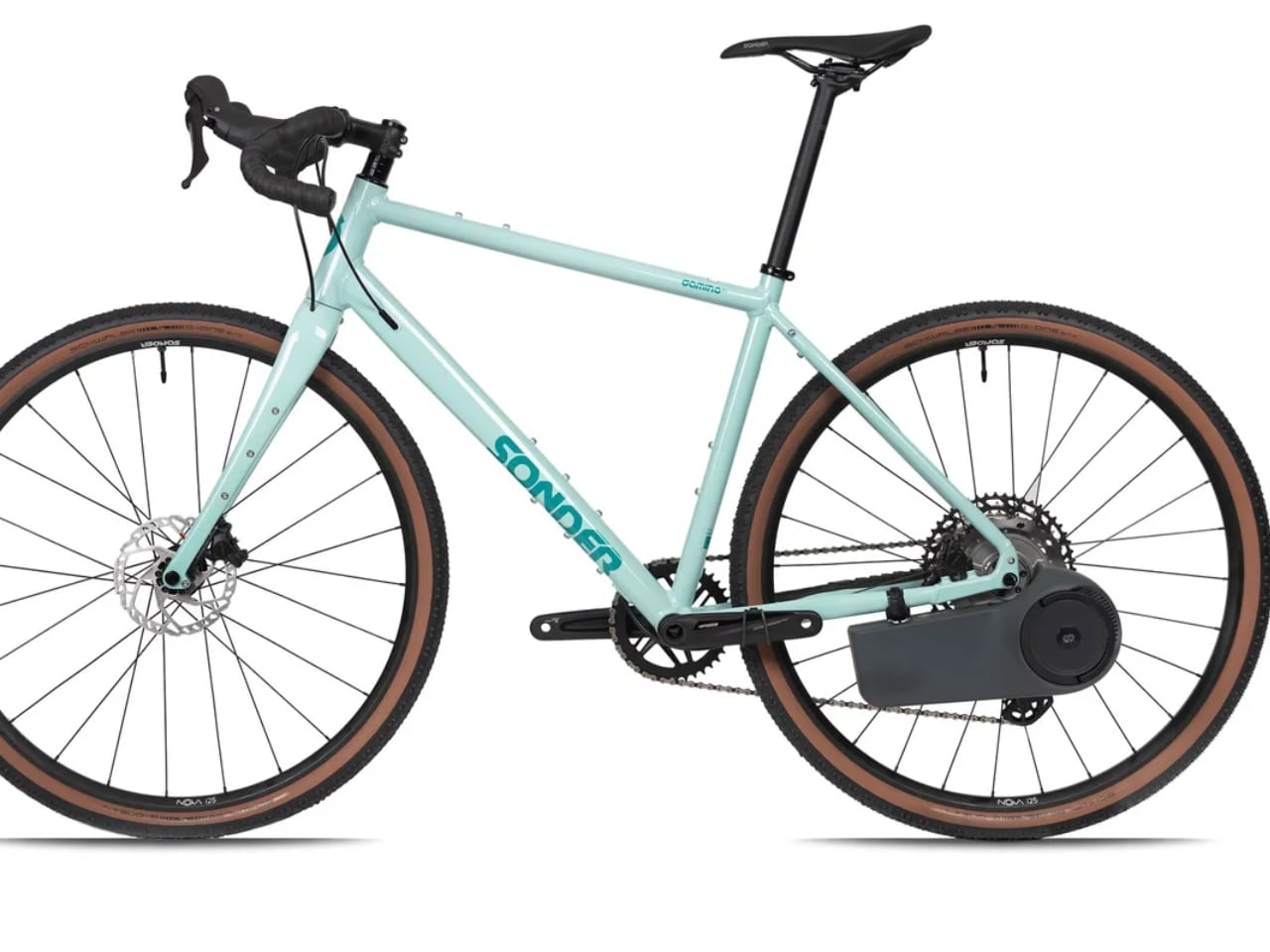
The Camino Al GRX1 at 2,999 GBP moves to drop bars and Shimano GRX 610 12-speed gearing. This build targets the rider who wants traditional gravel geometry with quality shifting and the option of motor assistance. The aluminum frame carries through from the flat bar model.
At the top sits the Camino Ti GRX1 at 4,249 GBP, pairing the titanium frame with GRX 1x and the Skarper drive. Titanium’s compliance and durability appeal to riders thinking in decades rather than seasons, and the “forever bike” logic extends to the modular motor: invest in a frame that lasts, add or remove assistance as needs change over time.
Value Proposition and Market Position
Pricing Logic
The standalone Skarper conversion kit sells for 1,495 GBP. Buying a regular Camino and adding Skarper separately would cost more than these bundled configurations, which means the partnership delivers genuine pricing advantage rather than merely convenience. Whether the discount compensates for the commitment of buying a specific bike with a specific motor system depends on individual circumstances, but the math favors the bundles.
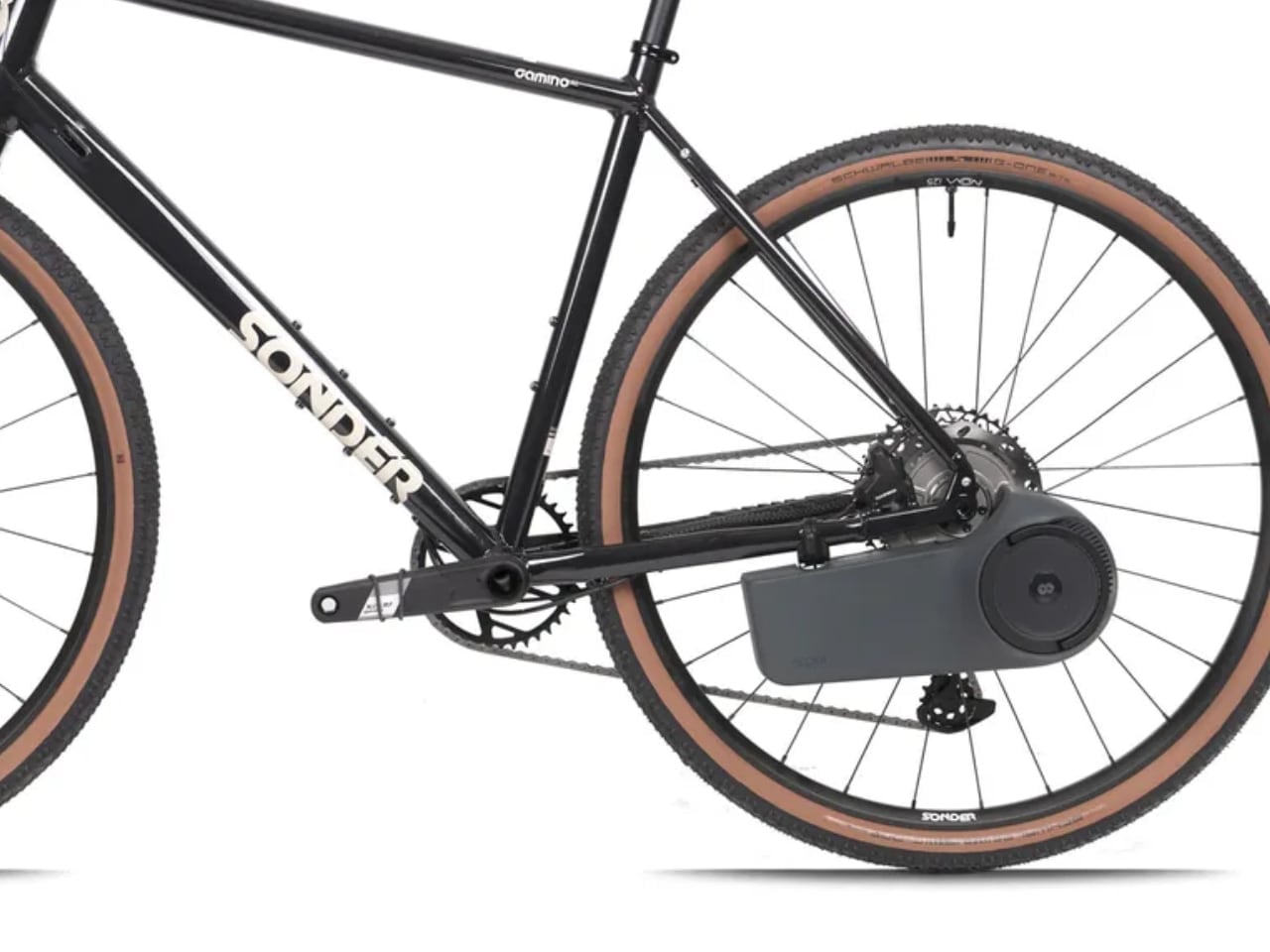
Compared to purpose-built electric gravel bikes, the starting price of 2,649 GBP positions these configurations competitively. The differentiation comes from capability: remove the Skarper unit and you have a conventional gravel bike that weighs and rides like a conventional gravel bike. Purpose-built ebikes carry their motors and batteries permanently, adding weight and changing handling characteristics regardless of whether you want assistance on any given ride.
Who This Serves
The target buyer emerges clearly from the product logic: someone who commutes by bike during the week and rides gravel on weekends, who lacks space or budget for two dedicated machines, and who wants neither a permanently heavy ebike nor a permanently unassisted bike that exhausts them before arriving at the office. The Skarper system’s quick-release nature makes the dual-use scenario practical rather than theoretical.
Neil Sutton, Sonder’s product manager, frames it around simplicity and adventure, noting that the removable drive “keeps a Sonder feeling like a Sonder” when unclipped. Ean Brown, Skarper’s CEO, emphasizes freedom and flexibility over the alternative of owning “a second heavy bike.” Both statements acknowledge the core insight: versatility matters most when it does not require permanent compromise.
Availability and Upgrade Path
The three Sonder x Skarper models are available immediately through Alpkit stores, Alpkit’s website, and Selfridges in London. The retail presence at Selfridges suggests positioning beyond core cycling audiences, reaching urban consumers who might not otherwise visit specialty bike shops.
Existing Sonder owners can purchase Skarper add-on kits with free professional installation at participating Alpkit stores. This upgrade path extends the collaboration’s reach beyond new bike sales, allowing current Camino riders to convert their frames without buying a complete new build. The factory integration remains cleaner, but the option exists for those already invested in the platform.
Design Significance
The Sonder x Skarper collaboration represents something worth watching in the electric cycling space: an OEM partnership that treats removable assist as a feature category rather than an aftermarket addition. Most ebikes build their motors permanently into the frame architecture. Most conversion kits remain aftermarket products that buyers install themselves. This sits between those models, offering factory confidence with modular flexibility.
Whether the rotor-drive approach gains broader adoption depends on how well Skarper’s execution holds up to real-world use and whether other frame manufacturers follow Sonder’s lead. For now, the Camino collaboration offers one answer to the two-bike problem: a gravel bike that becomes an ebike when you want it to, and becomes a gravel bike again when you do not.