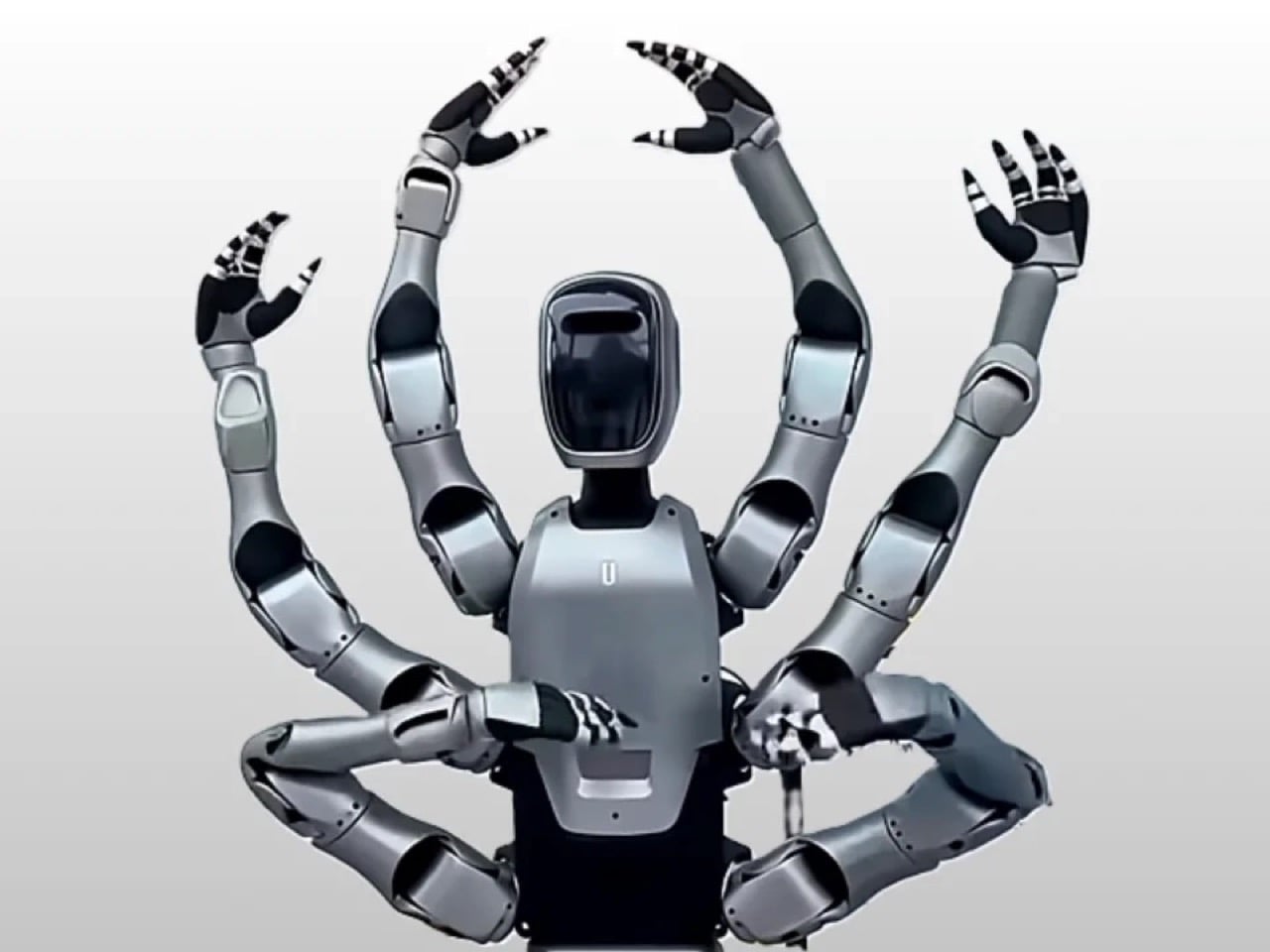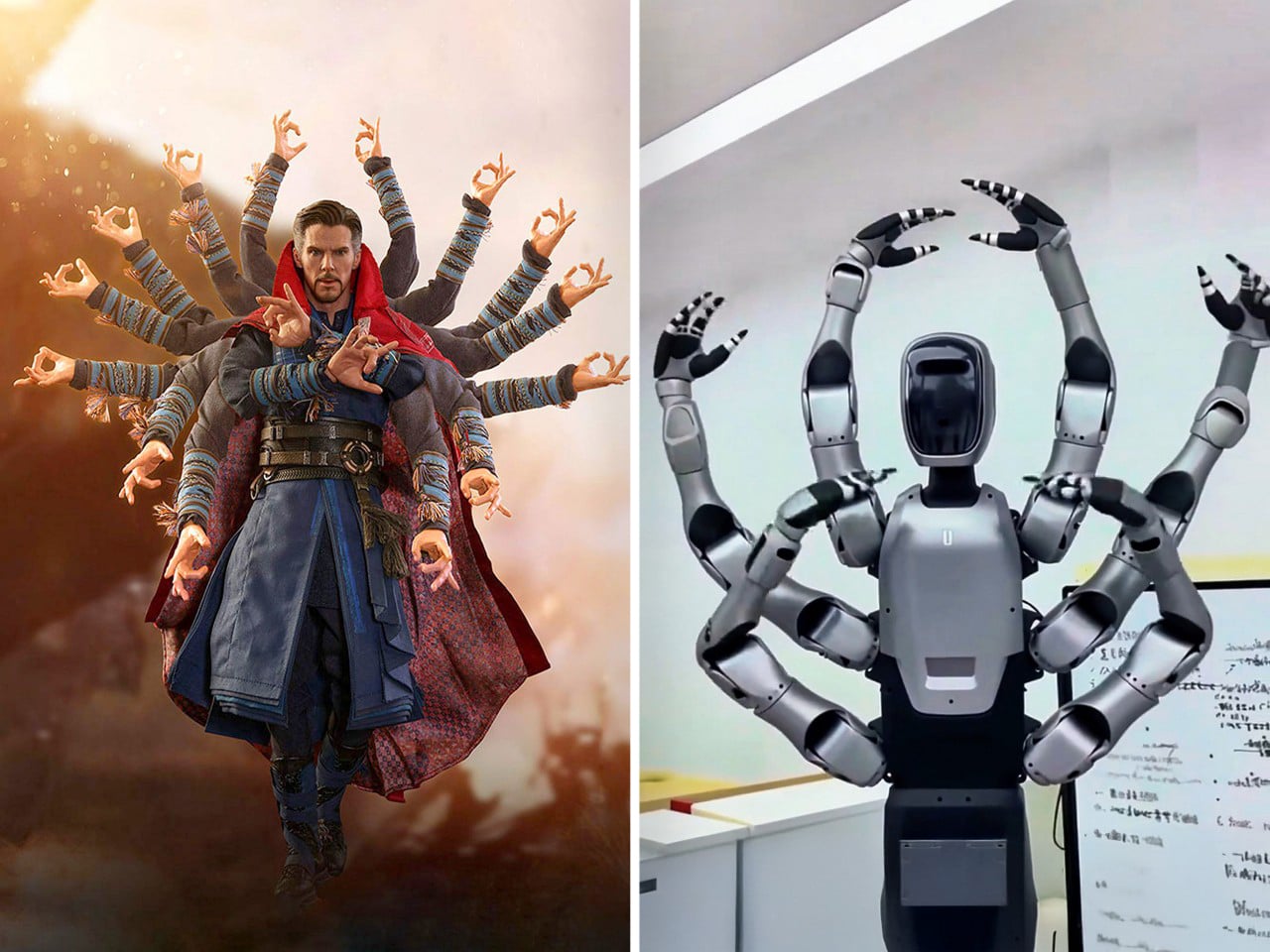

There is a moment in Infinity War where Doctor Strange fans out into a halo of spectral arms and every animator in the room probably high fived. Midea’s new Miro U looks like someone freeze framed that shot, printed it, and walked it down the hall to the robotics lab with the caption “do this, but for factories.” Six coordinated arms, a torso that feels almost cloaked, a wheeled base that spins 360 degrees in place, it reads less like industrial equipment and more like a concept sheet that escaped ArtStation. Except this thing is heading to a washing machine plant in Wuxi, with a target of boosting line changeover efficiency by about 30 percent according to Midea’s own numbers. The visual language screams sorcerer, the job description says production engineer.
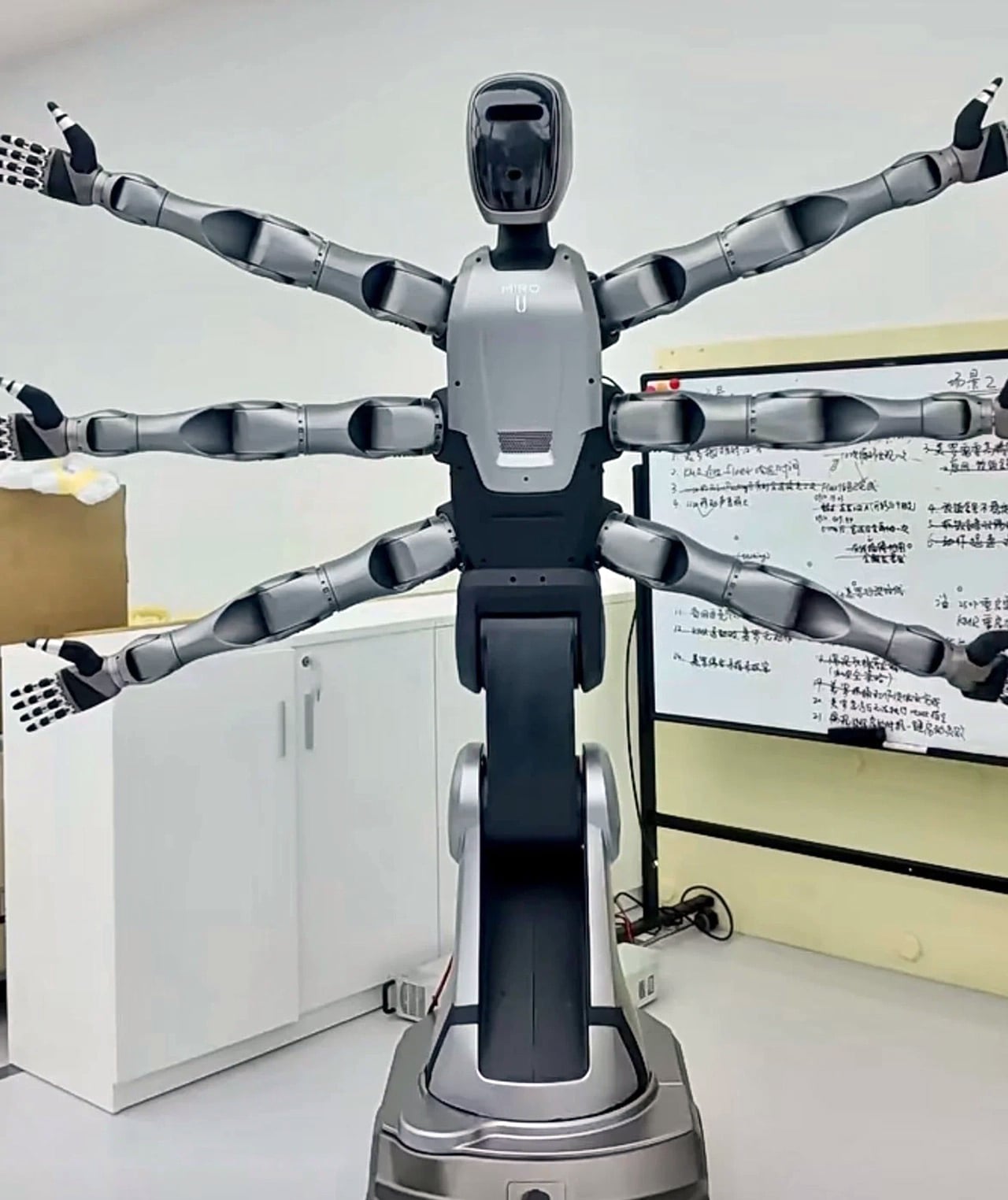
You can tell a lot about a robot from what its designers chose to sacrifice. Miro U trades the prestige of bipedal walking for a wheel leg base that is brutally honest about factory floors. No stairs, no urban parkour, just flat concrete and tight aisles that reward stability and turning radius over photogenic gait. It also trades the polite two arm humanoid silhouette for six bionic arms that Midea describes as high precision and flexibly controlled, coordinated around a central spine like a mechanical mandala. That is a very specific bet on parallelism. If you care about line changeovers and modular cells, you want one body that can grab tools, fixtures, and parts at the same time without waiting for someone else to show up.
Designer: Midea


There is a design honesty here that I find refreshing. Most humanoid projects in the West are in a beauty contest with the human form. Smooth faces, leggy proportions, carefully choreographed walking demos, everything framed around the idea that “this could stand where a worker stands.” Miro U walks away from that stage and heads for the backstage rigging. Six arms mean it behaves less like a single worker and more like a compact crew. One pair can hold a housing, another can swap a jig, the remaining arms can manage cables or safety barriers. The silhouette is chaotic on purpose because the workflow is chaotic and the robot is supposed to absorb that complexity.
The numbers around it are still pretty thin, which is typical at this stage, but the broad strokes are telling. Third generation in Midea’s humanoid line, which means they have already burned through at least two iterations before this one hit the news cycle. Fully self developed tech stack, from motion control to the six arm coordination, which matters if you care about long term tuning in real factories rather than trade show floors. Scheduled deployment at the Wuxi washing machine plant this month, following an earlier wheeled humanoid that has been working in Jingzhou since August. This is not a lab mascot. This is a product being dogfooded on a line that actually has throughput targets.
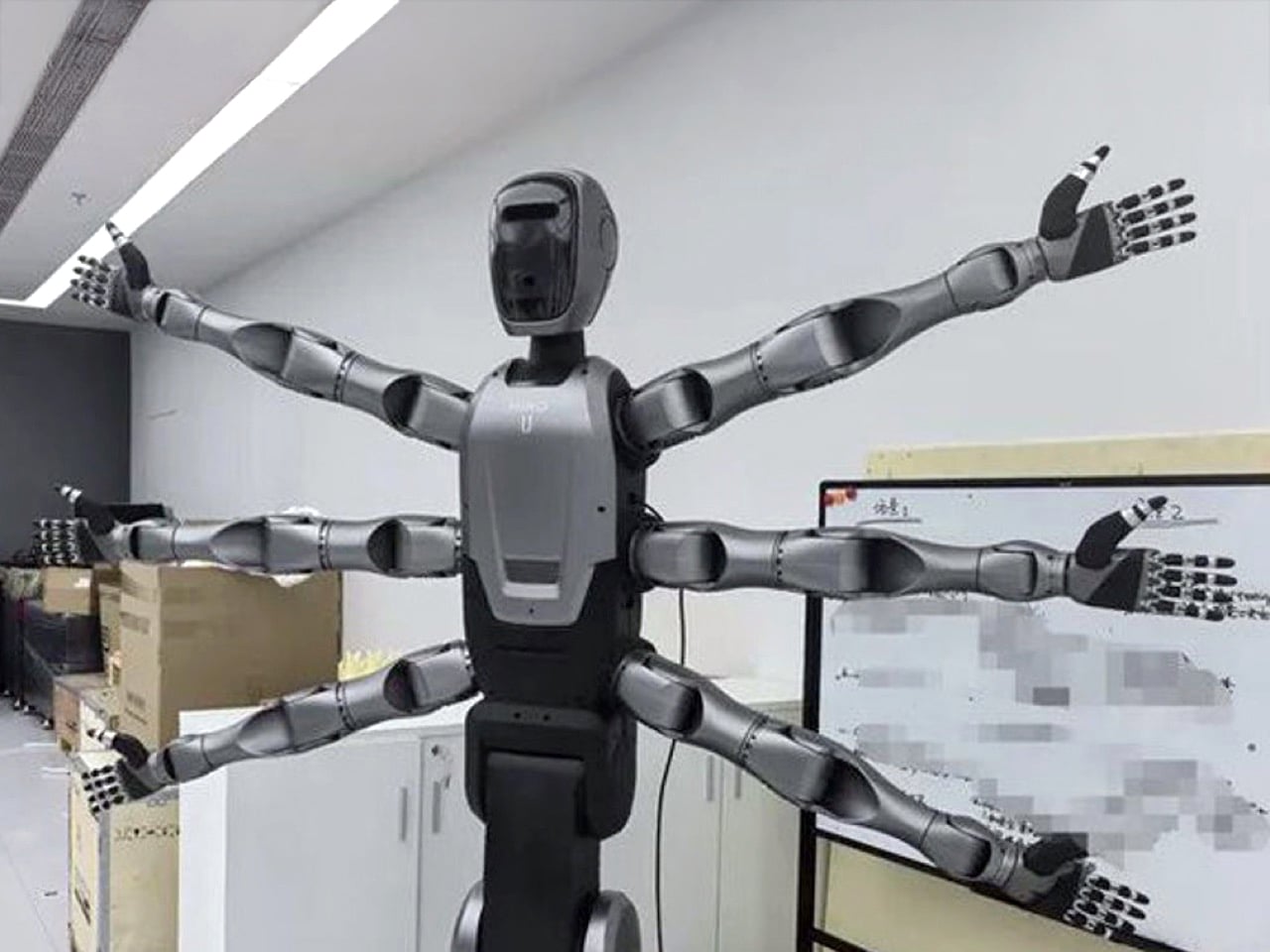
The superhero resemblance is more than a meme hook. Superhero bodies are about exaggerated affordances. Extra limbs, extra reach, extra context switching. Doctor Strange with a ring of arms is a visual metaphor for parallel spellcasting. Miro U with six arms is a visual metaphor for parallel operations on a line that refuses to sit still. Factories that build multiple SKUs on shared equipment live and die by how quickly they can tear down and rebuild a station for the next run. A robot that can reposition fixtures, pull in new tools, and handle parts without waiting for a human crew starts to look less like a novelty and more like a new species of line technician.
You can also read Miro U as a quiet critique of the “humanoid or bust” hype. The question is not whether robots can walk like us, but whether they can inhabit the work in a useful way. Midea is a manufacturer first, and that shows. They do not need a robot that can walk out of the factory and hail a cab. They need something that can survive three shifts a day, roll between modules, and treat the shop floor like a mutable level layout. The wheel base, the vertical lifting, the 360 degree in place rotation, all of that is a love letter to cramped industrial layouts rather than glossy demo stages.

There is also a cultural angle that I cannot ignore. This is a Chinese appliance giant that bought KUKA in 2017 and has been quietly building a robotics stack while the rest of the world argued about whether Tesla’s Optimus would ever fold a shirt. Now they roll out a six arm sorcerer for factories and talk openly about large scale deployment of humanoids across industrial and commercial spaces. Whether Miro U itself becomes a platform or a stepping stone, it signals an attitude. The factory is not a place where you hide robots in cages anymore. It is a stage where body plans are fair game.
Does that mean humanity is cooked. No. It means the shape of “a worker” is starting to fork more visibly. On one branch, you have the leggy, two arm humanoids chasing a one to one replacement fantasy. On another, you now have creatures like Miro U, multi arm, wheeled, unapologetically weird, tuned for specific forms of chaos. The fear response is predictable, but the more interesting reaction is curiosity. If this is what a robot body looks like when you stop caring whether it resembles us, what other silhouettes are still on the cutting room floor.