
Most architecture, even the wildest parametric forms, is fixed the day it opens and stays that way until it is renovated or demolished. Michael Jantzen points out that exciting spaces are often “fixed in time” while people’s needs and desires keep shifting. The Malleable Space Pavilion is a small, clear argument for buildings that can change as easily as furniture, where space becomes something you can push, pull, and rewrite whenever you want.
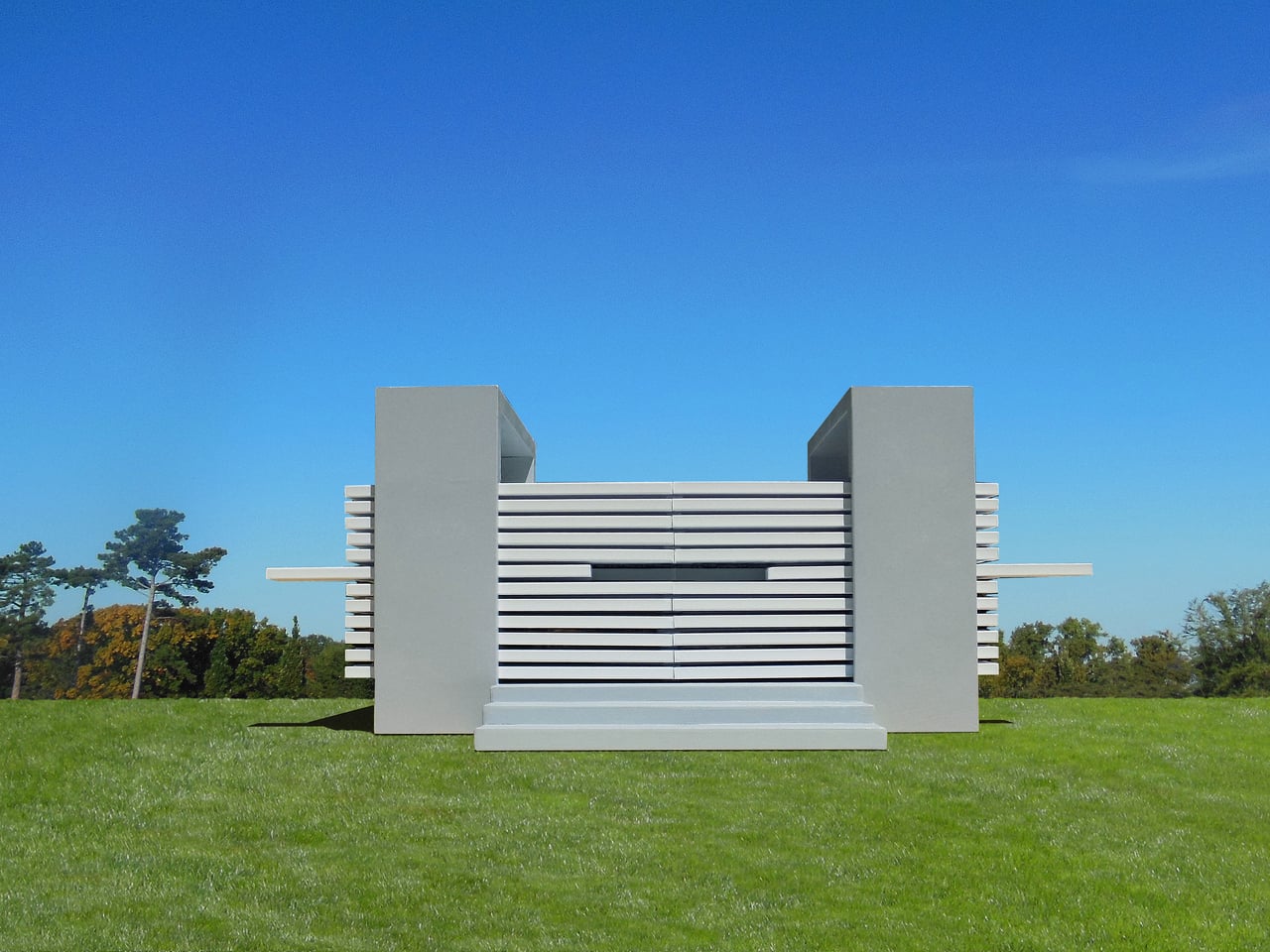
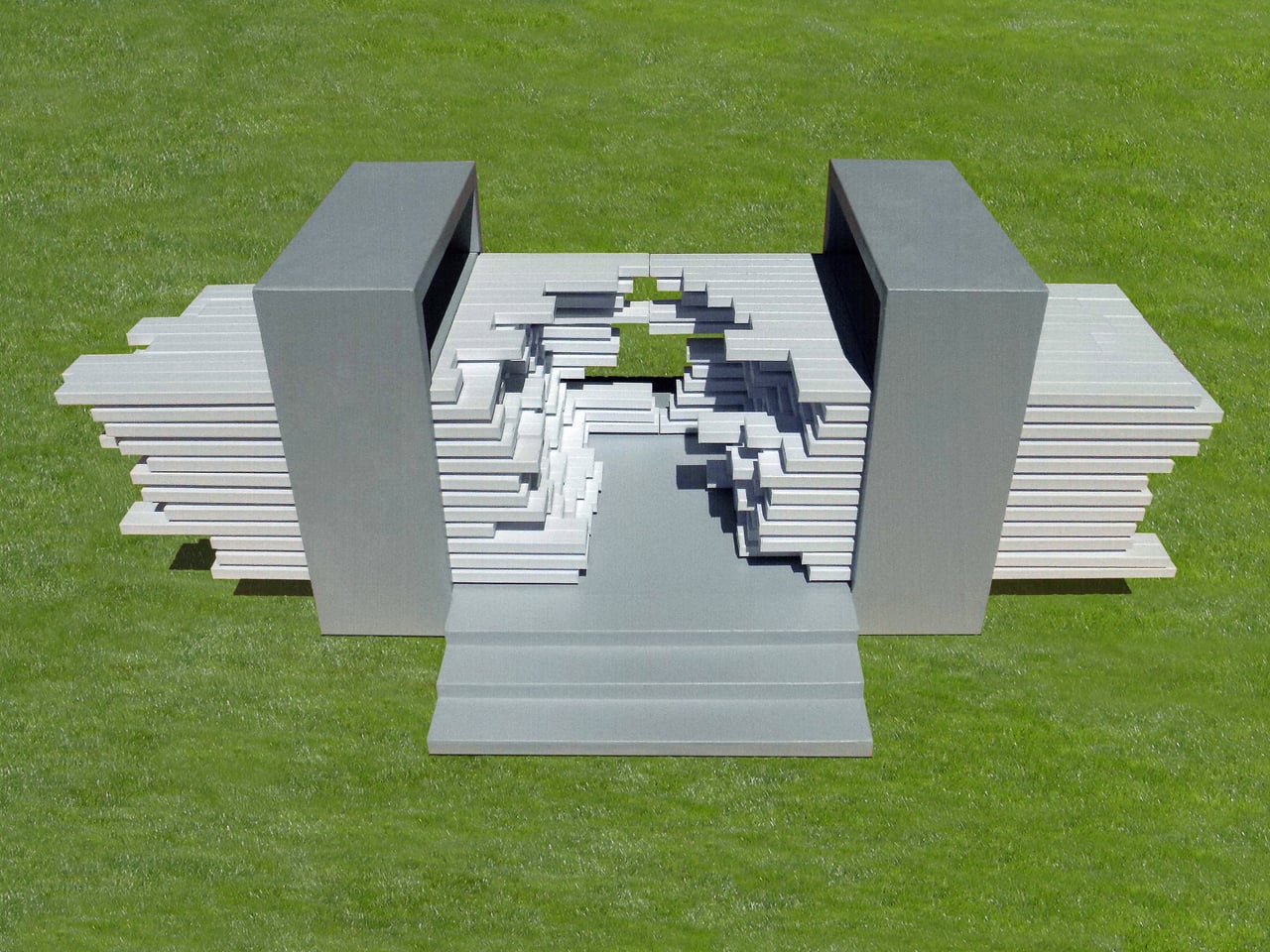
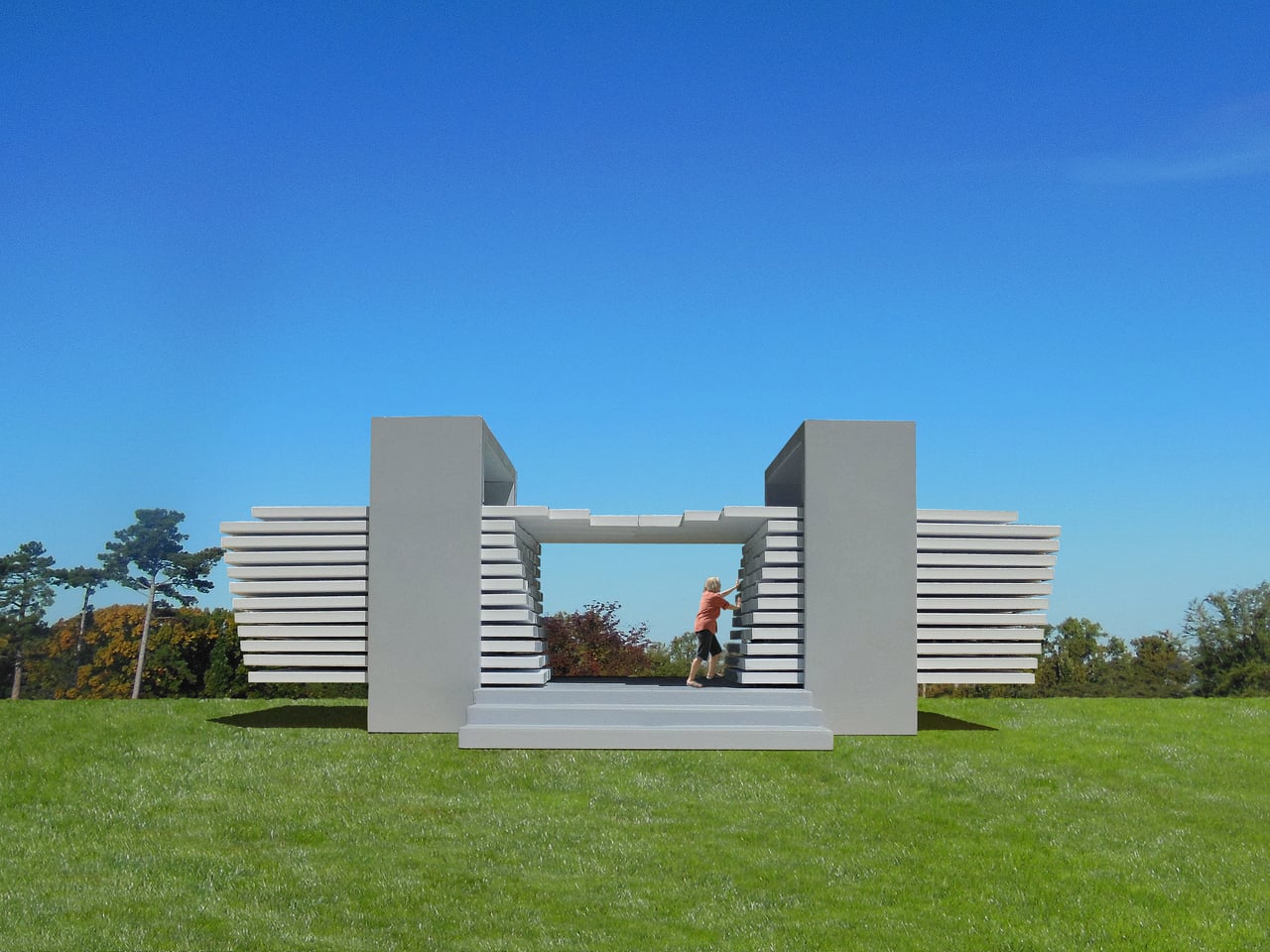
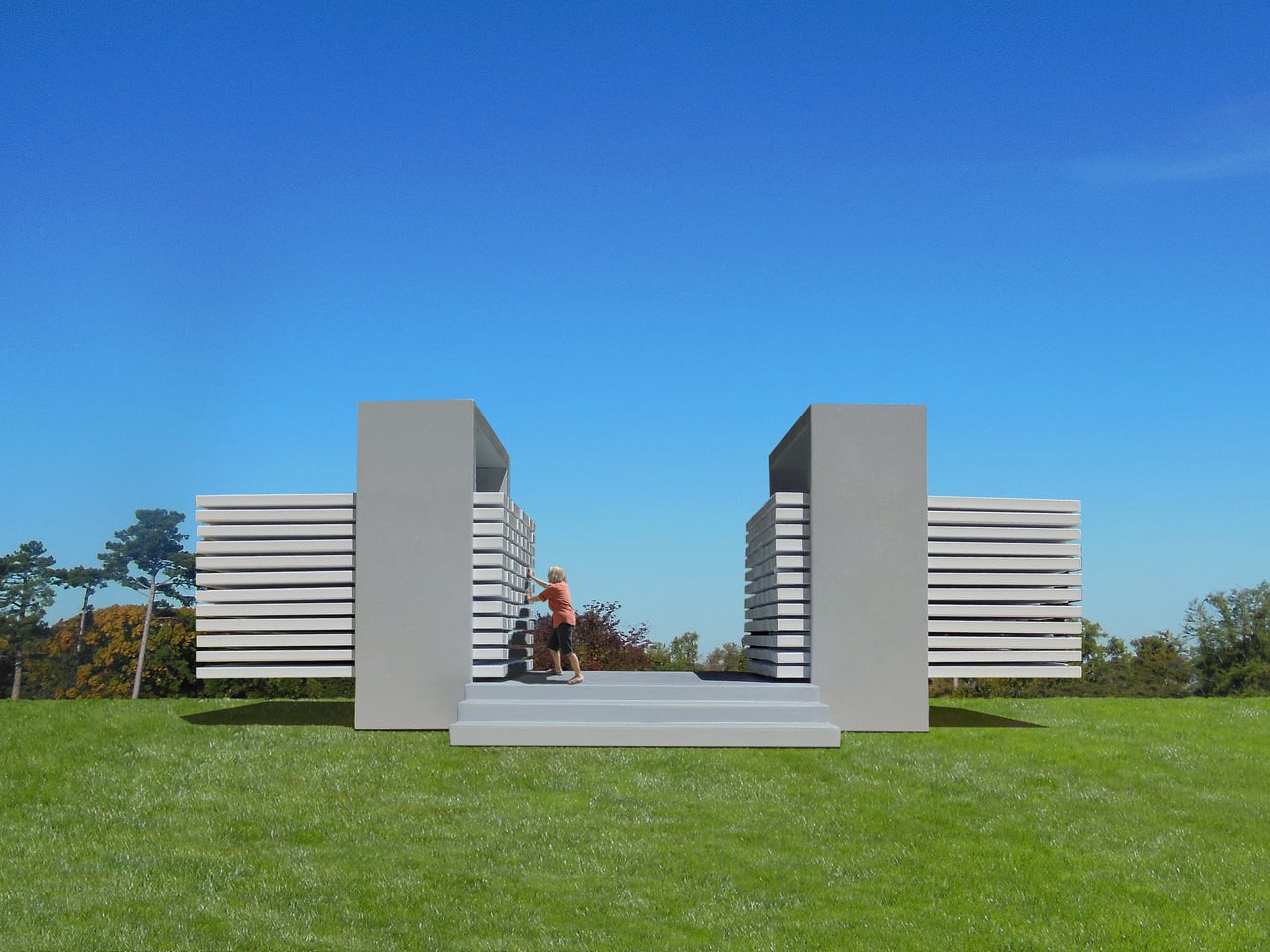
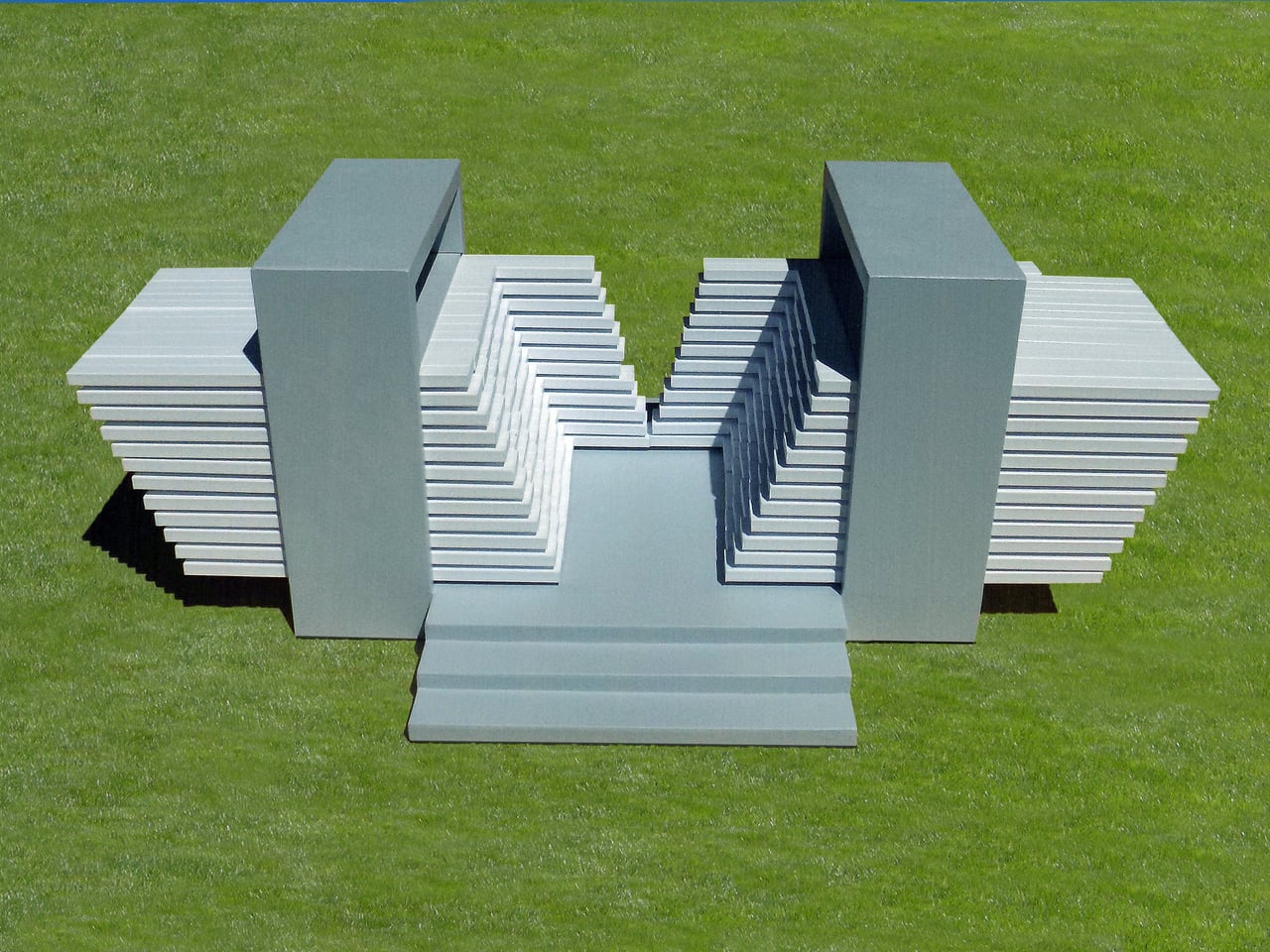
The Malleable Space Pavilion is an experimental interactive structure made from a very simple kit of parts. Two tall gray support columns anchor the design, and 192 white horizontal elements, 96 per side, are mounted on tracks between them. In the default state, they form two opposing blocks with a narrow canyon between them, a calm, almost minimalist object sitting in a field that reads more like land art than a building you can enter.
Designer: Michael Jantzen
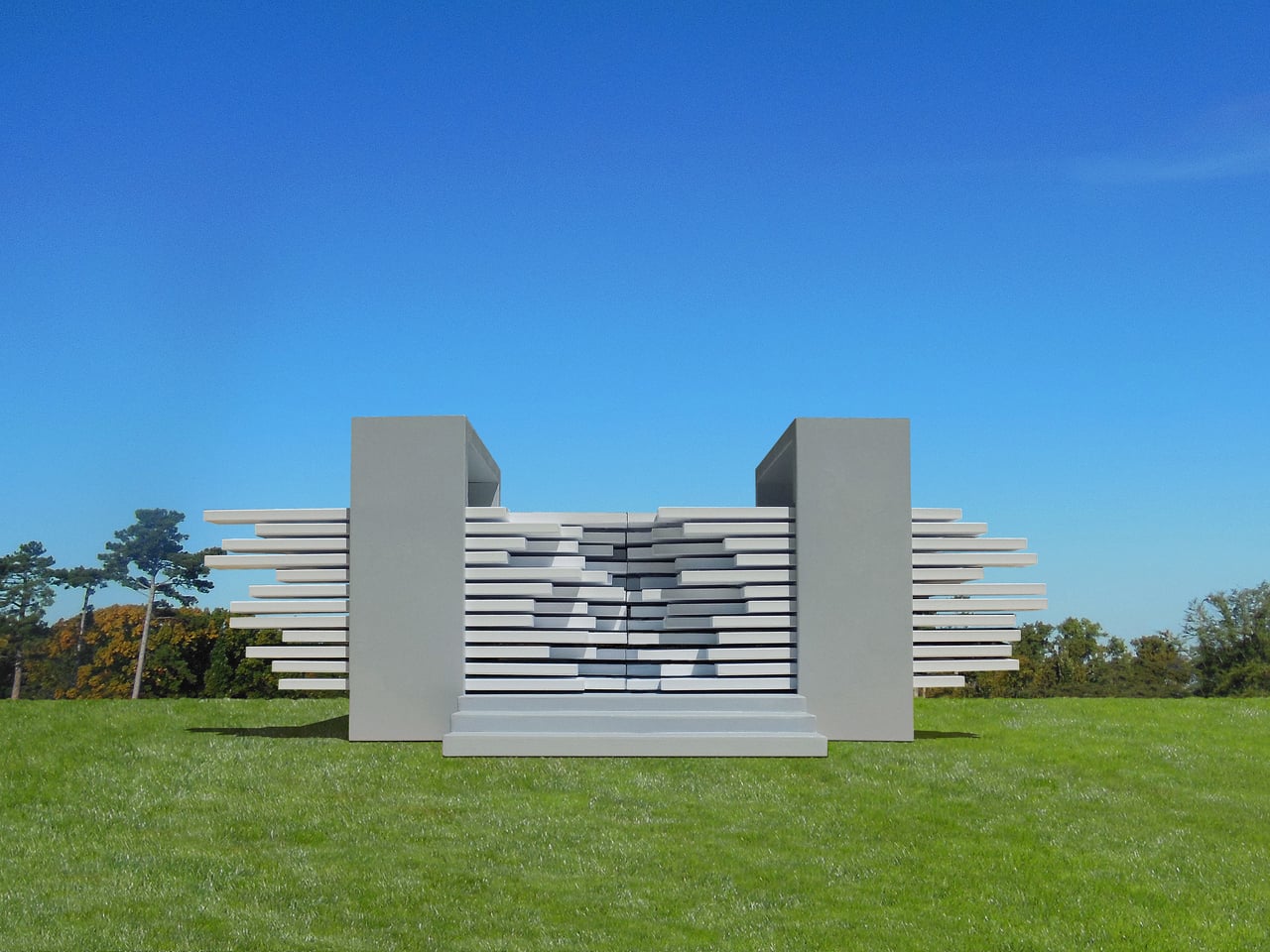
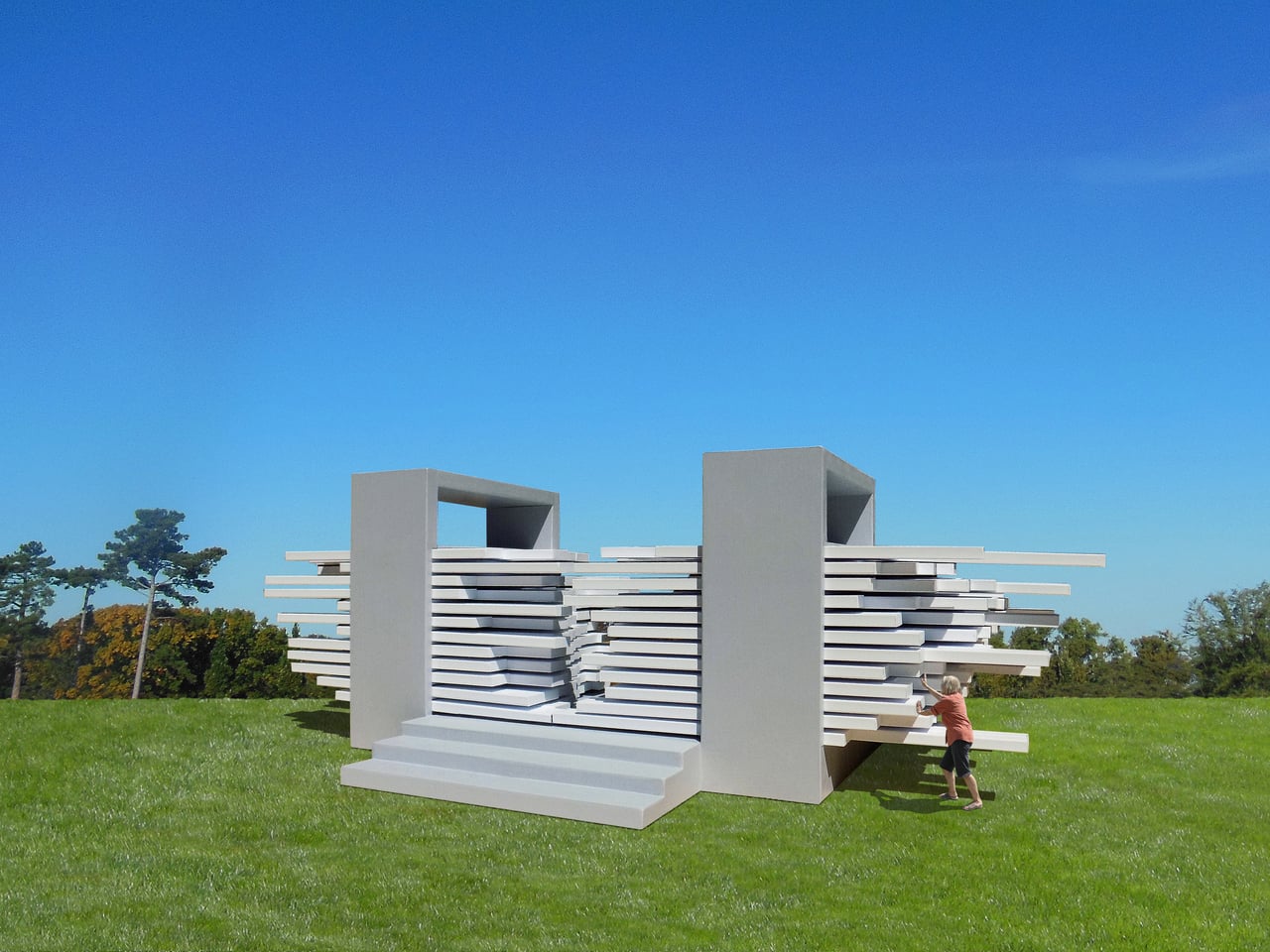
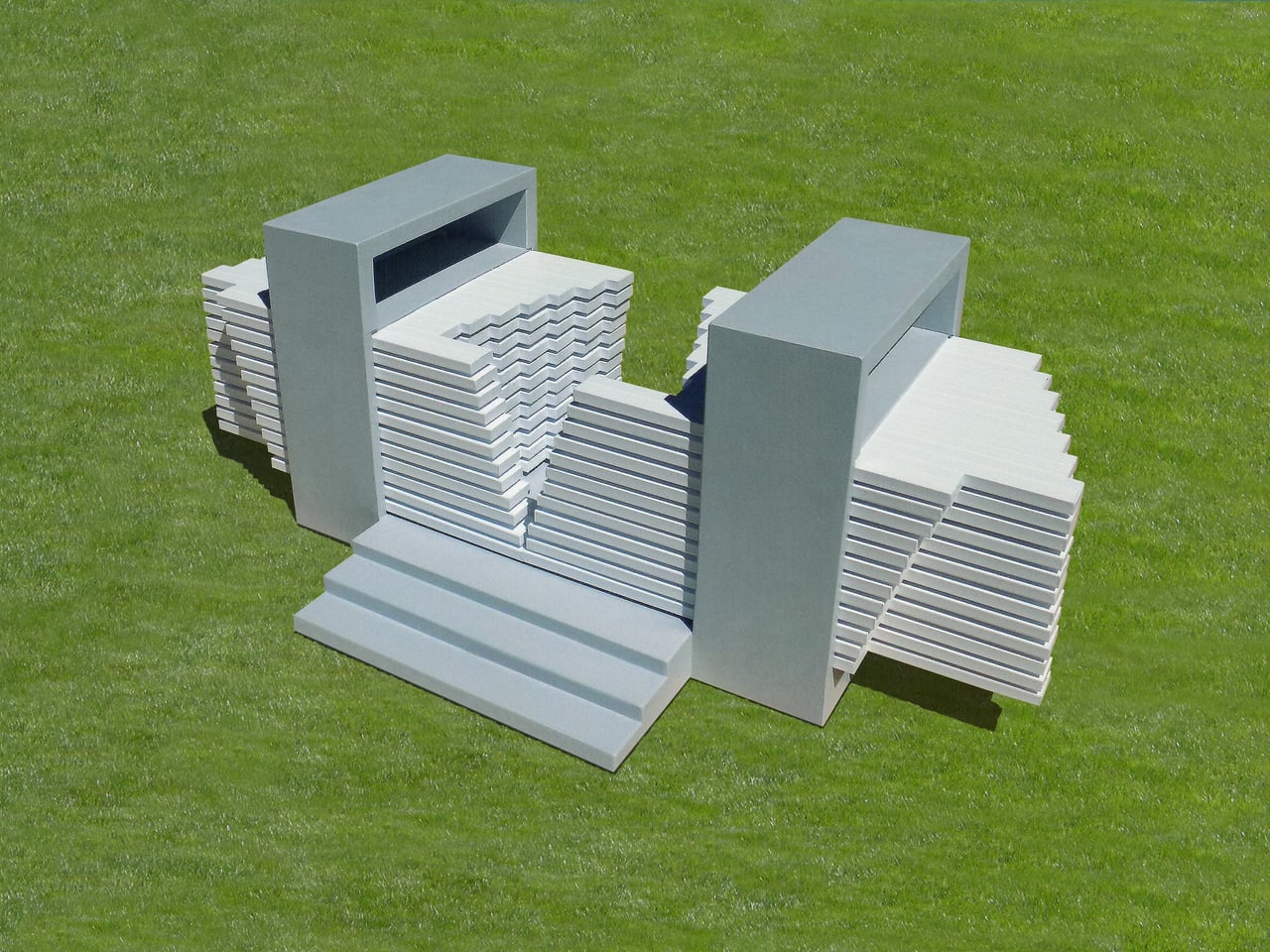
Every white element can slide in and out independently, letting visitors pull pieces to create steps, ledges, and overhangs. Jantzen describes configurations ranging from symmetrical simplicity to chaotic complexity, and the same hardware can read as a tunnel, a grotto, or a solid bar depending on how far the elements are extended. Space is literally carved out of the blocks in real time, turning a static object into a responsive spatial machine.
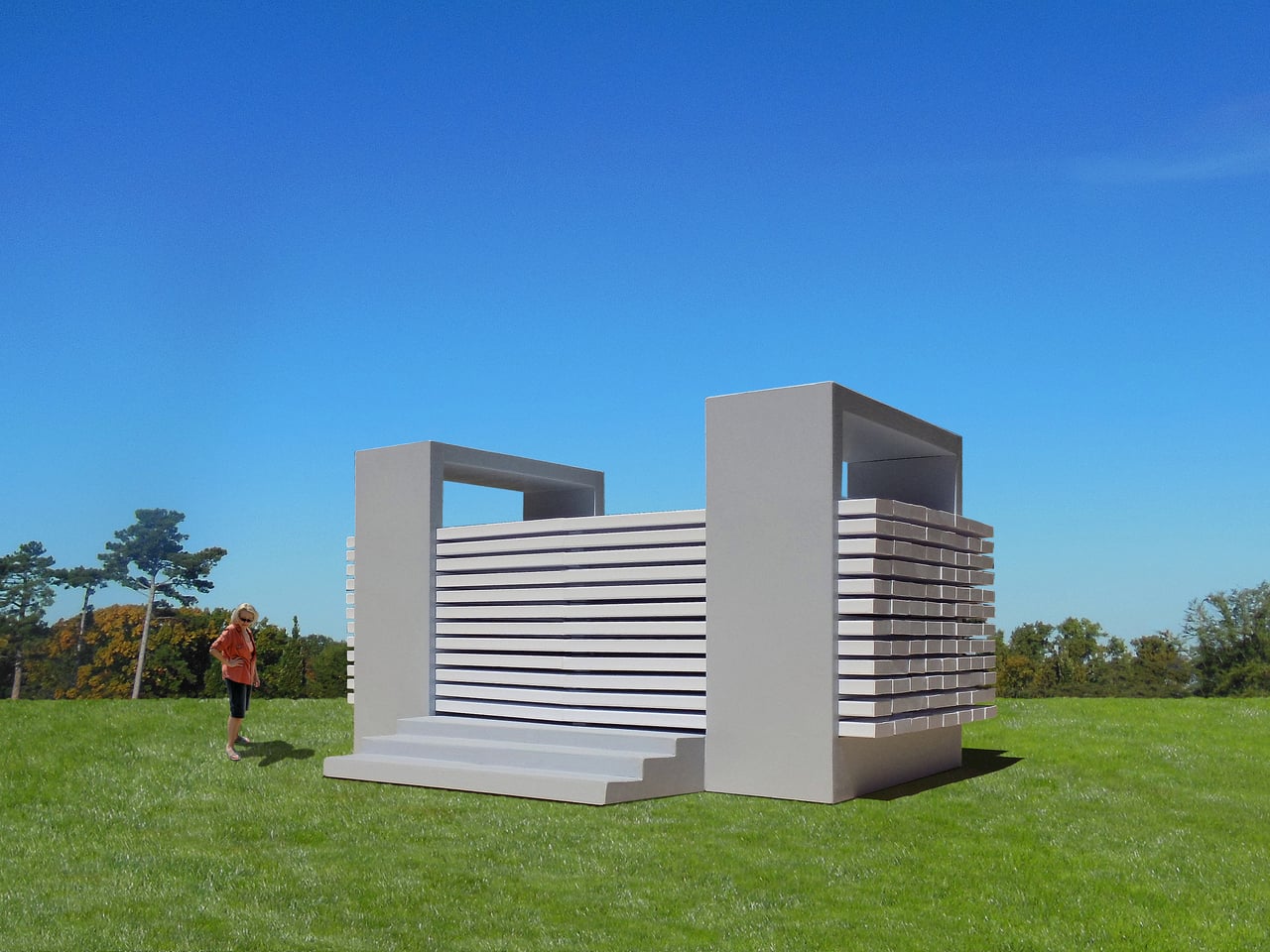
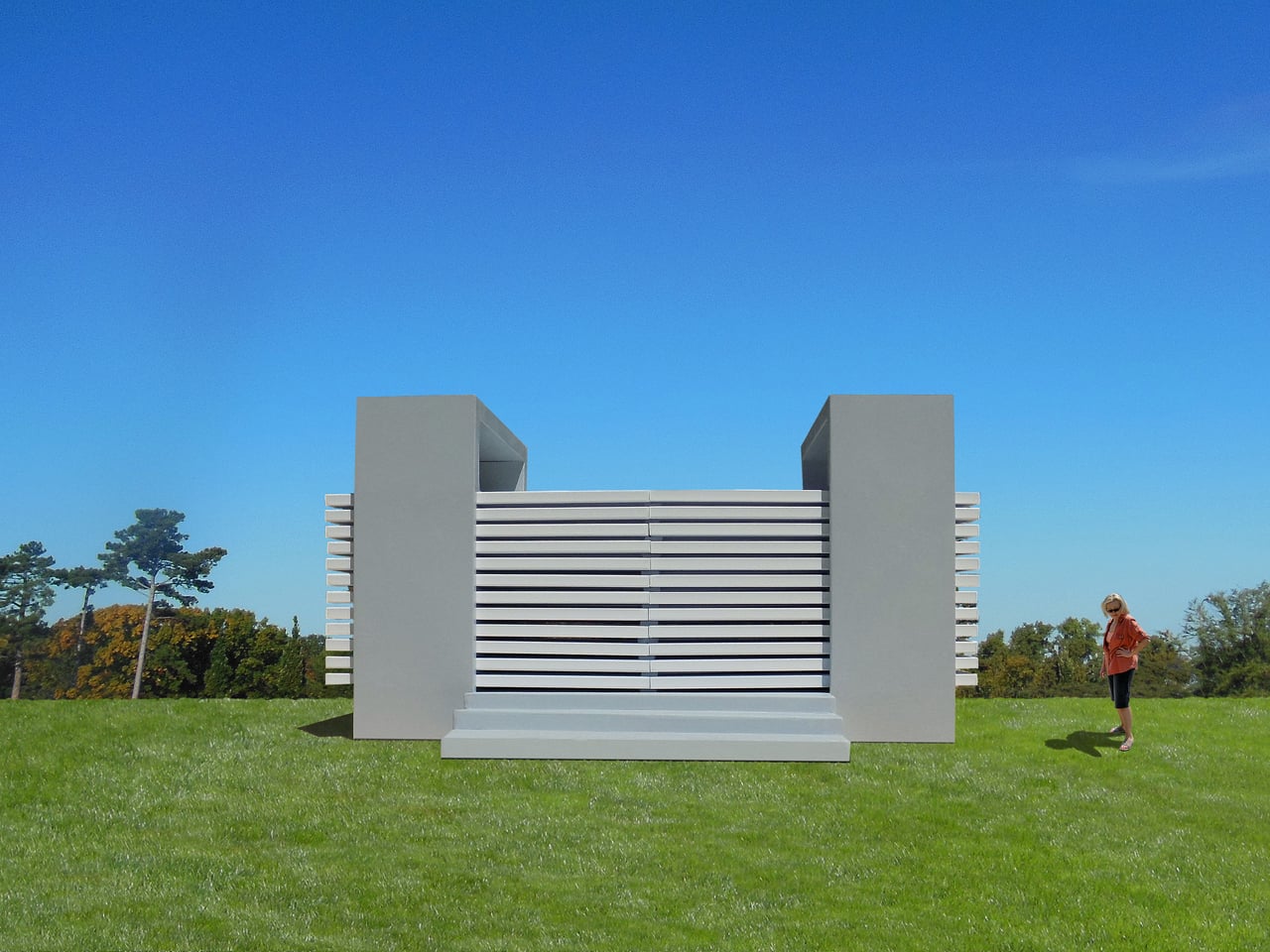
One moment, you walk into a symmetrical canyon with terraced walls and a rectangular skylight, the next you find yourself in a jagged, pixelated chamber where light leaks through irregular gaps. The elements double as benches and low roofs, so you can pull out a seat or shade with the same gesture. The pavilion becomes a place to sit, play, and experiment rather than just pass through, with every configuration suggesting new ways to occupy the same footprint.
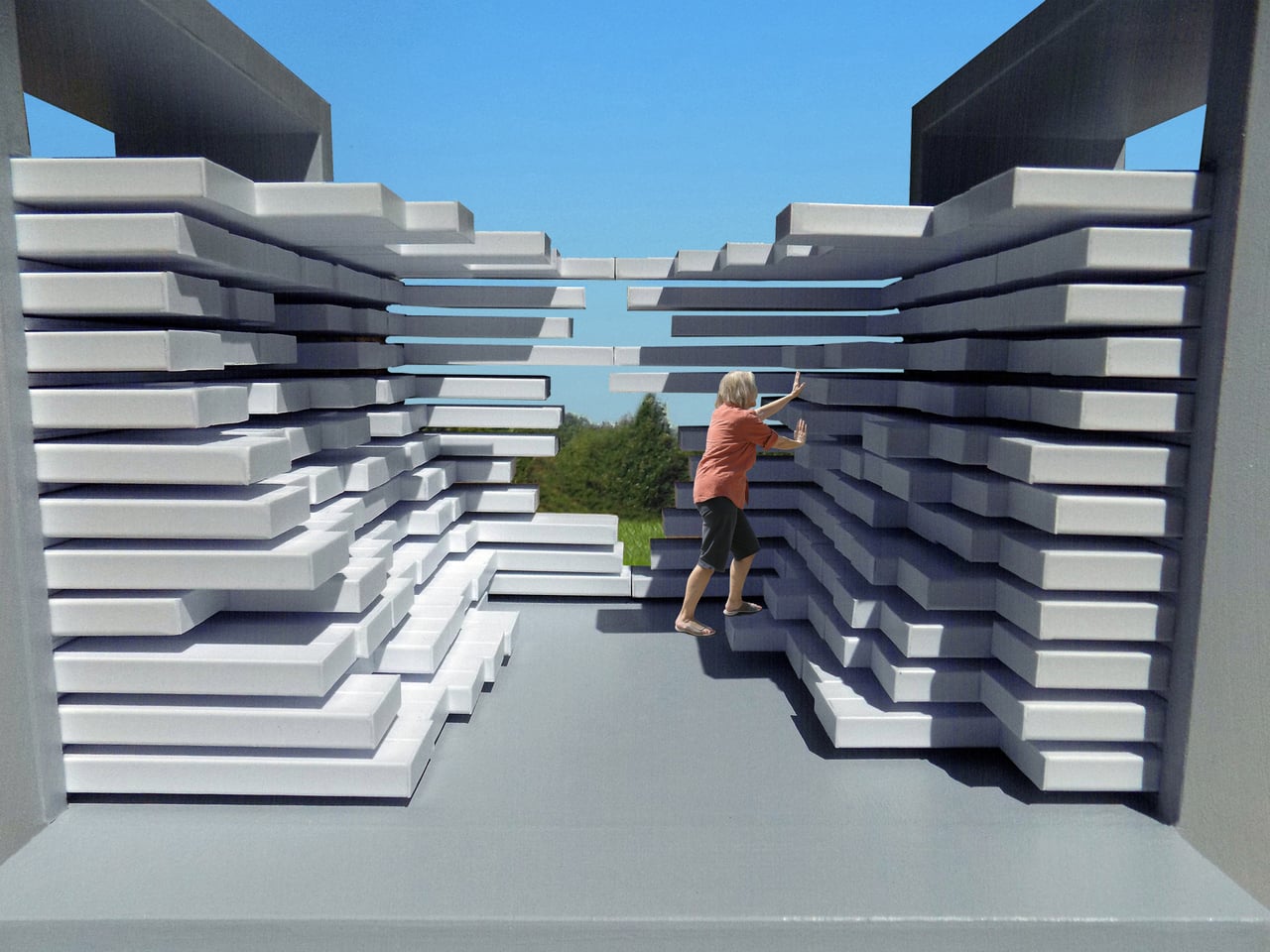
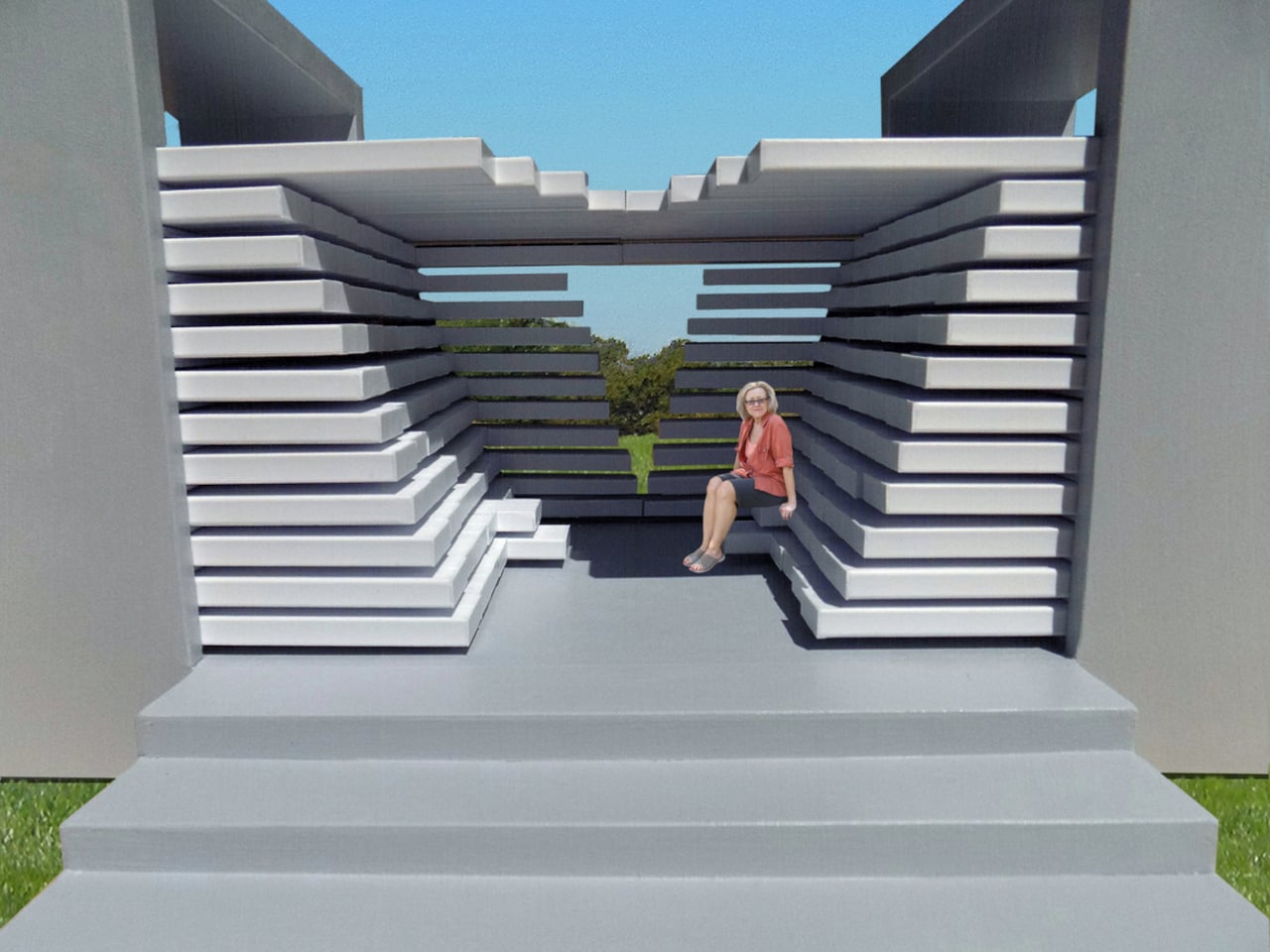
Pushing and pulling the elements is performative; visitors become visible agents of change. The stepped profiles feel like editing a low-resolution 3D model, but at a human scale and with your hands instead of a mouse. The pavilion records those actions as a temporary composition, so every group leaves behind a different spatial drawing until someone else comes along and rewrites it, turning the structure into a constantly evolving collaboration between architect and occupants.
Jantzen believes that a more advanced architecture is one that can be changed in time, and this pavilion sits within his series of transformable structures. Questions remain about full-scale mechanics, durability, and accessibility, but the value here is conceptual clarity. The project makes adaptability tangible and playful, turning a big conversation about flexible buildings into something you can push, pull, and sit on, rather than leaving it abstract and theoretical.
The Malleable Space Pavilion treats architecture less like a finished sculpture and more like an instrument waiting to be played. Instead of a single author deciding what the space should be, every visitor gets to compose their own version for a while. For a design culture used to talking about responsive environments in abstract terms, there is something refreshing about a pavilion that simply hands you the handles and lets you reshape it yourself, making change the default rather than the exception.