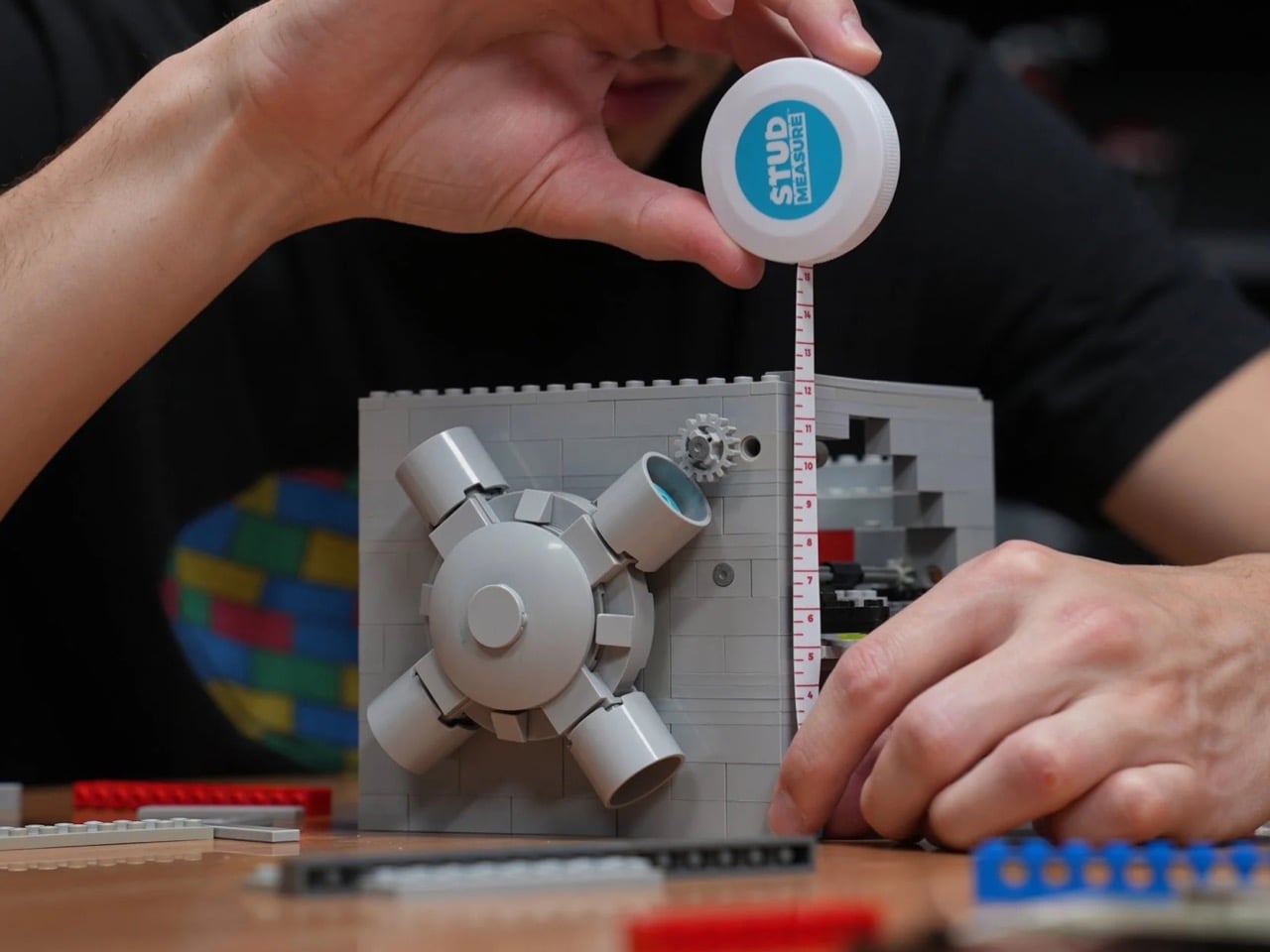
Every LEGO fan knows the brick separator, but far fewer have a dedicated way to measure their creations. The Stud Measure steps into that gap with a compact case, a flexible tape, and markings that translate directly into the geometry of the LEGO system. It is designed for anyone who has ever counted studs by hand across a long baseplate and wished there were a faster way.
Instead of dangling a metal hook over your build, you snap a bright blue clip straight into the studs. From there, the tape glides across the surface or up the side of a wall while the numbers tick by in studs, bricks, and plates. Whether you are mocking up a city block, planning a train layout, or scaling a real world object into LEGO form, the Stud Measure turns measuring into part of the creative process.
Designer: Brick Science
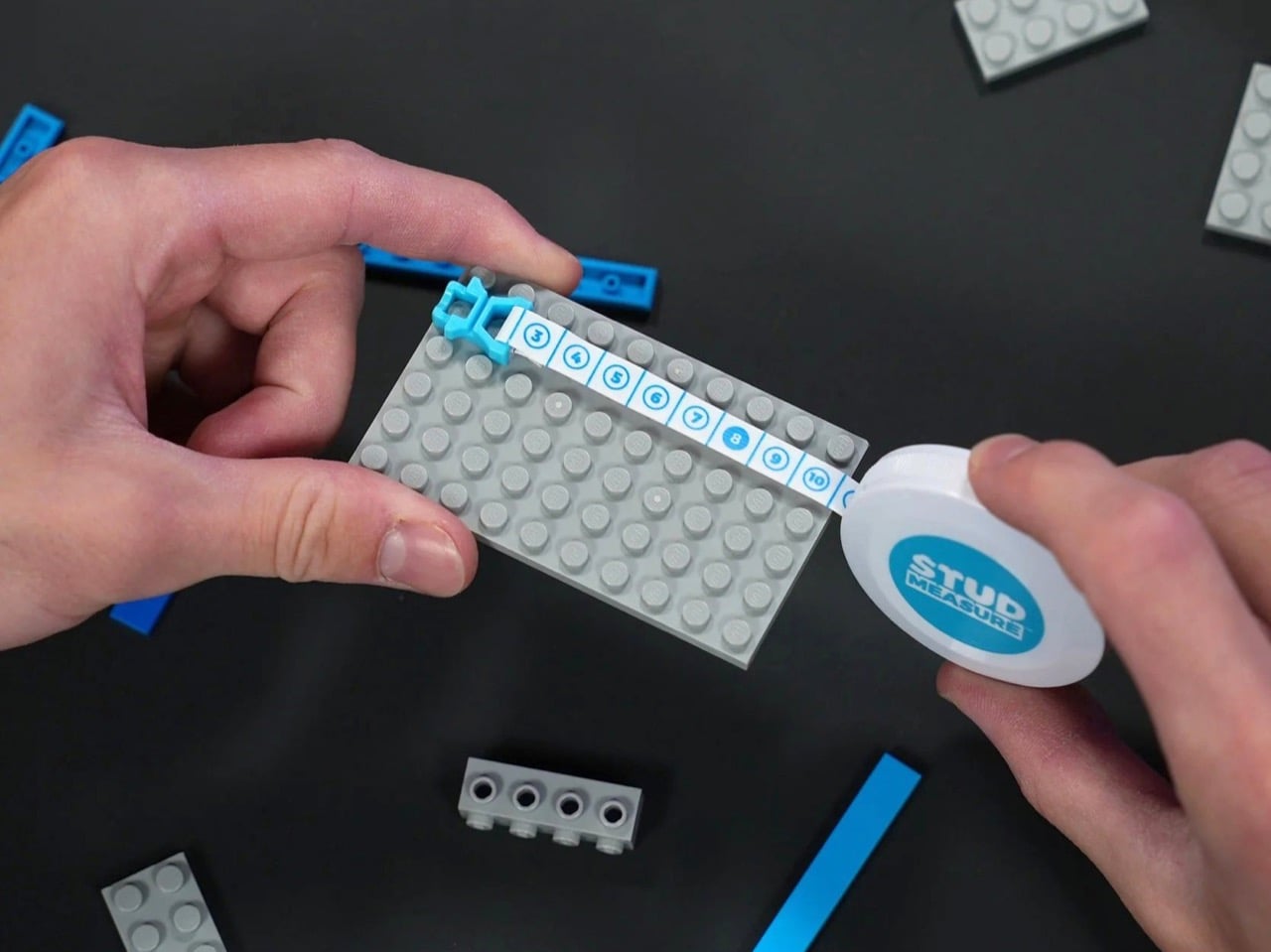

Riley from Brick Science, a channel with over 2 million subscribers, developed the tool and launched it through a dedicated shop at $9.99. That pricing puts it squarely in impulse buy territory, which feels about right for something this niche. The tape extends to 190 studs, which translates to roughly 60 inches or 152 centimeters in real world terms. For context, that covers the length of most standard LEGO train layouts and easily spans the width of a modular building display. You could measure an entire tabletop setup without retracting and repositioning, which matters when you are trying to keep alignment tight across multiple sections.



That little clip is the real piece of engineering genius here. A standard tape measure hook is designed for grabbing the edge of a two-by-four; it has no real purchase on the curved, precise landscape of a LEGO plate. The Stud Measure’s end piece, however, is molded to fit snugly between the studs, using the system’s own clutch power to anchor itself. This means your zero point is always perfectly centered and locked in place, leaving your hands free. It’s a simple, elegant solution to a problem that has plagued serious builders for decades, finally treating the LEGO grid with the same respect a machinist would treat a piece of milled aluminum.
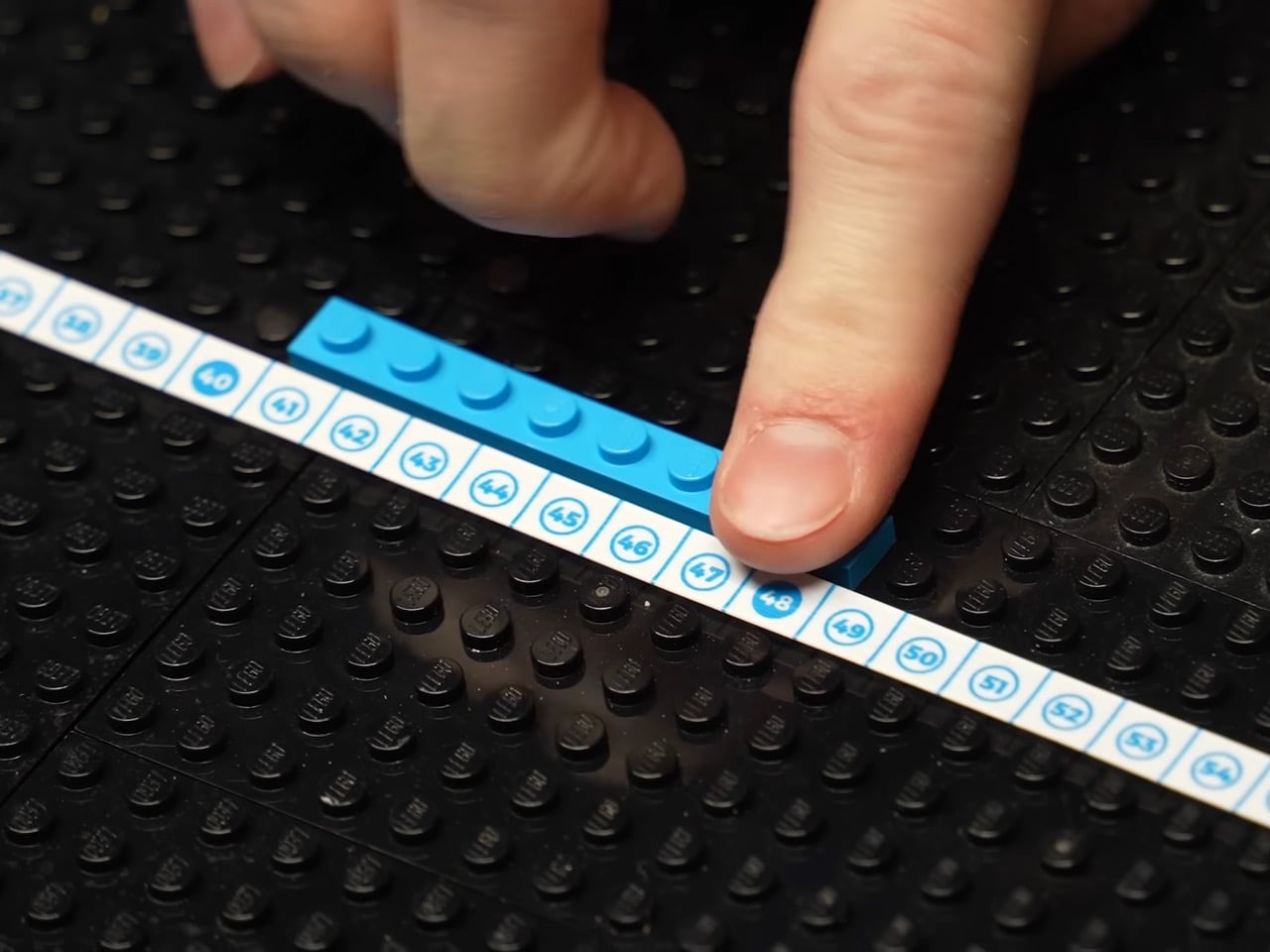
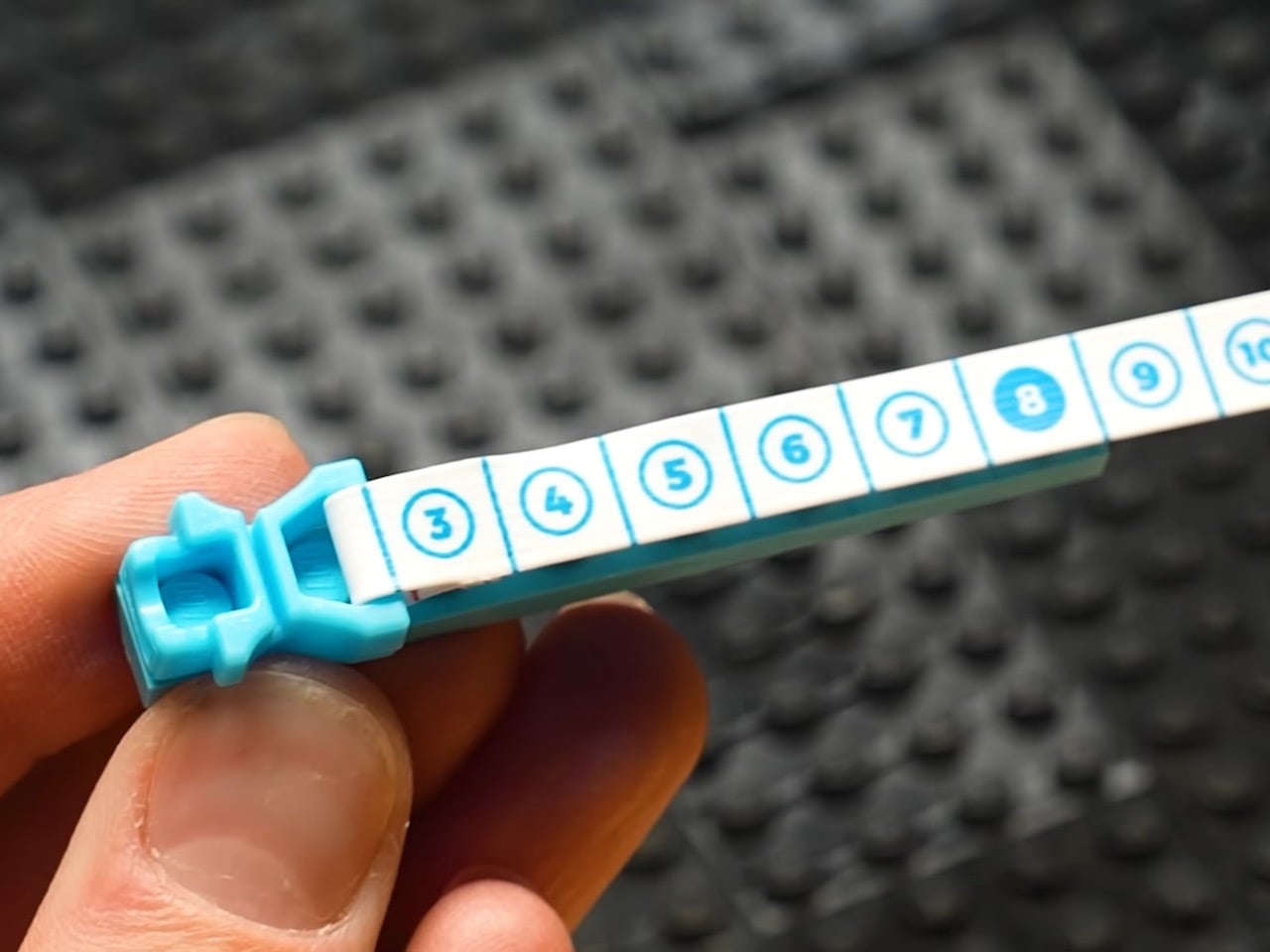
Once anchored, the tape itself does the rest of the work. One side is marked out to 190 studs, a respectable length for even large scale projects. Flip it over, and you get a vertical scale marked in brick heights, with fine red lines indicating the one-third increments of a single plate. This dual-sided approach is what elevates it from a novelty to a legitimate design tool. You can instantly verify that two separate towers in a diorama are the exact same height, or plan a complex wall structure with openings that are a precise number of bricks wide and tall. It removes the tedious counting and guesswork, letting you focus on the actual build.
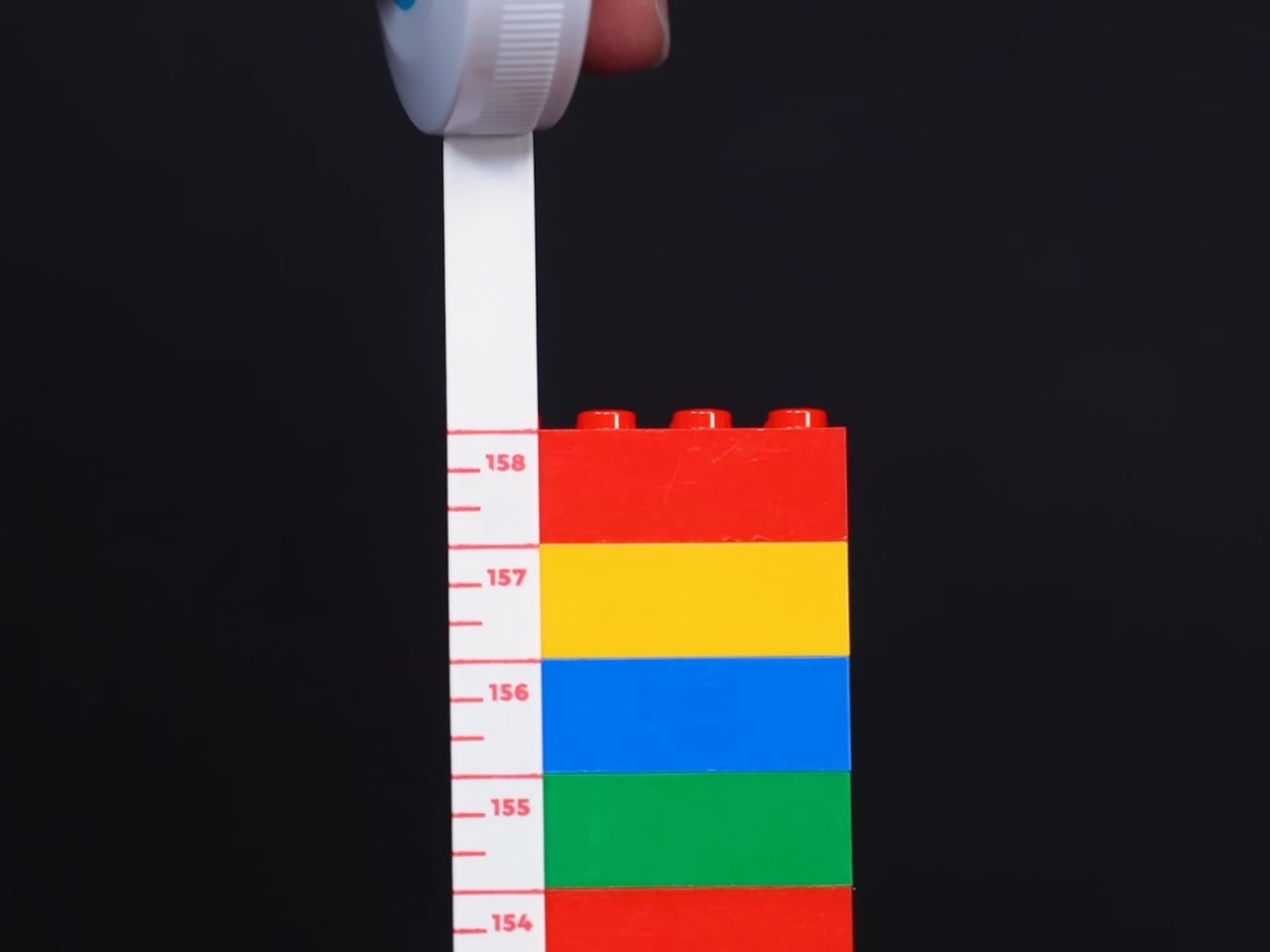
The Stud Measure is fundamentally a translation device, converting the abstract dimensions of the real world into the concrete, tangible units of the LEGO system. You can measure a shelf and know instantly you have a 120-stud canvas to build on. It closes the loop between imagination and execution, making ambitious, scaled projects feel far more achievable for builders who want to move beyond the instruction booklet. This is not a toy, despite its bright colors and its association with one. It is a piece of workshop equipment, just like a good set of calipers or a reliable square, designed to remove friction from the creative process.
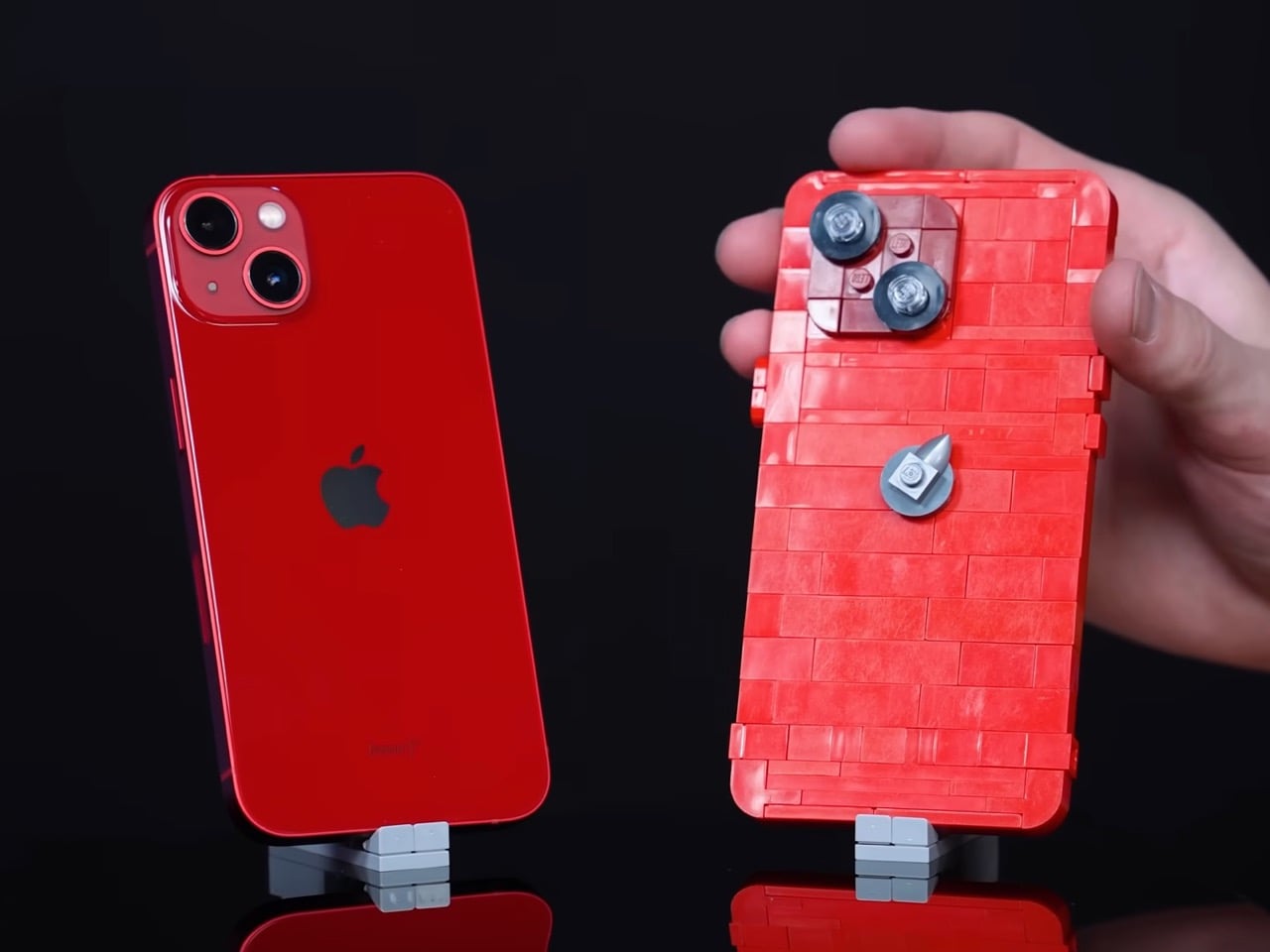


Ultimately, it is a ten dollar gadget that solves a hundred dollar headache. The real value is not just in the time saved, but in the uninterrupted focus it allows. Every moment a builder spends recounting studs or converting inches to bricks is a moment they are pulled out of the design flow. By making the act of measuring so seamless and integrated, the Stud Measure lets you stay in that creative headspace longer. It is a tiny, ingenious piece of plastic that respects the builder’s time and effort, and that kind of thoughtful design is always worth a closer look.