
Brainless, Heartless Scarecrows
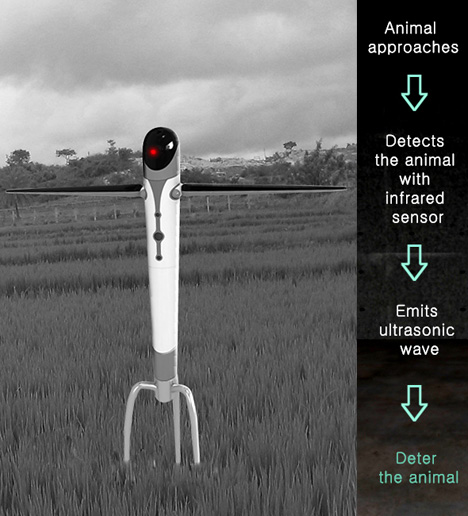
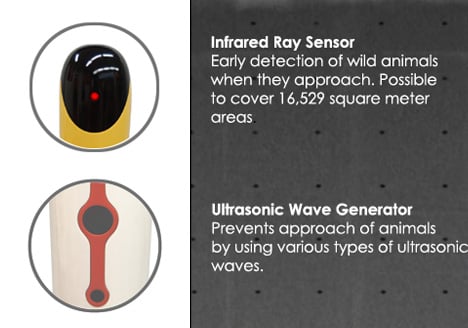
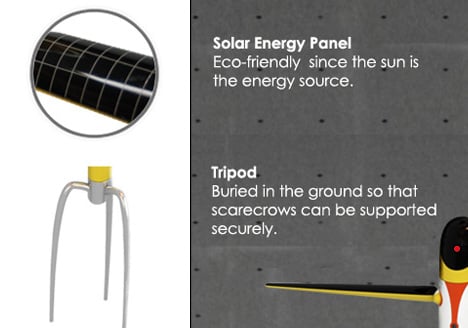
The future of farming is here! It’s scarecrows with infrared ray sensor eye with a 16,529 square meter range for animal detection. Ultrasonic Wave Generating animal approach prevention. Solar panel wings for completely self-powered scarecrowery. Tripod legs for secure sentry standing. Bunnies beware of the shockwave! You gonna get jolted.
The wave causes no damage to the animal, just gives them a little incentive. The scarecrow itself does no damage to the environment, and powers itself. Only thing I see missing here is a deterrent to human thieves! Though too many ultrasonics to the head might be shock enough.
This is the “Digital Scarecrow.”
Designers: KyungRyul Lim & Miyeon Kim







27 Comments »
foodtown says
everything seems to be hi-tech
matt says
just because it has a solar panel doesnt mean its automatically “eco-friendly”
your materials and technology within that product are definitely not eco-friendly.
kind of funny i thought about if someone from now on that went into a farmers field without him knowing might run into one of these and feel like they have been spotted by Skynet!
bob says
just because it has a solar panel doesnt mean its automatically “eco-friendly
sure lets make it out of dirt and fig leaves, oh wait fig leaves are poisionous to some animals, and dirt well god only knows what’s in dirt. Get a grip man.
nancyJ says
everybody use that circle button,if change will be good.
Carl says
high tech expensive. whats to stop it being nicked?
Alan says
Will love to steal one of these…. So, are you gonna spend money on security ?
M.S.W. says
Perhaps if the designer adds a feature where one would need to insert a key to move the scarecrow, if no key is inserted the scarecrow would emit a high pitched sonic alarm ( like the ones used in those keychain “panic alarms” )to give the human theif ear full of audible pain.
Upgrade feature for version 2.0 could also be in addition to the sonic alarm to include a GPS-Celluar transponder to locate the stolen scarecrow’s approximate location by calling in it’s location in timed intervals.
Trackbacks